The Invisible Infrastructure: How AI is Making Modern Education More Secure and Reliable?
When most people think about Artificial Intelligence (AI) in schools and universities, they picture smart chatbots answering student queries, adaptive learning portals tailoring math lessons, or automated essay graders. But behind the user-facing dashboards lies a deeper, systemic transformation.
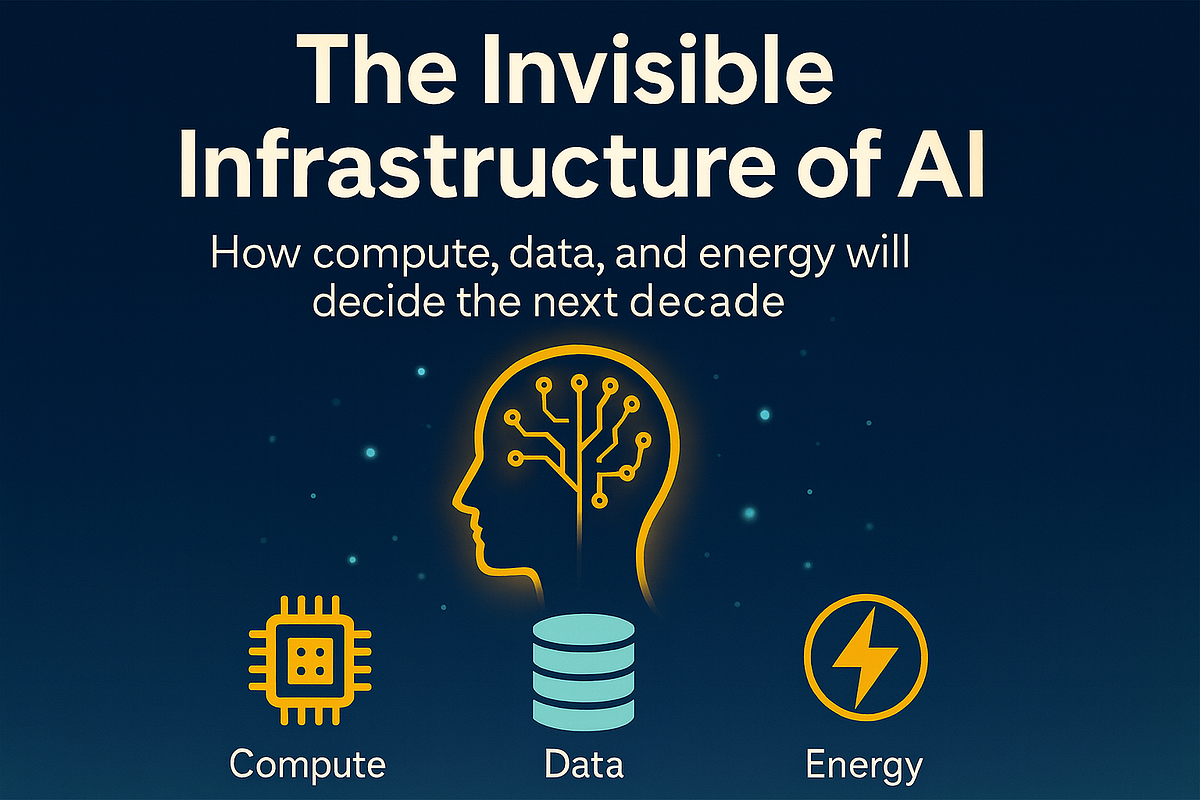
Today, AI functions as the invisible infrastructure of the modern education system. It operates quietly in the background to solve three of the most critical structural challenges facing educational institutions: protecting sensitive student data from sophisticated cyberattacks, establishing unshakeable academic reliability, and ensuring undeniable educational fairness.
This comprehensive deep dive explores how advanced machine learning algorithms, predictive threat detection, and ethical AI frameworks are quietly building a safer, more reliable, and equitable future for global education.
1. The Vulnerability of Modern Education Ecosystems
Educational institutions are no longer just places of learning; they are massive data repositories. From K-12 school districts to prestigious higher education universities, academic networks store vast amounts of personally identifiable information (PII), financial records, medical histories, and proprietary intellectual property.
This concentration of data has made the modern education system a primary target for global cybercriminals. Traditional, reactive security measures—such as basic firewalls and static passwords—are no longer sufficient to defend against modern, automated cyber threats. Protecting this vast digital ecosystem requires an active, intelligent, and scalable defense mechanism.
2. AI-Driven Threat Detection: The New Frontier of Institutional Cybersecurity
To counter modern digital threats, educational institutions are deploying AI-driven threat detection systems as an automated, 24/7 security layer. Unlike legacy antivirus software that only recognizes known malware signatures, machine learning models analyze massive volumes of network traffic logs, cloud workloads, and user activity in real-time.
By utilizing advanced behavioral analysis, the AI establishes a baseline of what “normal” activity looks like within a school’s network. If an account suddenly attempts to download thousands of encrypted student records at 3:00 AM from an unusual IP address, the system identifies the anomaly within seconds. This rapid intervention drastically reduces “dwell time”—the window an attacker has to navigate a system undetected—neutralizing threats before a catastrophic data breach occurs.
3. Mitigating Ransomware and Protecting Sensitive Student Data Privacy
Ransomware attacks on educational institutions can paralyze entire school districts, locking access to critical learning portals, grading records, and payroll systems. AI plays an indispensable role in mitigating these disasters through predictive analytics and automated isolation protocols.
When a ransomware script begins executing on a school server, it attempts to rapidly encrypt files. AI-powered security systems detect this specific, hyper-accelerated file-modification behavior instantly. The system immediately isolates the infected device from the broader network, preventing the malware from spreading laterally. Concurrently, privacy-preserving data analysis techniques ensure that even during automated forensic audits, individual student data privacy remains fully protected and compliant with strict international data protection laws.
4. Moving Beyond Plagiarism Detection Tools: The Shift to Learning Assurance
The rapid rise of generative AI tools has fundamentally disrupted traditional methods of evaluating student work. For the past few years, schools relied heavily on plagiarism detection software designed to flag copied text. However, trying to maintain academic integrity purely through post-submission “AI detectors” has proven to be an unreliable and deeply flawed strategy.
Modern educational institutions are shifting their focus from punitive detection to systemic learning assurance. The objective is no longer just catching academic misconduct after an assignment is submitted; it is about verifying the authentic process of learning as it happens. AI is helping educators move away from a culture of surveillance and toward a culture of verifiable student capability.
5. Continuous Progression Tracking: Verifying the Learning Process
How can an educator trust that a student actually completed a written assignment? The answer lies in continuous progression tracking, powered by secure cloud-based learning management systems (LMS).
Instead of evaluating a single, static document, AI tools securely monitor the longitudinal development of a student’s work. The system tracks:
The iterative drafting workflow over days or weeks.
Version histories and document evolution.
The time spent interacting with reference materials.
This creates a visible “learning footprint.” If a student’s final essay matches their historical writing cadence, editing patterns, and developmental steps, the educator has definitive proof of authorship. This shift turns data into a tool for constructive pedagogical conversation rather than a misconduct hearing.
6. Secure Proctoring Ecosystems and Authentic Assessment Design
As remote learning and hybrid higher education models expand, maintaining a level playing field during high-stakes examinations is vital. Secure proctoring ecosystems powered by localized AI models help ensure exam integrity without compromising human dignity.
These intelligent systems use secure identity verification to prevent identity fraud and monitor for clear anomalies, such as an unauthorized second person in the room or a browser-lockdown trigger. Rather than automatically penalizing a student, the AI flags these events for human reviewers to eliminate false positives. Furthermore, institutions are using AI to assist in authentic assessment design, helping teachers scale complex, real-world evaluation models—like oral defenses, live project presentations, or team-based readiness tests—that are inherently resistant to shortcut tools.
7. Algorithmic Fairness: Eliminating Human Bias in Academic Grading
Human evaluation is naturally vulnerable to implicit bias. Factors such as a student’s past academic performance, classroom behavior, handwriting quality, or even a teacher’s fatigue can unintentionally influence grading outcomes. AI can be engineered to act as an objective equalizer.
When utilizing unbiased automated grading systems for structured and semi-structured assessments, the algorithm evaluates answers based strictly on pre-defined rubrics. The system remains completely blind to a student’s name, gender, ethnicity, or socioeconomic background. By standardizing the evaluation criteria across thousands of submissions, AI ensures that every student is judged solely on the objective merit of their work.
8. Identifying and Rectifying Socioeconomic Disadvantages in Curriculum
True educational fairness requires identifying where institutional systems accidentally disadvantage certain student cohorts. Advanced AI data analysis can audit standardized test questions and curriculum materials to detect hidden demographic biases.
For example, an analytics model might discover that a specific word problem on a national exam results in disproportionately lower scores for non-native English speakers or students from low-income communities—not due to a lack of subject knowledge, but because of culturally specific phrasing. By flagging these anomalies, AI allows policymakers and curriculum designers to rectify structural biases, engineering a more inclusive educational path for everyone.
9. Zero Trust Architecture: Securing Identity-Driven Access Control
As educational networks expand across cloud environments, personal devices, and campus IoT networks, the traditional concept of a secure perimeter is obsolete. Modern institutions are adopting a Zero Trust architecture, an identity-centric security model that treats every access request as untrusted until explicitly verified.
AI serves as the engine of Zero Trust by managing identity-driven access control and adaptive authentication. The system continuously evaluates the context of every user request, assessing factors like device health, geographic location, and behavioral consistency. If a faculty member or student logs in from a trusted campus laptop, they experience a seamless workflow. If the same account attempts to access highly sensitive administrative databases from an unverified device across the world, the AI instantly triggers step-up multi-factor authentication, keeping institutional systems secure without disrupting daily learning.
10. The Necessity of Regular Audits for Ethical AI Frameworks
Deploying an ethical AI framework is never a one-time achievement. Because machine learning models are inherently probabilistic, they continuously interact with shifting real-world data. This interaction leads to “model drift,” data decay, and the unintentional reinforcement of historical human biases. To keep these systems safe, unbiased, and legally compliant, organizations must establish a process of regular technical and operational audits.
First, periodic audits verify that an AI system aligns with rapidly evolving international regulations. For instance, the landmark EU AI Act enforces strict post-market monitoring and conformity assessments for high-risk systems, making periodic auditing a legal mandate.
Second, audits are essential for technical risk mitigation. By utilizing structured frameworks like the NIST AI Risk Management Framework, system architects can continuously map, measure, and manage algorithmic vulnerabilities, safety hazards, and transparency gaps.
11. Creating a Trustworthy, Equitable, and Future-Proof Educational Ecosystem
The true value of artificial intelligence in modern education does not lie in flashy automation, but in its ability to quietly fortify the foundations of our schools. By acting as an invisible infrastructure, AI transforms how we protect information, verify knowledge, and practice institutional equity.
| Core Pillar | Legacy Challenges | AI Infrastructure Solution | Ultimate Outcome |
| Security | Vulnerability to ransomware; data breaches; exposed student PII. | AI-driven threat detection, Zero Trust architecture, and automated behavioral analysis. | Secure Data Privacy |
| Reliability | Unreliable text detectors; identity fraud; fragmented online testing. | Learning assurance, progression tracking, and secure proctoring ecosystems. | Academic Integrity |
| Fairness | Implicit human grading bias; hidden socio-economic curriculum barriers. | Unbiased automated grading and algorithmic data auditing. | Educational Equity |
As we navigate the complexities of a highly digitized world, leveraging AI to build a secure, reliable, and fair environment ensures that the credentials students earn remain trustworthy, their personal data remains protected, and every learner receives a truly equitable opportunity to succeed.

How useful was this post?
Click on a star to rate it!
Average rating 0 / 5. Vote count: 0
No votes so far! Be the first to rate this post.