
The Hidden Cost of Poverty: Why Free Education Still Fails to Create True Equity
For decades, governments, global NGOs, and human rights advocates have championed a singular, powerful weapon in the war against global inequality: free public education. The logic appears bulletproof. By removing school fees and abolishing tuition, societies can democratize access to classrooms, allow children from low-income backgrounds to escape the generational cycle of poverty, and build an inclusive, knowledge-driven economy.
However, the reality on the ground tells a much more sobering story. Despite the widespread global abolition of tuition fees, millions of children in developing and developed nations continue to drop out, fail, or fall behind. This is the tragic paradox of modern social policy: why free education fails to deliver on its promise of equal opportunity.
The truth is that tuition is only a fraction of the real cost of schooling. For families living at or near the poverty line, the act of sending a child to school triggers a cascade of invisible, insurmountable expenses. To design policies that actually work, we must expose the hidden cost of poverty and understand the systemic barriers to education that zero-tuition frameworks completely ignore.
1. Decoding the "Free Education" Fallacy: Why Zero Tuition is a Myth
The phrase “free education” is one of the most misleading misnomers in modern public policy. While a government can pass legislation stating that public school tuition is free, it cannot easily regulate the broader economic ecosystem of learning.
In low-income households, the financial pressure of education is not eliminated when fees are set to zero; it is merely redistributed. From the daily price of getting to the schoolhouse to the mandatory tools required inside it, the absolute cash outlay required to survive the academic year remains prohibitively expensive. When policymakers celebrate high primary school enrollment rates without examining completion metrics, they fail to see how the hidden cost of poverty quietly forces vulnerable children out of the system.
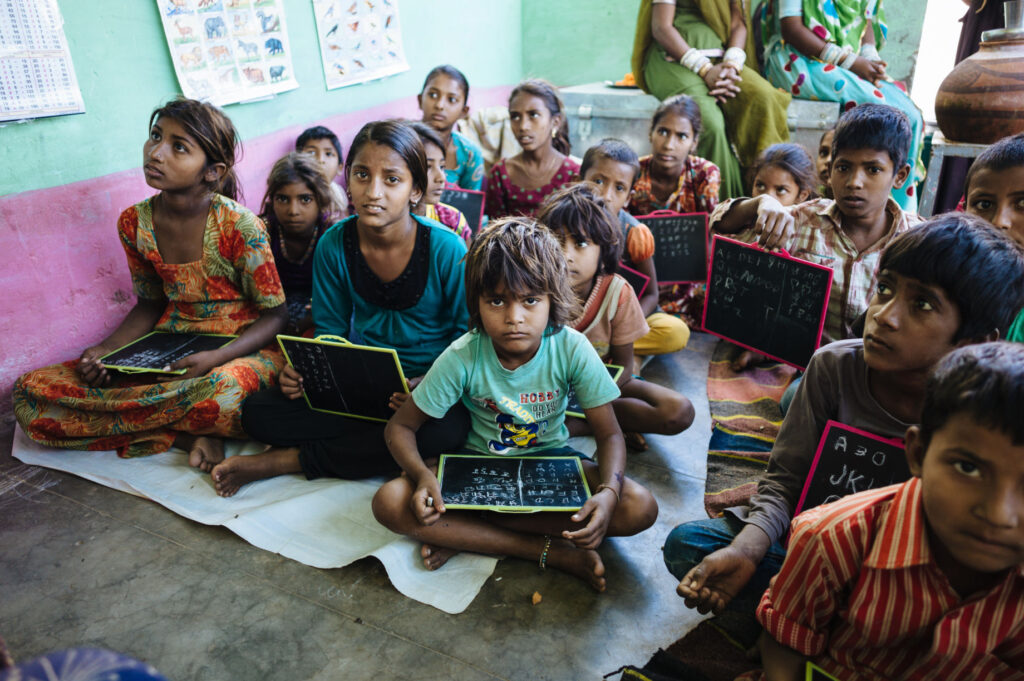
2. The Tangible Hidden Costs: Uniforms, Supplies, and Transport
Even in a school system with zero tuition, a child cannot show up to class empty-handed or unclothed. These tangible, non-tuition costs represent a massive financial barrier for impoverished families:
School Uniforms and Shoes: Many public schools strictly enforce uniform policies to maintain discipline and social cohesion. However, purchasing uniforms, athletic kits, and acceptable footwear represents a major seasonal expense that can swallow a week’s worth of household income.
Textbooks and Stationery: While some governments promise free textbooks, supply chain inefficiencies often leave rural or underfunded schools with severe shortages. Parents are forced to buy expensive learning materials, notebooks, pens, and calculator tools out of pocket.
The Cost of Transport: In rural or marginalized communities, schools are often located miles away. If there is no safe public transportation, parents must pay for private vans, local buses, or community transport. If they cannot afford these daily fares, children simply stay home.
According to a global analysis by UNICEF India, non-tuition expenses like uniforms and transport are among the primary reasons low-income parents are forced to withdraw their children from “fee-free” public systems.
3. The Opportunity Cost of Childhood: When Surviving Prevents Learning
To understand why free education fails, we must look beyond direct monetary expenses and evaluate the concept of opportunity cost. In an impoverished household, every member of the family is a potential economic contributor.
When a teenager sits in a classroom, they are not working in the fields, helping with a family business, or earning a daily wage as informal labor. For a family struggling to buy food, the “opportunity cost” of keeping a child in school instead of the workforce is simply too high. Children are frequently pulled out of school during harvest seasons, or kept home permanently to take care of younger siblings so that their parents can work long hours in factories or informal service jobs.
4. Hunger in the Classroom: How Malnutrition Stifles Cognitive Development
Education is a cognitive process, and cognitive processing requires energy. Malnutrition is one of the most devastating, invisible barriers to education that free tuition cannot fix.
A child who arrives at school on an empty stomach cannot concentrate, struggles with executive function, and experiences extreme cognitive fatigue. Over time, chronic malnutrition leads to physical stunting and permanent cognitive deficits.
                       The Malnutrition-Learning Trap
                                      │
         ┌────────────────────────────┴────────────────────────────┐
         ▼                                                         ▼
  Physical Hunger                                            Cognitive Drain
 (Leads to high absenteeism,                              (Reduces memory retention,
  illness, and low energy)                                focus, and test performance)
Without robust, universal midday meal programs, free classrooms merely act as spaces where hungry children struggle to learn.
5. The "Protective Effect" of Wealth: Why Poor Students Fall Away
One of the most profound socio-economic concepts in modern educational research is what sociologists call the “protective effect of wealth.”
A landmark study conducted by the Research in Equitable Access and Learning (REAL) Centre at the University of Cambridge examined thousands of young people across diverse developing nations. The researchers discovered that even when poor children and wealthy children demonstrated the exact same cognitive abilities at age eight, their paths diverged dramatically as they grew older.
Wealthy children who struggled academically were “protected” by their families’ resources—access to private tutors, prep classes, and high-quality nutrition—allowing them to catch up and ultimately enter tertiary education. Conversely, promising, high-ability children from low-income backgrounds gradually fell away due to the cumulative stress and limited support structures of poverty.
6. The Digital Divide: Homework and the Technology Barrier
In 2026, the classroom is no longer confined to physical blackboards and paper notebooks. Digital literacy and online learning platforms have become central to modern curriculum delivery. Unfortunately, this digital transition has severely exacerbated educational inequality.
Low-income students often suffer from the digital divide:
No Internet Access: While wealthier peers have high-speed broadband at home, poor students must rely on spotty mobile data or have no connection at all.
Lack of Devices: Doing complex homework assignments, research, or coding projects is nearly impossible on a shared, outdated smartphone.
Inadequate Digital Literacy: Parents who are digitally illiterate cannot help their children navigate online classrooms, submit digital homework, or access virtual resources.
Without equitable technology distribution, transitioning to digital-first schooling makes “free education” even more exclusionary.
7. The Social-Emotional and Psychological Toll of Poverty
We must also analyze the deep psychological burden that economic hardship places on young minds. Children living in poverty do not leave their worries at the school gates. They carry the chronic stress of housing instability, domestic financial disputes, and social marginalization.
This chronic elevation of cortisol levels impairs memory, disrupts emotional regulation, and increases the likelihood of behavioral outbursts or deep depression. Furthermore, the social stigma of not being able to afford school trips, uniform upgrades, or basic learning materials can lead to low self-esteem and school absenteeism. When schools do not provide robust mental health counseling, they fail to support the emotional resilience required for academic success.
8. Systemic Failure: Under-Resourced Public Schools vs. Premium Private Institutions
Another reason why free education fails to produce social mobility is the vast disparity in school quality. In many developing nations, the public school system is severely under-resourced.
                         The Dual Educational Track
                                      │
         ┌────────────────────────────┴────────────────────────────┐
         ▼                                                         ▼
Underfunded Public Track                                   Premium Private Track
 (Overcrowded classes, lack                              (Trained teachers, modern
  of labs, high teacher absent rates)                     infrastructure, global exposure)
Wealthy parents naturally bypass the free public system, enrolling their children in elite private institutions that provide global networking, career counseling, and advanced STEM resources. Thus, the free school system becomes a second-class tier reserved exclusively for the poorest students, reinforcing class divisions rather than dismantling them.
9. Gender-Specific Barriers: Why Poverty Hits Girls Hardest in Education
When poverty strikes a household, the barriers to education are heavily gendered. Around the world, girls bear a disproportionate share of the domestic and financial burdens of poverty.
According to global gender audits by the World Bank, families experiencing severe financial hardship are far more likely to invest their limited resources in educating boys rather than girls. Additionally, lack of access to clean water, separate sanitation facilities, and affordable menstrual hygiene products forces millions of adolescent girls to miss up to a week of school every month. In the most extreme circumstances, financial desperation drives families to arrange early marriages for young girls to reduce the household economic burden, permanently ending their educational journey.
10. A Holistic Roadmap: Moving Beyond Free Tuition to Equitable Learning
To truly solve this crisis and establish equitable access to opportunities, global policymakers must move beyond the simple act of abolishing school fees. We need a holistic, student-centric framework that addresses the root causes of poverty in education:
Provide Universal Basic Resources: Governments must directly fund uniforms, textbook distributions, digital devices, and school transport to eliminate the out-of-pocket costs of schooling.
Implement School Nutrition and Health Programs: Expand school-based midday meal frameworks and provide basic medical and dental check-ups directly on campus to combat malnutrition and reduce absenteeism.
Establish Targeted Financial Subsidies: Implement means-tested cash transfer programs that financially reward low-income parents for keeping their children in school, directly offsetting the opportunity cost of child labor.
Bridge the Digital Divide: Invest in community digital centers and provide free or heavily subsidized laptops and internet connectivity to disadvantaged students.
Expand Secondary-to-Tertiary Funding Pathways: Create robust scholarship networks, grants, and mentored pathways to ensure that high-promise student innovators from impoverished backgrounds are not locked out of premium universities.
To read more about global education funding challenges and resource allocation strategies, consult the joint World Bank and UNESCO Education Finance Watch portal.
11. Conclusion: Dismantling the Invisible Barriers to True Educational Equity
Abolishing school tuition is a noble first step, but it is an incomplete solution. As long as we ignore the hidden cost of poverty, free education will continue to function as an empty promise rather than a vehicle for social mobility.
True equitable access requires us to look at the whole child. We must ensure they are fed, healthy, mentally resilient, safe, and digitally equipped. Only by dismantling the invisible, non-tuition barriers to learning can we empower every child—regardless of their socio-economic background—to step out of the cycle of poverty and become the creators and leaders of tomorrow

How useful was this post?
Click on a star to rate it!
Average rating 0 / 5. Vote count: 0
No votes so far! Be the first to rate this post.