Will AI Tutors Replace Human Teachers? The Rise of Adaptive Learning in EdTech
The educational landscape in 2026 is experiencing a seismic shift. Technology has advanced past standard digital textbooks and recorded lectures, introducing a new era of cognitive computation. At the heart of this disruption is a highly debated question across global schools, universities, and corporate institutions: Will AI tutors replace human teachers?
With the explosive rise of adaptive learning in EdTech, generative artificial intelligence, and real-time behavioral analytics, the line between software and instructors is beginning to blur. This comprehensive analysis evaluates the technical mechanisms behind the modern AI tutor, details how the adaptive learning technology market functions, explores whether an AI teaching assistant can match a physical educator, and details why the human element of mentorship remains irreplaceable in 2026.
The Growth of Adaptive Learning in EdTech
To understand why the debate over AI tutors vs human teachers is heating up, we must examine the sheer scale of the digital education industry. In 2026, the global adaptive learning market has reached a staggering valuation of over $5.2 billion (growing at a compound annual growth rate of nearly 20%).
Adaptive learning is an educational method that uses computer algorithms to orchestrate the interaction with the learner and deliver customized resources and learning activities to address the unique needs of each student. Today, millions of students interact daily with intelligent platforms like Khan Academy’s Khanmigo, Century Tech, and DreamBox. These systems do not merely present slides; they dynamically rewrite curricula on the fly based on a student’s cognitive processing speed, response confidence, and historical mistake patterns.
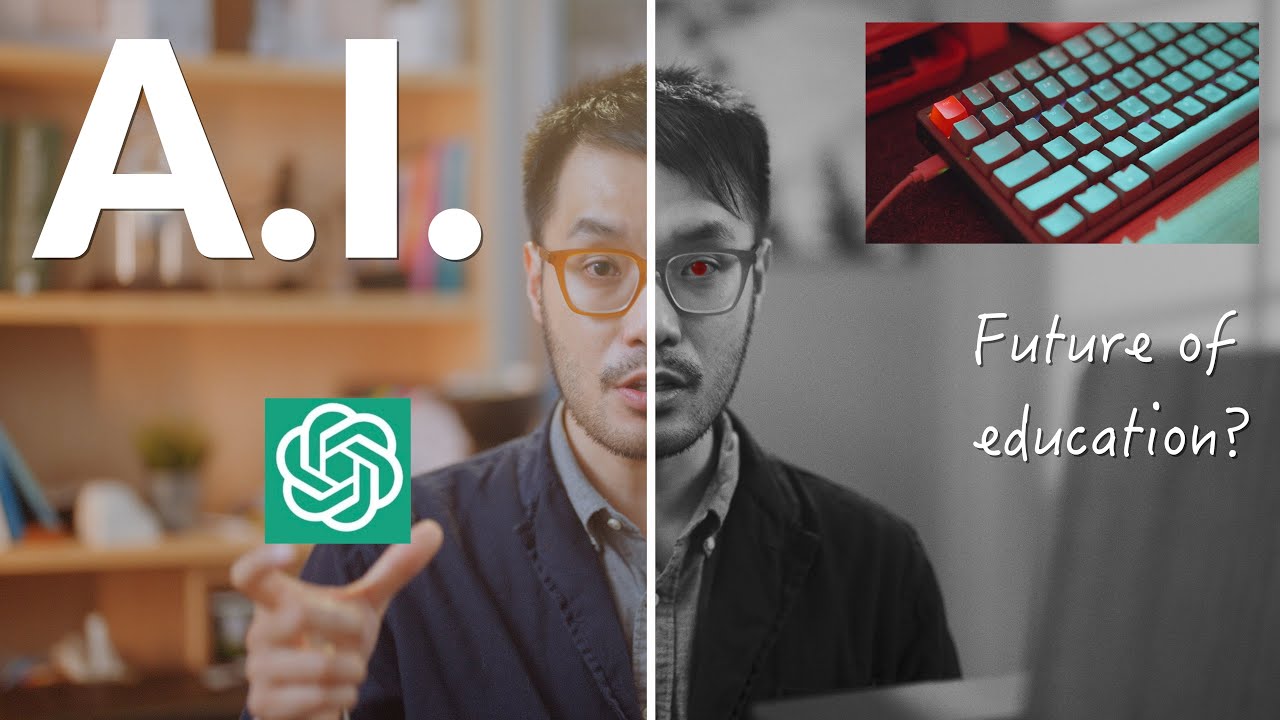
What AI Tutors Do Best: The Scalable Assistant
To evaluate whether AI in education can substitute for physical educators, we must first look at the unique computational strengths of machine learning models. AI classroom assistant platforms excel in environments where human resources are strained or structurally limited.
+------------------------------------+------------------------------------+
| Core AI Tutor Capabilities         | Real-World Academic Impact         |
+------------------------------------+------------------------------------+
| Real-Time Curricular Adaptation    | Instantly alters lesson paths if a  |
|                                    | student struggles with a sub-topic.|
+------------------------------------+------------------------------------+
| 24/7 Accessibility and Scalability | Provides continuous homework, exam |
|                                    | prep, and query-handling at 2 AM.  |
+------------------------------------+------------------------------------+
| Non-Judgmental Practice Arenas     | Eliminates social anxiety, letting  |
|                                    | students ask "basic" doubts repeatedly.|
+------------------------------------+------------------------------------+
| Predictive Memory Retainment       | Calculates optimal interval reviews |
|                                    | using dynamic spaced repetition.   |
+------------------------------------+------------------------------------+
1. Personalization at Scale
In a typical classroom, a single teacher is tasked with managing thirty or more students, all of whom possess varying baseline intelligences, learning speeds, and attention spans. This forces teachers to design lessons for the “median student,” often leaving advanced learners bored and struggling students left behind.
An AI tutor in 2026 completely bypasses this limitation. Through personalized learning experiences, the software profiles the individual learner’s performance. If a student exhibits a weakness in advanced calculus, the AI dynamically isolates the breakdown to basic algebra, pausing the main lesson to run remedial micro-lessons before returning to the core subject.
2. Eliminating the Emotional Friction of Failure
One of the most underestimated benefits of AI tutoring systems is psychological. Academic anxiety prevents millions of students from asking clarifying questions in a public classroom for fear of peer judgment or teacher disapproval.
Artificial intelligence platforms create an completely objective, judgment-free zone. A student can ask an LLM-powered bot to explain the same fundamental equation twenty times using twenty different analogies. The system will never lose patience, change its tone, or make the student feel academically inferior.
Decoding Adaptive Learning Technology: How It Works
The magic behind adaptive learning in EdTech lies in its architecture. Modern platforms rely on three core components:
The Content Model: A mapped database of all pedagogical topics and their relationships (e.g., you cannot understand “multiplication” without mastering “addition”).
The Learner Model: A real-time profile of the user’s current knowledge levels, learning speed, working memory capacity, and focus patterns.
The Instructional Engine: The algorithmic system (often a combination of neural networks and reinforcement learning) that determines exactly which piece of educational content to deliver next.
According to research synthesized in the OECD Digital Education Outlook 2026, pedagogically-guided generative AI tools dramatically increase cognitive retention and learning outcomes when built on solid learning science frameworks.
Why Human Teachers Remain Irreplaceable: The Empathy Barrier
Despite the analytical superiority of modern EdTech artificial intelligence, teaching is not merely a pipeline of data transferring from a hard drive to a student’s brain. Learning is a deeply emotional, social, and psychological human experience.
1. Emotional Intelligence (EQ) over Artificial Intelligence (AI)
A skilled human teacher does not just look at test scores; they read body language, facial expressions, and emotional energy. A teacher can walk into a room, spot a student who seems unusually quiet, suspect that they are facing personal issues at home, and modify their pedagogical demands with empathy.
AI models cannot experience or truly understand empathy. While affective computing platforms in 2026 can track eye movements and approximate micro-expressions through webcams, they lack authentic emotional depth. An AI tutor cannot offer a shoulder to lean on or provide genuine moral validation when a student is on the verge of giving up.
2. Accountability and Motivation
Why do people pay thousands of dollars for personal fitness trainers when every exercise routine is available for free on YouTube? The answer is accountability.
Most human beings need an external source of motivation to push through challenging, complex concepts. A student might dismiss a reminder notification from an AI study tool, but they will work harder to avoid letting down a mentor they respect. Human teachers inspire, challenge, and hold students accountable to their potential in a way that code cannot.
The Commodity of Explanation vs. The Value of Mentorship
The rise of generative AI has led to an interesting economic reality in 2026: The monetary value of simple explanation has plummeted to near zero.
If a student wants a clear, step-by-step breakdown of photosynthesizing plant cells, they no longer need to wait for a teacher’s lecture. An AI can explain it immediately, using customized visual diagrams or high-level academic analogies. However, this does not make the teacher obsolete; it reframes their role.
The educators who are at risk of being replaced by AI in 2026 are those who act as “pure explainers”—instructors who simply deliver dry lectures, administer standardized worksheets, and provide generic grading feedback. However, teachers who focus on mentorship, soft skills, collaborative debate, critical thinking, and character development are more valuable than ever.
Directly Comparing the Capabilities: AI Tutors vs. Human Teachers
The table below provides a detailed structural comparison of the educational delivery formats in 2026:
+------------------------------------+-------------------------+-------------------------+
| Feature / Metric                   | AI Tutors (EdTech AI)   | Human Teachers          |
+------------------------------------+-------------------------+-------------------------+
| Scalability & Delivery Cost        | Extremely Low Cost      | High Cost               |
| Availability                       | 24/7, Instant Response  | Limited to School Hours |
| Personalization Level              | Infinite (Per Student)  | Broad (Class-Wide)      |
| Emotional Connection & Empathy     | Simulated / None        | Exceptionally High      |
| Creativity & Critical Thinking     | Template-Based          | Deeply Open-Ended       |
| Classroom Management & Discipline   | Dependent on Self-Drive | Strong Group Dynamics   |
+------------------------------------+-------------------------+-------------------------+
The Rise of the Hybrid Classroom: AI and Human Collaboration
The future of education is not a battle of AI vs human teachers; it is a collaborative partnership. The most effective educational institutions in 2026 are adopting a hybrid approach: AI-assisted human teaching.
In this model, the AI teaching assistant handles the repetitive, time-consuming administrative work that traditionally causes educator burnout:
Drafting Course Materials: Generating customized quizzes, worksheets, and study notes tailored to the classroom’s theme.
Automated Micro-Grading: Providing rapid, structured feedback on standardized essays and complex math steps.
Proactive Analytics: Scanning the class’s online portal data to flag which students are slipping behind before the next exam.
By offloading these tasks to AI, teachers regain an average of 5 to 6 hours per week. This newly recovered time is redirected exactly where it is needed: one-on-one student mentoring, dynamic group debates, hands-on lab experiments, and emotional support.
Adaptive Learning Pitfalls: The Risks of Relying Purely on AI
While the advantages of adaptive learning technology are clear, educators and child psychologists raise significant red flags regarding over-reliance on automated educational platforms:
Metacognitive Laziness: When students use general-purpose AI tools to instantly answer homework questions, they bypass the critical struggle phase of learning. Without “desirable difficulty,” true cognitive retention fails to occur.
Social Isolation: A purely virtual, AI-run education deprives children of crucial peer-to-peer interactions, team conflict-resolution, and public speaking experience.
Algorithmic Bias: If the datasets training an AI classroom assistant are biased, the platform may deliver skewed historical perspectives or display cultural insensitivity toward minority demographics.
Finding the Best AI-Driven Learning Platforms in 2026
For parents, educators, and students looking to integrate the power of machine learning into their study routines, choosing the correct tools is crucial. Look for systems that prioritize the following criteria:
Pedagogical Alignment: The AI should not simply give out answers. It should guide the student to the solution using scaffolding techniques (e.g., Socratic questioning).
Robust Privacy & Security Standards: Ensure the platform adheres to global student data protection laws (such as COPPA or GDPR) to protect children’s biometric and cognitive data.
Parental/Teacher Portals: Choose systems that offer analytical dashboards, giving human mentors clear insights into the student’s progress and struggle points.
For further information on global guidelines surrounding artificial intelligence in modern curricula, you can read the latest research frameworks on the EDUCAUSE AI in Education Research Portal.

How useful was this post?
Click on a star to rate it!
Average rating 0 / 5. Vote count: 0
No votes so far! Be the first to rate this post.