How to Manage Mental Stress and Avoid Burnout During Competitive Exam Prep
Preparing for high-stakes competitive examinations requires immense dedication, sustained effort, and mental endurance. Whether you are studying for medical entrance tests, engineering board exams, civil service qualifiers, or graduate admissions, the relentless pressure can take a severe toll on your psychological well-being. Unchecked study fatigue can quickly escalate into full-scale academic exhaustion, impairing memory retention and reducing overall performance.
Learning how to navigate emotional pressures, maintain physical health, and balance intense study schedules is essential for long-term success. This guide outlines actionable strategies to manage stress and prevent burnout while maintaining high academic output throughout your preparation journey.
1. Understanding the Mechanics of Exam Stress and Academic Burnout
Recognizing early warning signs of emotional exhaustion is the first step toward protecting your mental health. High-stakes test preparation creates chronic anxiety, which triggers constant physical alertness in the body.
The initial psychological pressure often begins as simple fatigue, but without adequate recovery, it develops into complete emotional exhaustion. Common symptoms include persistent brain fog, chronic insomnia, irritability, loss of motivation, and a sudden drop in test scores. Understanding that burnout is a physiological reaction to unmanaged tension helps candidates address the root causes before performance degrades.
2. Setting Realistic Daily Goals and Managing Study Expectations
A primary source of student anxiety stems from setting unrealistic academic schedules. Overloading daily task lists creates a continuous sense of failure when goals remain unmet.
Micro-Goal Segmentation: Divide vast syllabi into small, manageable daily targets to create steady momentum and build confidence.
Buffer Time Allocation: Reserve flexible time slots every week to handle unexpected delays, catching up on backlogs without increasing daily anxiety.
Prioritization Frameworks: Focus on high-yield topics during peak energy hours, reserving lower-energy periods for lighter revision tasks.
| Planning Dimension | Unrealistic Preparation Model | Balanced Sustainable Model |
| Daily Coverage | Forcing 14+ hours of continuous reading | Structuring 6 to 8 hours of deep, focused study |
| Rest Days | Zero days off for months | Scheduled weekly rest and personal recovery time |
| Progress Tracking | Measuring success by raw hours sat | Measuring success by clear chapter mastery |
| Mindset | “I must complete everything immediately” | “Consistent daily progress drives overall success” |
Structuring realistic routines ensures sustained productivity while protecting daily motivation levels over long preparation cycles.
3. Optimizing Sleep, Hydration, and Physical Well-being
Mental stamina relies heavily on physical health. Depriving yourself of sleep to gain extra study hours directly impairs memory consolidation, analytical thinking, and emotional regulation.
+--------------------------------------------------------------------+
|               PHYSICAL HEALTH FOUNDATION FOR PREPARATION           |
|                                                                    |
|  [Sleep Optimization]  ---> 7-8 hours for memory consolidation    |
|          |                                                         |
|          v                                                         |
|  [Nutritional Balance] ---> Complex carbs & stable hydration      |
|          |                                                         |
|          v                                                         |
|  [Daily Movement]      ---> 30 mins light exercise / walking      |
+--------------------------------------------------------------------+
Prioritizing 7 to 8 hours of quality sleep allows the brain to process and transfer new information into long-term memory stores. Regular physical movement releases endorphins that reduce physiological tension. To explore evidence-based recommendations on physical health and cognitive recovery, review health guidelines maintained by the World Health Organization.
4. Constructing Restorative Study Breaks and Active Recovery Routines
Continuous studying without structured rest rapidly degrades focus and information retention. Incorporating intentional recovery intervals maintains high cognitive efficiency throughout the day.
                    COGNITIVE RECOVERY vs. DIGITAL DRAIN

                      /------------------------\
                     /                          \
                    /    RESTORATIVE RECOVERY    \
                   /  (Walking, Stretch, Rest)    \
  +---------------+--------------------------------+---------------+
  |               |    MENTAL ENERGY RESERVES      |               |
  |               |    Sustained High Focus        |               |
  | Intense Focus |                                | Long-Term     |
  |  Session      +--------------------------------+  Stamina      |
  |               |    DIGITAL OVERLOAD DRAIN      |               |
  |               |  (Social Media, Online Feeds)  |               |
  +---------------+--------------------------------+---------------+
                   \                              /
                    \                            /
                     \                          /
                      \------------------------/
Engaging in passive social media scrolling during study breaks re-stimulates the brain with information overload, defeating the purpose of a break. Instead, step away from digital screens to practice light stretching, deep breathing, or brief outdoor walks to give your mind true relaxation.
5. Overcoming Imposter Syndrome and Social Comparison Traps
Competitive environments foster intense peer comparison, leading to imposter syndrome and feelings of inadequacy. Comparing your preparation journey to others creates unnecessary emotional distress.
Limit Peer Discussion Channels: Avoid surrounding yourself with panic-inducing study groups or online forums focused solely on score comparisons.
Track Internal Benchmarks: Measure your performance exclusively against your past mock test scores and personal chapter completion metrics.
Normalize Knowledge Gaps: Understand that making mistakes during preparation is a natural part of the learning process, not a reflection of your intelligence.
Reframing self-doubt into constructive problem-solving protects your psychological resilience. Helpful mental health resources and coping strategies can be found through the National Institute of Mental Health.
6. Utilizing Mindfulness, Deep Breathing, and Anxiety Reduction Tools
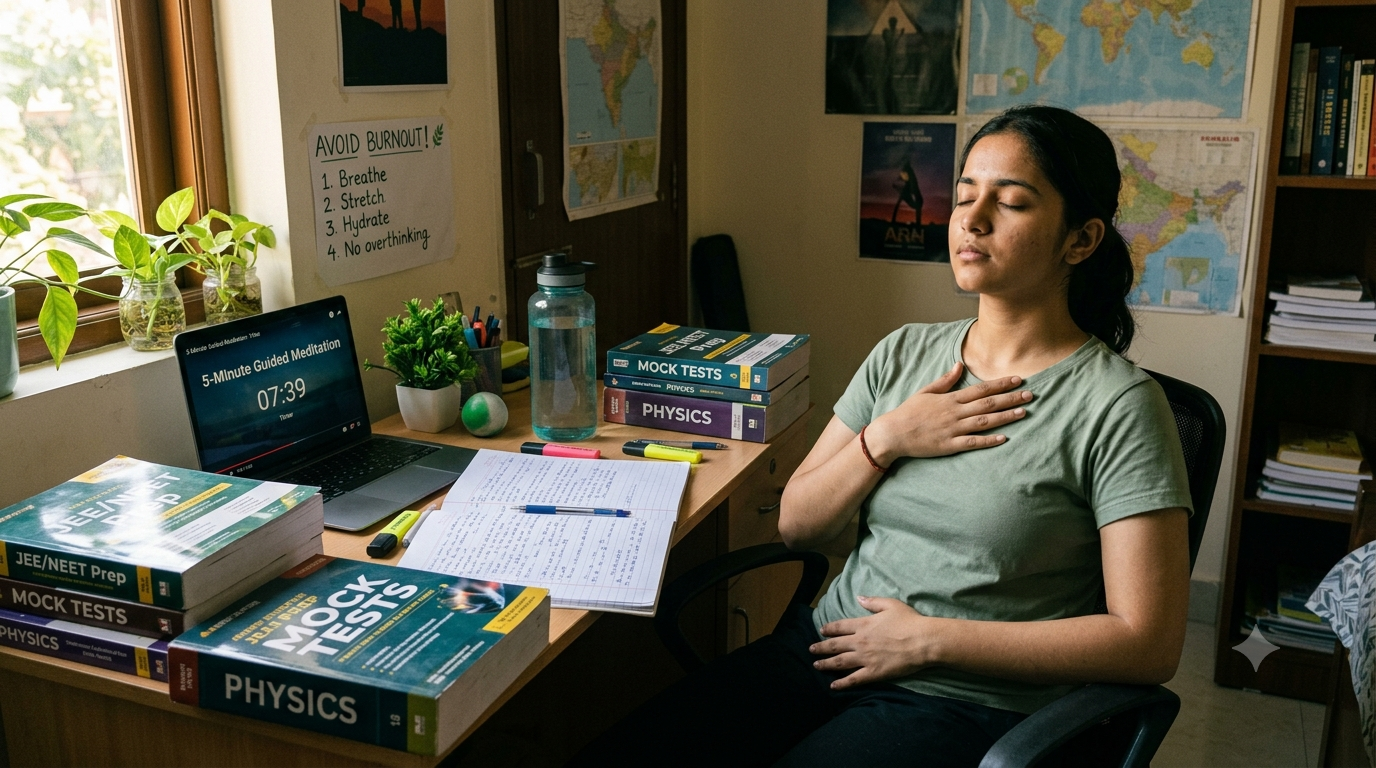
When exam pressure spikes, applying mindfulness practices helps calm the central nervous system, reducing physical symptoms of panic.
+------------------+      +-------------------+      +--------------------+
| Recognize Spike  | ---> | Box Breathing     | ---> | Grounding Technique|
| in Anxiety       |      | Inhale 4s, Hold 4s|      | Focus on Present   |
+------------------+      +-------------------+      +--------------------+
         ^                                                     |
         |                                                     v
+------------------+      +-------------------+      +--------------------+
| Resume Study with| <--- | Reframe Negative  | <--- | Release Physical   |
| Clear Focus      |      | Self-Talk Thoughts|      | Muscle Tension     |
+------------------+      +-------------------+      +--------------------+
Practicing box breathing—inhaling for four seconds, holding for four seconds, exhaling for four seconds, and holding for four seconds—slows rapid heart rates during stressful moments. Integrating brief daily meditation sessions helps train the mind to stay centered during high-pressure testing conditions.
7. Re-framing Mock Test Results and Academic Setbacks
Mock tests are diagnostic tools designed to identify weak spots, not definitive predictions of final results. Treating poor test scores as opportunities for improvement rather than personal failures prevents emotional crashes.
Review incorrect questions to classify whether errors stemmed from conceptual gaps, misreading options, or poor time management.
Schedule immediate revision blocks dedicated to mastering the exact chapter sub-topics missed during the diagnostic test.
Take mini-quizzes on the revised material to verify concept mastery, reinforcing a growth-oriented mindset.
Treating setbacks as data points builds psychological durability, ensuring that test anxiety does not derail long-term progress.
8. Building a Support Network and Knowing When to Seek Professional Help
Attempting to navigate intense exam preparation in complete isolation increases the risk of severe depression and anxiety. Maintaining strong connections with supportive family members and friends provides necessary emotional outlets.
Communicating openly about your stress levels allows loved ones to offer perspective and encouragement. If persistent anxiety interferes with daily functioning, sleep, or eating habits, seeking guidance from a professional counselor or therapist is a proactive step toward protecting your mental health.
9. Final Conclusion and Strategic Roadmap
Managing stress and avoiding burnout during competitive exam preparation requires a balanced, sustainable approach. By setting realistic study goals, prioritizing sleep and physical health, practicing mindfulness, and reframing academic setbacks, you build the emotional resilience necessary to perform at your best.
Ultimately, your mental well-being is the foundation of your academic performance. Protecting your health while maintaining consistent, disciplined preparation provides the clearest, most reliable path to exam success.

How useful was this post?
Click on a star to rate it!
Average rating 0 / 5. Vote count: 0
No votes so far! Be the first to rate this post.