
Top 7 Undergraduate Aerospace Engineering Research Projects for High-Impact Portfolios
Introduction: The Power of Hands-On Research in Aerospace Engineering
Building a compelling undergraduate portfolio is the single most effective way to stand out when applying for competitive aerospace engineering graduate programs or top-tier defense and commercial space industry positions. While strong coursework grades demonstrate theoretical mastery, recruiters and university admissions committees prioritize candidates who prove their ability to solve real-world flight dynamics, orbital mechanics, propulsion, and structural design challenges through rigorous hands-on project experience.
By tackling high-impact research initiatives, undergraduate students bridge the gap between classroom textbooks and enterprise-grade aeronautical design. Executing independent or team-based experimental investigations showcases project management proficiency, simulation software mastery, and technical publication potential before earning your bachelor’s degree. This comprehensive guide highlights seven top aerospace research project domains designed to elevate your professional portfolio.
1. Why Undergraduate Aerospace Portfolios Matter for Your Career
Engineering recruiters and admissions committees routinely review hundreds of identical resumes featuring standard coursework credits and generic design lab assignments.
┌─────────────────────────────────────────────────────────────┐
│             TRADITIONAL VS. RESEARCH-DRIVEN PORTFOLIO       │
│                                                             │
│   Standard Portfolio:                                       │
│   Coursework Labs ──► Textbook Theory ──► Generic Degree    │
│                                                             │
│   High-Impact Research Portfolio:                           │
│   CFD Datasets ──► Physical Hardware ──► Industry Standard  │
└─────────────────────────────────────────────────────────────┘
Developing a documented portfolio containing Computational Fluid Dynamics (CFD) datasets, physical hardware prototypes, flight test telemetries, and peer-reviewed conference papers provides undeniable evidence of software fluency and lab capability. Furthermore, undertaking structured research projects early in your academic journey opens doors to undergraduate research fellowships, institutional grants, and industry sponsorships that fast-track your career trajectory.
2. Project 1: CubeSat Nanosatellite Subsystem Design and Attitude Control
Nanosatellite technology has democratized space exploration, allowing undergraduate engineering students to design, assemble, and test actual orbital space hardware.
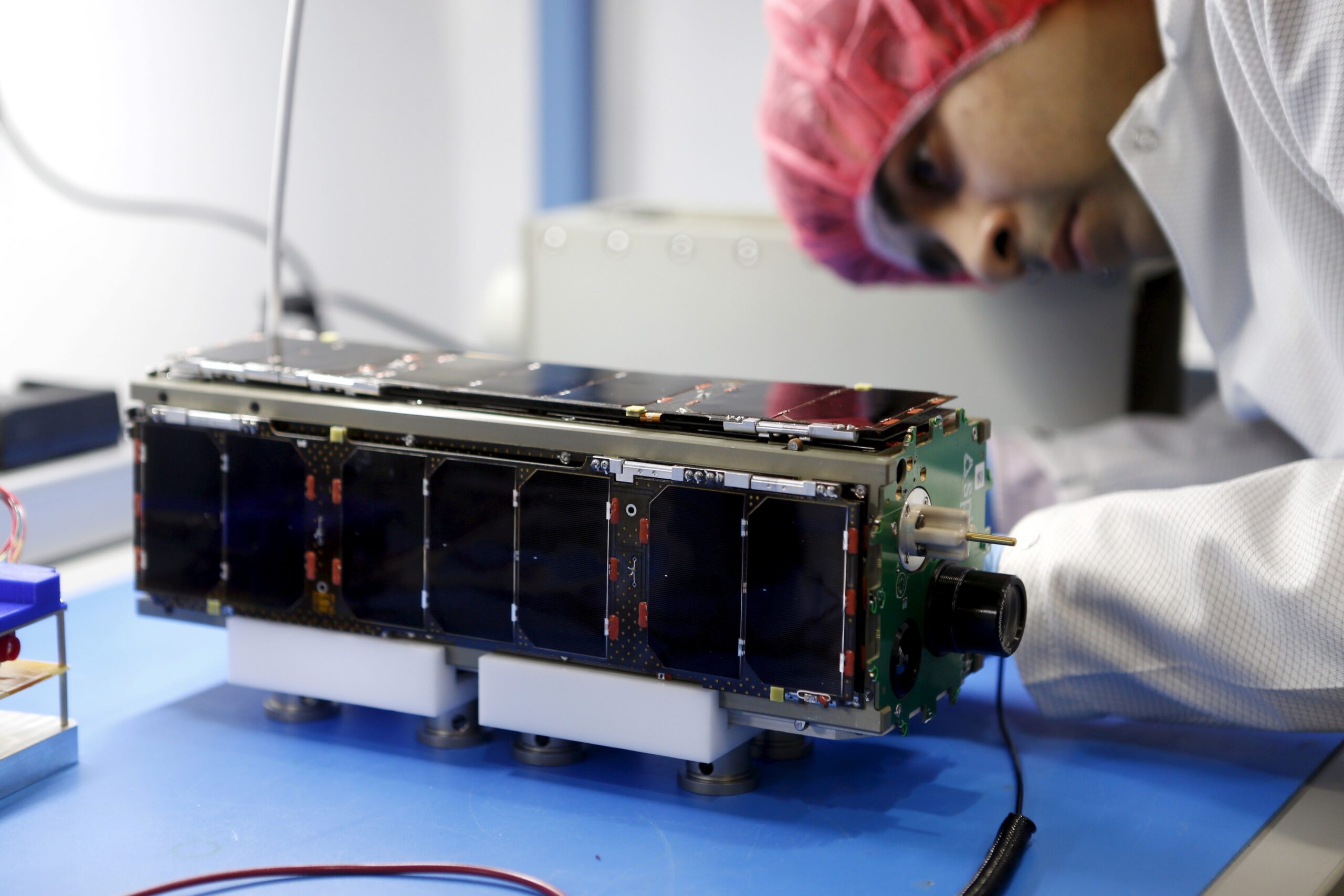
A high-impact CubeSat undergraduate project focuses on developing specific spacecraft subsystems, such as the Attitude Determination and Control System (ADCS), power management units, or miniature thruster payloads. Students gain hands-on experience programming reaction wheels, magnetorquers, and fine sun sensors to stabilize orbital orientation against atmospheric drag and magnetic field perturbations.
To review official space mission engineering guidelines and small satellite standards, explore resources provided by the National Aeronautics and Space Administration (NASA).
3. Project 2: High-Speed Computational Fluid Dynamics (CFD) of Hypersonic Airfoils
Hypersonic flight research represents one of the most critical frontiers in modern defense technology and commercial aerospace engineering. Executing a computational research project in high-speed fluid mechanics involves modeling boundary layer transition, shock-wave boundary-layer interactions (SWBLI), and aerodynamic heating profiles on hypersonic vehicle geometries. Using industry-standard CFD solvers like ANSYS Fluent or OpenFOAM, undergraduates investigate air chemistry effects and pressure distribution across varying angles of attack at speeds exceeding Mach 5.
4. Project 3: Hybrid Rocket Engine Propulsion and Burn Rate Optimization
Chemical propulsion remains vital for orbital launch systems, with hybrid rocket engines offering an ideal balance of safety, cost-efficiency, and mechanical simplicity for university laboratories.
This propulsion research project involves designing a laboratory-scale hybrid rocket motor utilizing solid paraffin wax fuel grains oxidized by liquid nitrous oxide or gaseous oxygen. Students analyze propellant regression rates, combustion efficiency, nozzle throat erosion, and chamber pressure dynamics using custom thrust stand instrumentation setups.
For detailed aeronautical propulsion standards and technical aerospace publications, consult documentation hosted by the American Institute of Aeronautics and Astronautics (AIAA).
5. Project 4: Autonomous Electric Vertical Takeoff and Landing (eVTOL) UAVs
Urban Air Mobility systems are transforming regional transportation, driving high industry demand for engineers skilled in electric vertical flight dynamics.
Undergraduate researchers develop scale-model eVTOL Unmanned Aerial Vehicles (UAVs), configuring transition flight algorithms between vertical hovering rotor thrust and winged forward cruise. The project integrates flight controller programming, aerodynamic drag reduction, motor-propeller thrust mapping, and real-time sensor telemetry processing for autonomous waypoint navigation.
6. Project 5: Composite Structure Optimization and Damage Detection in Wings
Advanced carbon fiber composites form the structural backbone of modern commercial airliners, military aircraft, and space launch vehicles.
Carbon Fiber Layup ──► Mechanical Load Testing ──► Structural Acoustic Monitoring
This structural mechanics project combines finite element analysis (FEA) modeling with physical coupon testing to evaluate composite wing spar performance under operational aerodynamic loads. Students implement Non-Destructive Testing (NDT) techniques—such as ultrasonic inspection or piezoelectric acoustic emission sensors—to detect internal delamination and micro-cracking prior to structural failure.
To explore international structural materials testing standards and flight safety regulations, review guidelines maintained by the Federal Aviation Administration (FAA).
7. Project 6: Electric Aircraft Propulsion and Battery Thermal Management
Transitioning commercial aviation toward net-zero carbon emissions requires pioneering electrical power architectures and lightweight energy storage solutions.
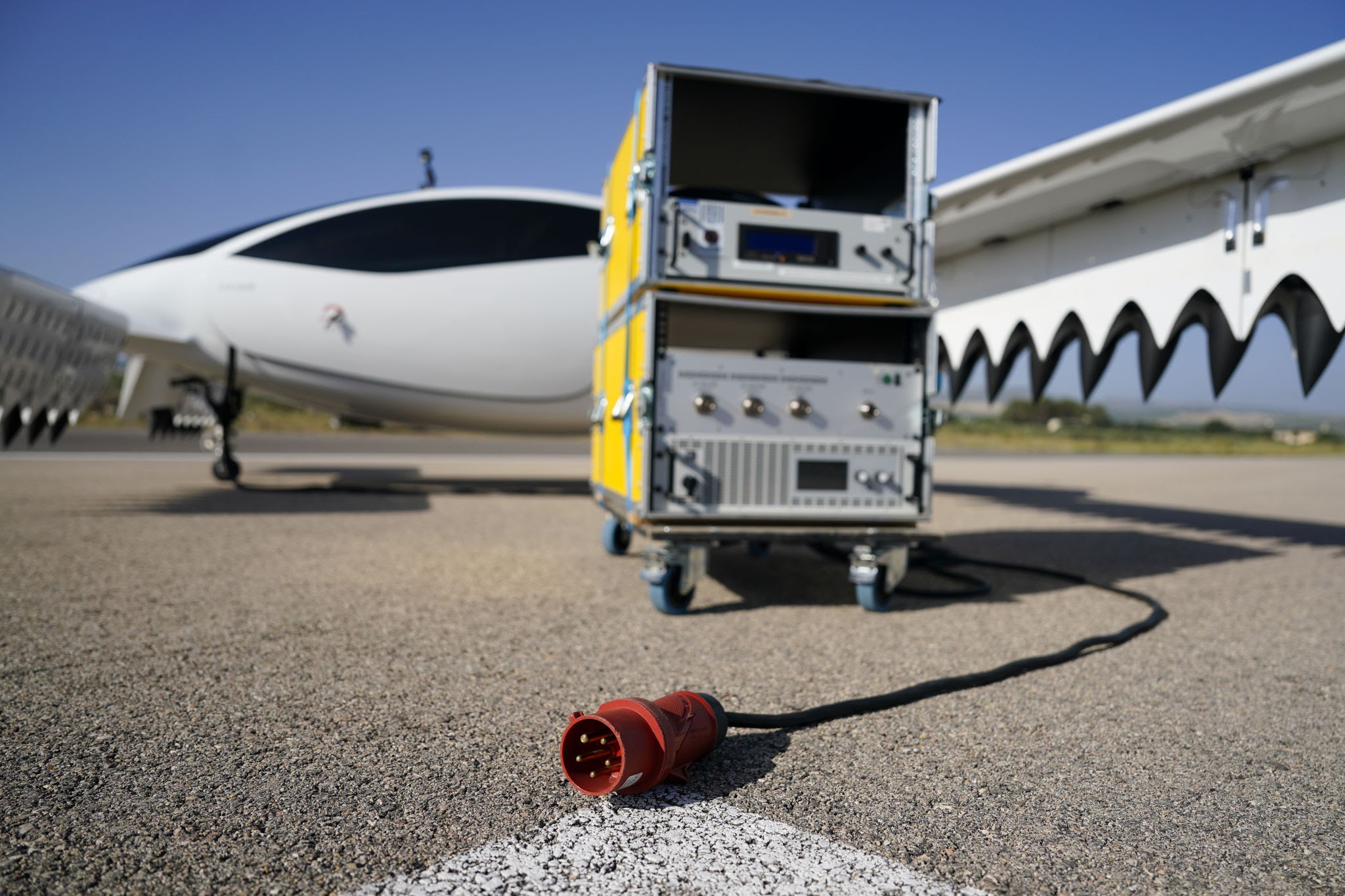
Focusing on clean aviation, this project models and builds thermal management systems for high-energy-density lithium battery packs powering electric aircraft motors. Students investigate phase-change materials, liquid cooling cold plates, and thermal runaway prevention protocols to maximize power output while keeping propulsion systems safely within operational temperature limits.
8. Project 7: Space Debris Mitigation and Aerodynamic Drag Sail Design
Remediating low Earth orbit congestion is an urgent priority for satellite operators and global space agencies worldwide.
Undergraduates working on space sustainability design passive deorbiting payloads, such as deployable aerodynamic drag sails or electrodynamic tethers for CubeSats. The project evaluates mechanical deployment reliability, orbital decay rates in high-altitude rarefied atmospheres, and structural stability against solar radiation pressure to accelerate satellite end-of-life disposal.
9. Project Matrix: Comparing Aerospace Portfolio Projects
| Research Project Track | Core Technical Focus | Primary Software / Hardware Tools | Target Industry Application |
| CubeSat Subsystems | Spacecraft Dynamics, ADCS | MATLAB/Simulink, Reaction Wheels, STK | Commercial Space, Satellite Operations |
| Hypersonic CFD | Aerothermodynamics, Shock Waves | ANSYS Fluent, OpenFOAM, Pointwise | Defense Technologies, High-Speed Flight |
| Hybrid Propulsion | Rocket Combustion, Fuel Grains | LabVIEW, Thrust Stands, NASA CEA | Launch Vehicles, Deep-Space Engines |
| eVTOL UAVs | Flight Control, Transition Dynamics | ArduPilot, PX4, Wind Tunnels | Urban Air Mobility, Autonomous Drones |
| Composite Structures | Structural FEA, NDT Damage Check | Abaqus, ANSYS Structural, Tensile Testers | Commercial Airframes, Spacecraft Hulls |
| Electric Propulsion | Battery Thermal Management | COMSOL Multiphysics, Thermal Imaging | Sustainable Aviation, eVTOL Power |
| Debris Drag Sails | Orbital Mechanics, Mechanism Design | NASA DAS, CAD Modeling, Vacuum Chambers | Space Sustainability, Regulatory Compliance |
10. Step-by-Step Blueprint: Documenting Your Project for Maximum Impact
Executing exceptional research is only half the battle; presenting your findings professionally ensures recruiters notice your engineering talent.
Maintain an Engineering Notebook: Log every design iteration, simulation output, hardware failure, and telemetry chart systematically throughout the project life cycle.
Publish Open-Source Repositories: Upload custom analysis code, CAD files, and simulation scripts to GitHub or GitLab to demonstrate coding structure and version control capabilities.
Produce CAD Models and Renderings: Include high-resolution 3D exploded views and stress-concentration heatmaps directly in your digital portfolio documentation.
Author Conference Papers: Submit extended research abstracts to regional or national student conferences (such as AIAA Regional Student Conferences) to earn formal publication credentials.
11. Conclusion: Elevating Your Aerospace Career Trajectory
Building a distinguished career in aerospace engineering begins long before graduation day. By taking ownership of high-impact research projects—ranging from hypersonic CFD analysis and hybrid rocket testing to autonomous eVTOL flight systems—you construct a practical, evidence-based portfolio that commands immediate respect from industry leaders and academic admissions panels.
Select a project domain aligned with your personal engineering passion, leverage open-source simulation tools alongside campus laboratory infrastructure, and document your research journey thoroughly to unlock elite opportunities across the global aerospace sector.

How useful was this post?
Click on a star to rate it!
Average rating 0 / 5. Vote count: 0
No votes so far! Be the first to rate this post.