
What Are the Best Space Science Career Options After Class 12?
Choosing the right space science career options after class 12 is one of the most thrilling pathways for students passionate about unraveling the mysteries of the universe. As global space exploration reaches unprecedented heights with lunar landers, deep-space telescopes, and private orbital flights, entering the space technology field offers incredible job growth, prestige, and intellectual satisfaction. Studying space science courses after 12th science opens up diverse opportunities ranging from satellite engineering to astrobiology. High school graduates with Physics, Chemistry, and Mathematics (PCM) can choose specialized undergraduate programs, competitive entrance examinations, and prestigious institutes. This detailed guide breaks down the most lucrative space careers for PCM students, academic roadmaps, premier institutes, entrance exams, and future industry trends.
1. Aerospace Engineering and Spacecraft Design
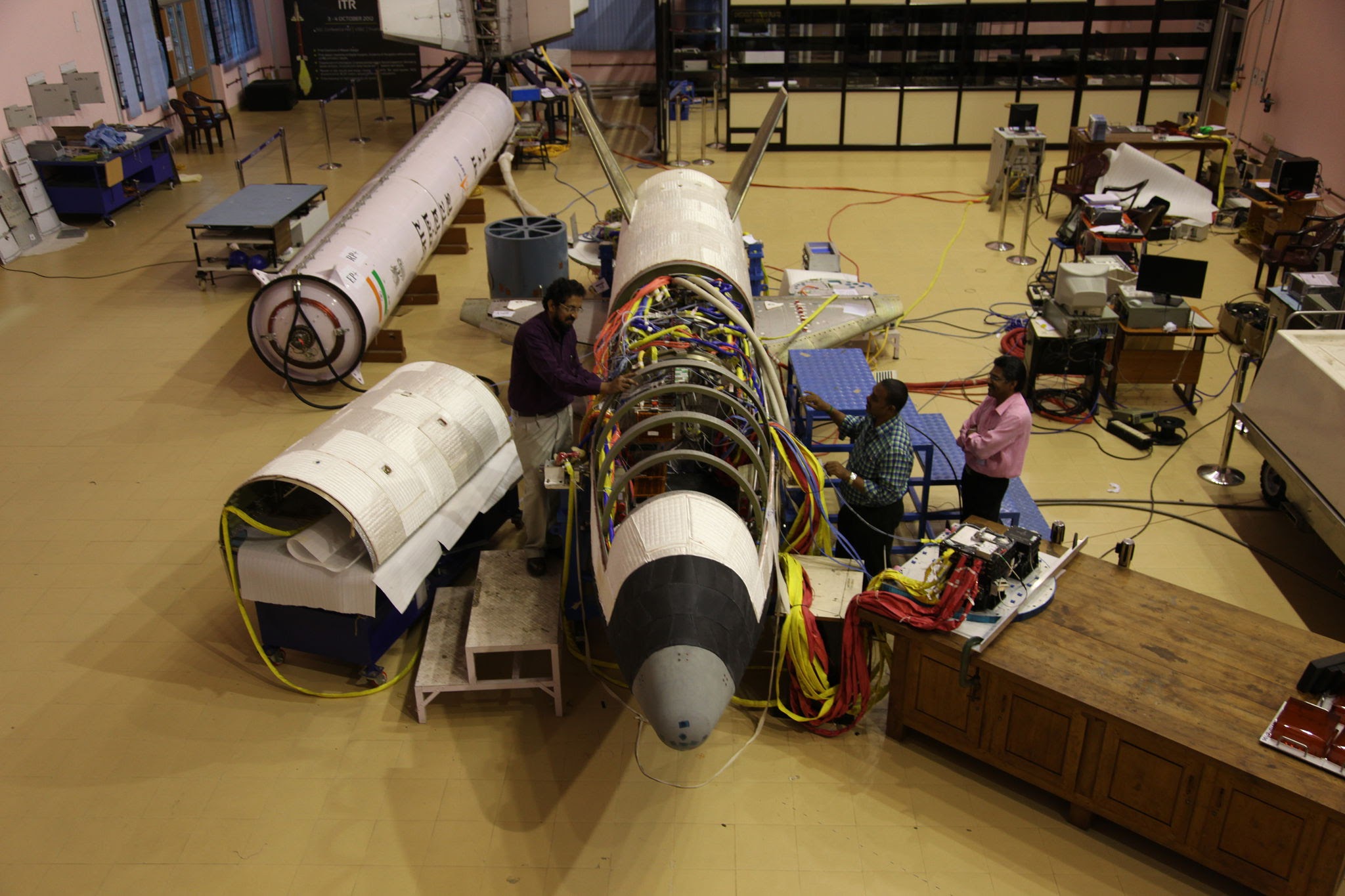
Pursuing aerospace engineering after 12th represents the flagship choice for students interested in designing rockets, space shuttles, and satellite propulsion systems. Aerospace engineers specialize in aerodynamics, orbital mechanics, structural materials, and thermal protection systems required for deep space missions. A four-year degree like B.Tech in Aerospace Engineering builds foundational expertise in flight mechanics, fluid dynamics, and avionics. Leading space organizations such as the Indian Space Research Organisation (ISRO) actively recruit talented aerospace engineering graduates for mission architecture, launch vehicle design, and satellite assembly.
2. Astrophysics and Observational Astronomy
If you are fascinated by black holes, neutron stars, exoplanets, and cosmic radiation, astrophysics research careers offer a fulfilling academic and professional route. Astrophysicists apply core principles of physics to interpret celestial events using data gathered by ground-based observatories and orbital space telescopes. Students typically start with a Bachelor of Science (B.Sc.) in Physics or an integrated B.Sc.-M.Sc. degree in Astronomy before completing advanced doctoral research. Prestigious research institutes like the Indian Institute of Astrophysics (IIA) conduct specialized research programs, providing state-of-the-art facilities for observational astronomers.

3. Avionics Engineering and Space Electronics
Every space launch vehicle and satellite relies on sophisticated onboard electronics, telemetry, radar tracking, and automated navigation systems. Avionics engineering for space missions focuses directly on developing radiation-hardened microprocessors, flight control algorithms, optical sensors, and communication transponders. A specialized B.Tech in Avionics or Electronics and Communication Engineering (ECE) equips students with microelectronics expertise, embedded system programming, and signal processing capabilities necessary for deep-space telemetry.
4. Satellite Technology and Remote Sensing
Satellites drive global telecommunications, weather forecasting, defense reconnaissance, disaster management, and environmental monitoring. Selecting satellite technology and remote sensing specialization allows graduates to build Earth observation systems, interpret Geographic Information Systems (GIS) spatial data, and design communication payloads. This sector bridges environmental monitoring with space engineering, creating high demand across government meteorological agencies, agricultural mapping firms, and private satellite constellations.
5. Planetary Geology and Cosmochemistry
Understanding the composition, soil chemistry, magnetic fields, and atmosphere of celestial bodies requires skilled planetary geology professionals. Planetary geologists analyze rocks, cratering patterns, and atmospheric samples returned by robotic landers and planetary rovers. Students with a strong foundation in Earth Sciences, Geology, or Applied Geophysics can transition into planetary science programs, serving as vital scientific advisors for interplanetary surface missions to the Moon, Mars, and asteroids.
6. Space Robotics and Artificial Intelligence
Autonomous rovers and robotic arms perform critical repairs, surface excavation, and sample gathering in hazardous extraterrestrial environments. Choosing space robotics engineering combines mechatronics, computer vision, kinematic modeling, and artificial intelligence. Completing a B.Tech degree in Robotics, Mechatronics, or Computer Science creates immediate entry points into developing autonomous landing systems, AI-driven navigation tools, and robotic manipulators used in space stations.
7. Astrobiology and Life Sciences in Space
Determining whether life exists beyond Earth and ensuring human survival during long-duration spaceflights fall under astrobiology career pathways. Astrobiologists study extremophiles on Earth, examine prebiotic organic compounds found in meteorites, and evaluate environmental conditions on ocean moons like Europa and Enceladus. A background in Biotechnology, Microbiology, or Biochemistry followed by specialized space biology research allows scientists to contribute directly to life-support system design, space medicine, and bio-regenerative habitats.
8. Space Law, Policy, and Commercial Space Management
The booming commercial space industry has expanded options beyond technical research to include space law and policy careers. As private space ventures increase satellite launches, orbital tourism, and plans for asteroid mining, legal experts are urgently required to navigate international treaties, orbital spectrum allocations, liability protocols, and space debris mitigation guidelines. Pursuing an undergraduate law degree (BA LLB) followed by a Master of Laws (LL.M.) in Space Law creates rewarding opportunities in international diplomacy, corporate legal counsel, and government regulatory bodies.
9. Top Entrance Exams for Space Science Careers After 12th
Securing admission into elite undergraduate programs requires qualifying through recognized national entrance tests. Here are the primary competitive exams for space aspirants:
| Entrance Exam | Conducting Body | Target Institutes / Career Paths |
| JEE Main & Advanced | NTA / IITs | Indian Institutes of Technology (IITs), Indian Institute of Space Science and Technology (IIST) |
| IAT (IISER Aptitude Test) | IISERs | Indian Institutes of Science Education and Research (Integrated B.Sc-M.Sc) |
| NEST | NISER & UM-DAE CEBS | National Institute of Science Education and Research (Basic Research Careers) |
| ISRO ICRB Exam | ISRO | Direct recruitment for engineering graduates into ISRO scientist grades |
10. Best Institutes and Universities for Space Science in India
Enrolling in premier educational institutions guarantees access to state-of-the-art laboratory infrastructure, specialized research funding, and direct industry placement pipelines. Top institutions include:
Indian Institute of Space Science and Technology (IIST), Thiruvananthapuram: Asia’s first dedicated space university, established by the Department of Space, offering specialized B.Tech programs in Aerospace Engineering and Avionics.
Indian Institutes of Technology (IITs): Renowned IIT campuses (IIT Bombay, IIT Kanpur, IIT Kharagpur, IIT Madras) offer premier undergraduate aerospace engineering and space research facilities.
Indian Institute of Science (IISc), Bangalore: A world-class center for scientific research offering advanced aerospace, atmospheric, and physical science courses.
Tata Institute of Fundamental Research (TIFR), Mumbai: Leading research institute providing specialized doctoral research pathways in high-energy physics and astronomy.
Inter-University Centre for Astronomy and Astrophysics (IUCAA), Pune: Premier institute dedicated to observational astronomy and theoretical astrophysics.
11. Essential Skills Needed for a Successful Space Career
Building a lucrative space industry career trajectory requires cultivating specialized technical capabilities alongside soft skills. Key competencies include:
Analytical Problem Solving: Ability to model complex atmospheric conditions, orbital mechanics, and thermal gradients.
Computer Programming and Simulation: Proficiency in Python, C++, MATLAB, and Computational Fluid Dynamics (CFD) software tools.
Interdisciplinary Collaboration: Working seamlessly across multi-disciplinary teams composed of propulsion engineers, software developers, and mission controllers.
Continuous Adaptability: Keeping pace with rapid breakthroughs in reusable launch vehicle technology, miniaturized CubeSats, and space-based AI.
12. Future Scope and Private Space Sector Growth
The global space economy is experiencing explosive growth due to the privatization of space travel and satellite internet constellations. The expanding private space exploration market offers dynamic job opportunities in commercial launch ventures, satellite manufacturing startups, space tourism companies, and space habitat architecture firms. Government policy initiatives encouraging public-private partnerships have created thousands of specialized roles in space tech innovation.

How useful was this post?
Click on a star to rate it!
Average rating 0 / 5. Vote count: 0
No votes so far! Be the first to rate this post.