Beyond the Report Card: The New Rules of Student Success in a Competitive Market
Walk into any high school or college campus in India today, and you will witness an unspoken panic. Students are scoring 95%, 98% on their board exams, yet they face a terrifying wall of rejection when entering the job market. The traditional formula—work hard, score well, get a high GPA, and secure a luxurious job—is officially broken.
We are currently experiencing severe degree inflation. When thousands of applicants hold the exact same first-class degree, that piece of paper stops being a competitive advantage. It becomes a basic entrance ticket.
The corporate world has silently rewritten the playbook. If you want to thrive in today’s hyper-competitive economy, you must look beyond the report card. The definition of academic excellence has transformed. Today, we are diving deep into the modern metrics of capability, exploring how to build a student portfolio, and mapping out the new rules of student success.
1. The Death of the 95% Illusion: Why Perfect Grades are No Longer Enough
For generations, the Indian education system operated on a simple rule: your worth was defined by your percentage. This mindset created an obsession with rote memorization.
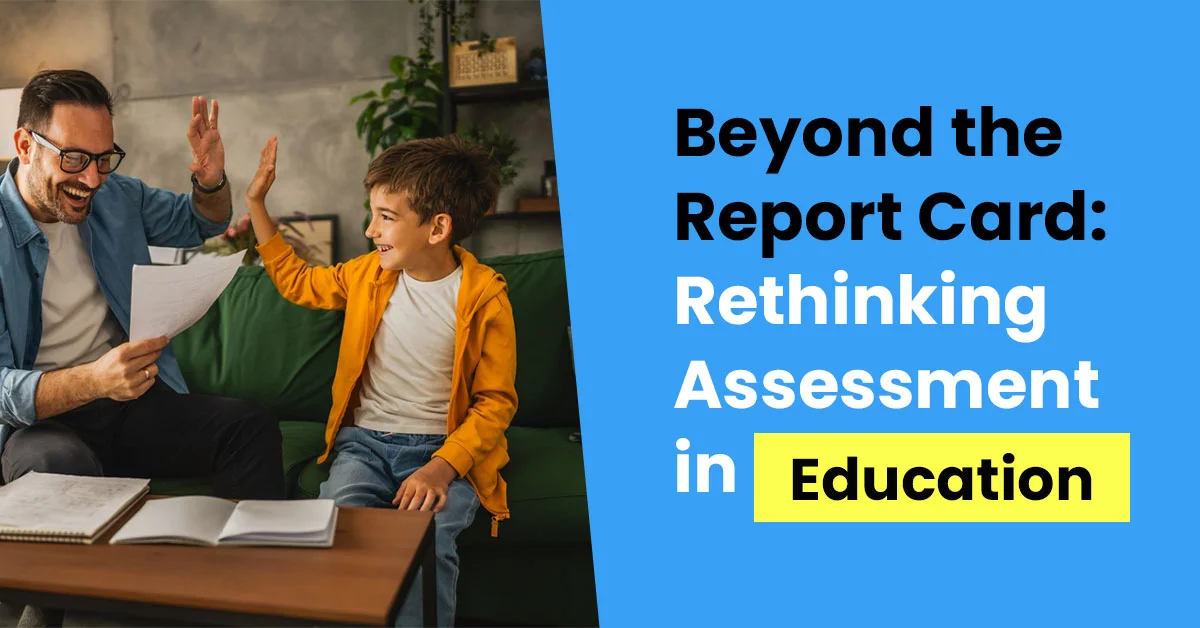
However, the modern corporate market has triggered a reality check. Recruiters are no longer impressed by a perfect GPA. Why? Because a high score only proves that a student is excellent at memorizing structured data under exam conditions. It does not prove that they can solve messy, real-world problems. When businesses look to hire freshers, they see a massive gap between academic knowledge and operational reality. To stand out, you must understand that the era of relying solely on your report card is officially over.
2. Shift to "Proof of Work": The Ultimate Currency of the Job Market
If grades are losing their power, what is replacing them? The answer is proof of work.
+-----------------------------------+-----------------------------------+
|       Traditional Credentials     |       Modern Proof of Work        |
+-----------------------------------+-----------------------------------+
| Tells a recruiter what you studied| Shows a recruiter what you built  |
| Validated by a university stamp   | Validated by a live, working link |
| Based on standardized testing     | Based on real-world output        |
| Focuses on compliance & memory    | Focuses on execution & results    |
+-----------------------------------+-----------------------------------+
Hiring managers no longer want to read a list of subjects you studied; they want to see what you have actually built. Proof of work means shifting from a passive resume to an active portfolio. If you are a coder, it means your GitHub repositories. If you are a marketer, it means a case study of an ad campaign you ran. If you are a designer, it is your Behance link. In a competitive market, a live link to a working project will beat a gold medal certificate every single day.
3. Rule #1: The Critical Importance of Internships for College Students
You cannot wait until graduation day to experience the corporate world. The first new rule of student success is prioritizing practical exposure. This highlights the absolute importance of internships for college students across all streams.
An internship serves as your ultimate sandbox. It is where theoretical textbook concepts clash with real corporate deadlines, budget constraints, and client demands. Whether it is a two-month summer stint at a local startup or a virtual internship with a global firm, this experience proves to employers that you understand professional etiquette, basic workplace tools, and corporate accountability. A candidate with a 7.5 CGPA and three solid internships is infinitely more employable than a 9.5 CGPA candidate who has never stepped inside an office.
4. Rule #2: Stacking Industry Certifications to Prove Functional Competence
University curriculums are notoriously slow to change. A typical computer science or business administration syllabus can take years to update, meaning that by the time you graduate, the tools you learned are already obsolete.
To bypass this institutional lag, smart students are actively stacking industry certifications. These micro-credentials prove that your knowledge is current and functional. Earning targeted certifications from industry leaders like Google, AWS, Microsoft, or HubSpot shows recruiters that you possess highly specialized, job-ready skills. It demonstrates a commitment to self-directed learning that a standard college degree simply cannot convey.
5. Rule #3: Embracing Campus Leadership Roles to Build Un-Automatable Soft Skills
As artificial intelligence automates routine technical tasks like basic coding and data entry, human-centric soft skills have become incredibly valuable. You cannot learn leadership, conflict resolution, or project management from a textbook. You have to practice them.
This is why taking up campus leadership roles is a game-changer for your profile. Managing a college cultural festival, leading the sports team, running the placement cell, or heading a student club forces you to handle real human challenges. When an interviewer asks, “Tell me about a time you handled a crisis,” the student leader can share a real story about managing a budget deficit or coordinating a team of fifty peers under pressure.
6. The Digital Lobby: Treating LinkedIn as Your Modern Report Card
Your physical report card sits inside a locker at home, visible only when you manually upload it. Your LinkedIn profile, however, is a 24/7 global digital lobby that is visible to every recruiter, founder, and hiring manager in the world.
   [ Optimize Profile Picture & Headline ]
                     │
                     ▼
   [ Document Your Daily Learning Journey ]
                     │
                     ▼
   [ Share Live Project Links & Certifications ]
                     │
                     ▼
   [ Network Directly with Industry Leaders ]
If you want to master how to stand out to corporate recruiters, you must treat LinkedIn as your living resume. Stop using it just to post formal certificate pictures. Instead, document your learning journey. Write about a problem you solved, share insights from a project you completed, or review an industry book you read. By building a clean digital presence, you attract career opportunities directly to your inbox instead of endlessly chasing them on crowded job boards.
7. Step-by-Step Guide: How to Build a Student Portfolio from Scratch
A common complaint among students is: “How do I show proof of work if no one hires me to do the work first?” You do not need anyone’s permission to build a portfolio. Here is the step-by-step framework on how to build a student portfolio using your own initiative:
Identify a Real-World Problem: Look at a local business, a favorite app, or a public dataset. Find something that is broken or inefficient.
Build a Conceptual Solution: If you are a designer, redesign a confusing app interface. If you are a writer, draft five high-conversion sample ad copies for a local brand. If you are an engineer, write a script that automates a tedious manual process.
Document the Process: Write a detailed case study explaining your thinking, the tools you used, the obstacles you faced, and how you overcame them.
Publish it Openly: Package this case study into a clean PDF, a Notion page, or a personal website.
This self-starting attitude proves to employers that you have drive, creativity, and the ability to execute ideas independently.
8. Skills vs. Degrees: Navigating the Great Educational Realignment
We are living through a massive global shift regarding the value of formal education. The conversation around skills vs degrees in the job market is no longer just an academic debate; it is actively shaping corporate hiring policies.
Global tech giants, forward-thinking startups, and major consulting groups are systematically removing strict college degree requirements from their entry-level roles. They have realized that a degree proves attendance, but a skill proves capability. While an elite degree can give you an initial advantage, your long-term career growth, salary increments, and professional survival rely entirely on your ability to continuously upskill and adapt.
9. Inside the Recruiter’s Lens: What Employers Look for Behind the GPA
To win the hiring game, you have to understand how recruiters think. When a hiring manager looks at a pile of hundreds of fresh graduate applications, they are looking for reasons to filter people out. A high GPA helps you survive the initial computerized scan, but during the interview stage, recruiters look for three core traits behind the numbers:
Learnability: Can you pick up new software tools and industry frameworks quickly?
Communication: Can you explain complex ideas clearly and collaborate smoothly with a team?
Problem-Solving Mindset: When faced with an unstructured challenge, do you freeze, or do you logically break it down and look for solutions?
By implementing practical holistic resume building tips, you ensure that your resume highlights these exact behavioral traits through your projects and leadership experiences.
10. Overcoming the Fear of Zero Experience: The Power of Micro-Internships
If a traditional six-month corporate internship feels out of reach due to your heavy college schedule, you should look into micro-internships and freelance projects.
Platforms like Internshala, Upwork, and various open-source communities offer bite-sized, project-based assignments. Taking on a two-week project to fix a website bug, write a newsletter, or organize a database gives you immediate, practical proof of work for freshers. These short, intense bursts of real work break the catch-22 cycle of needing experience to get experience, allowing you to add credible entries to your resume quickly.
11. Conclusion: Taking Radical Ownership of Your Professional Success
The ultimate takeaway is clear: the modern education system is built on an old model, but the modern job market operates on entirely new rules. Relying solely on your college to hand you a career based on your marks is a high-risk strategy.
True student success is no longer defined by what you can memorize for an exam paper on a Tuesday morning. It is defined by your adaptability, your practical portfolio, your real-world exposure, and your digital footprint. By stepping beyond the comfort zone of your report card, stacking valuable certifications, securing early internships, and building authentic proof of work, you take complete control of your future. Stop chasing a perfect score sheet—start building a career profile that the market cannot afford to ignore.

How useful was this post?
Click on a star to rate it!
Average rating 0 / 5. Vote count: 0
No votes so far! Be the first to rate this post.