
Is EdTech Replacing Traditional Classrooms? An Honest Look at the Future of Hybrid Learning
The educational landscape has experienced a dramatic evolution over the last several years. For generations, the physical school was an unyielding, standardized pillar of society. Students sat in rows of wooden desks, faced a physical blackboard, took handwritten notes, and followed a highly rigid, synchronized schedule. If a student was absent due to illness, they missed the lesson entirely; if they struggled to grasp a concept, they had to wait for remedial classes or seek external private tutoring.
As we navigate through 2026, the traditional classroom is no longer the sole gatekeeper of knowledge.
The rapid proliferation of high-speed internet, cloud-based Learning Management Systems (LMS), virtual reality simulations, and artificial intelligence has triggered a massive digital shift. Today, students can access world-class lectures, interactive study guides, and global peer communities from anywhere in the world on a personal screen. This technological surge has ignited an intense global debate among parents, educators, and policy makers: Is EdTech replacing traditional classrooms? This comprehensive analysis provides an honest, evidence-based look at the future of hybrid learning, contrasts the core realities of traditional classrooms vs online learning, highlights emerging educational technology trends 2026 is producing, and details why a balanced, integrated approach remains the ultimate roadmap for modern education.
1. Defining the Battleground: Traditional Classrooms vs Online Learning
To run an honest evaluation, we must first establish what these distinct learning models represent in the modern educational ecosystem.
Traditional Classrooms: This legacy model relies entirely on physical presence, synchronous face-to-face instruction, standardized schedules, and localized resources. The physical classroom acts as a structured social environment where a teacher manages the learning pace of a group of students in real time.
Online Learning: This digital-first model operates on virtual, asynchronous or synchronous cloud portals. It offers infinite geographic flexibility, self-paced progress tracking, and access to a massive library of digital-first resources, allowing students to learn without physical campus boundaries.
For years, these two models were treated as mutually exclusive rivals. If you chose online learning, you sacrificed the structured discipline and social integration of physical campuses; if you chose physical schools, you sacrificed the flexibility, personalized pacing, and technical tools of modern software. The true disruption of 2026 is that this binary division is disappearing, replaced by an integrated, multi-dimensional framework.
2. The Unstoppable Rise of EdTech: Educational Technology Trends in 2026
The rapid expansion of the digital education market is driven by several key technological trends that have matured significantly:
AI-Driven Personalization: Modern EdTech software no longer pushes every student through the exact same slides. Instead, algorithms analyze a student’s personal learning speed, error patterns, and response confidence, dynamically rewriting the curriculum path on the fly.
Immersive Virtual Reality (VR) Simulations: Rather than looking at flat diagrams in textbooks, biology students can explore three-dimensional virtual organ models, chemistry students can run virtual molecular reactions, and history students can explore interactive virtual recreations of ancient ruins.
Algorithmic Administrative Assistants: Automating routine, time-consuming administrative tasks—such as grading multiple-choice worksheets, tracking attendance, and scheduling exams—is saving teachers hours of double labor every week.
To explore extensive, global data tracking how these technological trends are reshaping skill demands, workplace competencies, and national educational policies worldwide, you can refer directly to the World Economic Forum’s Education and Skills Insights.
3. Is EdTech Replacing Traditional Classrooms? Debunking the Absolute Replacement Myth
When asking is EdTech replacing traditional classrooms, the short, honest answer is: No, EdTech is not replacing physical classrooms, but it is fundamentally rewriting how those classrooms operate.
The idea that schools will completely disappear, replaced by children sitting in isolated rooms staring at glowing screens, is a dangerous and highly unrealistic myth. Early attempts at purely virtual, 100% online learning demonstrated significant vulnerabilities. Without the physical guidance of teachers, younger students struggled to maintain daily academic focus, reported high rates of zoom-fatigue, and experienced a severe loss of critical social skills.
Therefore, educational technology is not an replacement tool. Its true value lies in acting as a powerful co-pilot. It is designed to offload repetitive lecture delivery, standardize administrative grading, and provide adaptive practice, allowing physical classrooms to shift from passive, dry lecture halls to active, highly collaborative workshop environments.
4. The Structural Blueprint: How the Hybrid Learning Model in Schools Works
The ultimate winner of this educational evolution is the hybrid learning model in schools, often referred to as blended learning. This framework combines the absolute best features of traditional face-to-face instruction with the flexibility and precision of digital tools.
In a modern hybrid learning model, the instructional lifecycle is divided into two distinct, highly synchronized phases:
The Virtual Conceptual Phase (Home Study): Students use digital portals, interactive short videos, and smart quizzes to learn basic theoretical concepts at their own pace. They can pause, rewind, and re-watch lectures until they achieve basic understanding.
The Physical Application Phase (Classroom Study): Instead of listening to a dry, one-way lecture, students attend the physical school to apply what they learned. They participate in group debates, hands-on science experiments, collaborative coding workshops, and one-on-one mentoring sessions with their teachers.
By moving standard explanation out of the classroom and onto the screen, schools can utilize their physical hours for high-value, active cognitive engagement.
5. Key Benefits of Hybrid Learning for Modern Students and Educators
Transitioning to a structured, blended approach delivers several profound advantages that legacy, purely physical systems cannot match:
Pacing Equity: Every student learns at a different speed. Hybrid tools meet the student at their current capability level, providing remedial scaffolding for struggling learners while keeping advanced students continuously challenged.
Continuous Income & Work Balance: For higher education students and adult learners, the benefits of hybrid learning are life-changing. It allows them to continue working full-time jobs, earning salaries, and managing family responsibilities while upgrading their academic credentials.
Geographical Independence: Students living in remote or rural locations can access the exact same high-quality, elite lectures and curriculum structures as those living in major metropolitan cities.
Alleviating Teacher Burnout: By automating repetitive grading and providing pre-packaged, interactive lesson materials, hybrid platforms free up valuable hours, allowing educators to focus on what they do best: mentoring and supporting students.
6. The Indispensable Human Element: Why Physical Teachers Remain the Soul of Learning
No matter how advanced an artificial intelligence algorithm or a virtual reality simulation becomes, a computer program can never replace a compassionate, highly skilled human teacher. Learning is not a cold, mechanical process of transferring data from a hard drive to a student’s brain; it is a deeply emotional, social, and psychological human experience.
A computer cannot read subtle facial expressions, detect emotional fatigue, or sense when a student is facing personal issues at home.
A skilled human teacher provides emotional validation, models moral character, inspires critical thinking, and holds students accountable to their potential. The physical school provides a vital micro-society where children learn to share, resolve conflicts, work in diverse teams, and build lifelong friendships. To understand how international policy makers are designing guidelines to protect child safety, data privacy, and ethical development in this digital era, you can consult the UNESCO Digital Learning Policy Frameworks.
7. Blended Learning Classrooms: Case Studies of Global Success
Around the world, progressive schools and universities are demonstrating that integrating technology into physical classrooms yields exceptional results.
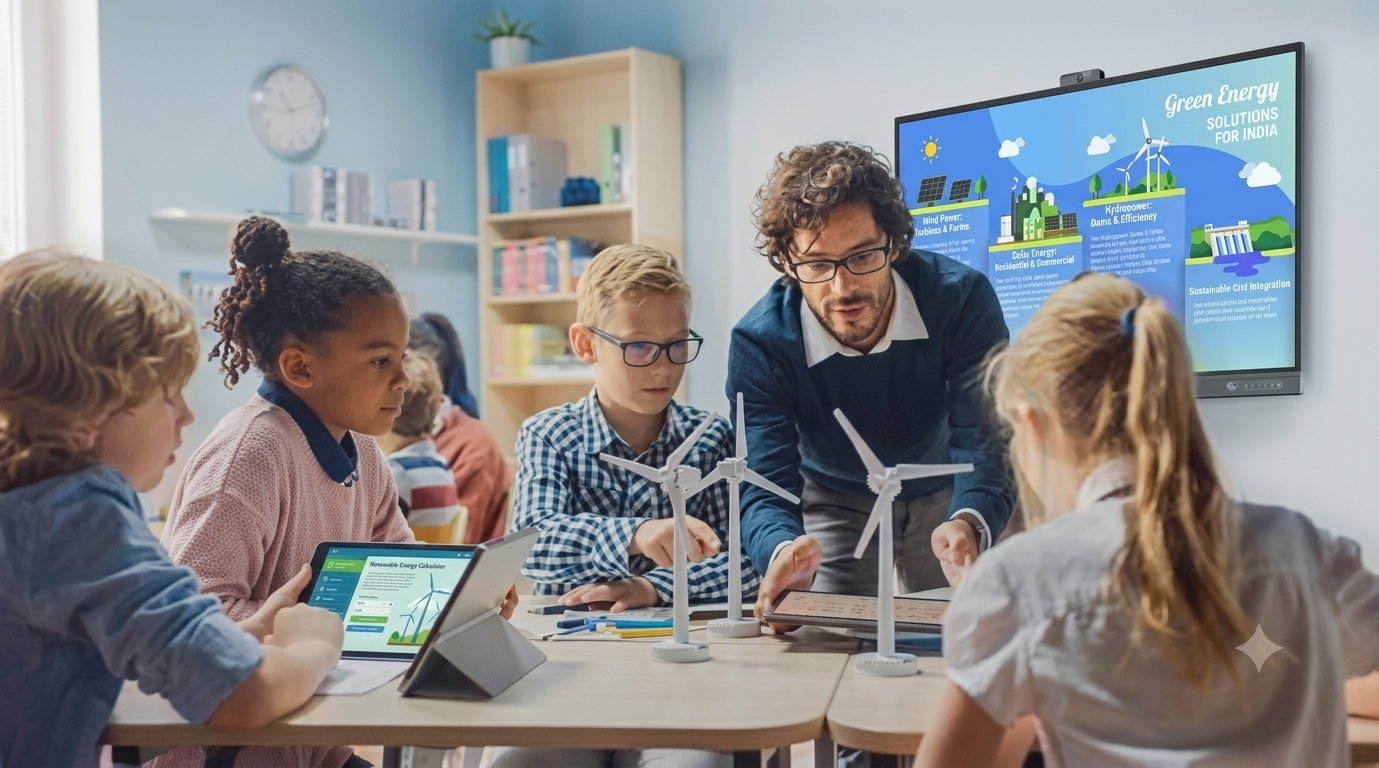
In many modern blended learning classrooms, the physical space has been completely redesigned. Legacy rows of forward-facing desks have been replaced with round, modular tables that encourage teamwork. The classroom walls are lined with digital whiteboard monitors where student groups can display their code, project designs, or research findings directly from their tablets.
These hybrid schools report significant increases in overall student engagement, higher retention rates in difficult STEM subjects, and a dramatic decrease in exam-day academic anxiety. By utilizing technology as a supportive asset rather than a distractive gadget, these schools are proving that a blended approach is the ultimate vehicle for student success. To explore extensive research, data, and policy parameters on how digital technologies influence global educational outcomes, you can refer to the OECD Education Directorate Portal.
8. Structural Pitfalls: The Risks of Over-Relying on Educational Technology
While the advantages of EdTech are clear, parents, educators, and psychologists raise significant warning signs regarding over-reliance on digital educational systems:
Metacognitive Laziness: If students use general-purpose generative AI tools to instantly generate answers to their homework questions, they bypass the critical, effortful struggle phase of learning. Without “desirable difficulty,” true long-term cognitive retention fails to occur.
The Digital Divide: If a hybrid school requires high-speed fiber internet and premium tablet hardware, underprivileged students who lack these resources face immediate academic inequality, deepening the educational gap.
The Distraction Trap: The same screen used to access educational software can easily lead to social media notifications, online gaming, and digital procrastination, fracturing a student’s attention span.
To read practical, classroom-tested strategies on how to avoid these technology traps, balance screen time, and construct highly motivating blended environments, you can consult the resources aggregated on Edutopia’s Blended Learning Resources.
9. Setting Up a Balanced Hybrid Ecosystem: A Checklist for Schools
To ensure that the impact of EdTech on education remains highly positive, schools and universities must implement a structured, balanced framework. Use this checklist to design a safe, effective hybrid ecosystem:
Pedagogy First, Technology Second: Never buy a software tool simply because it is trendy. Ensure the technology directly supports a specific, evidence-based learning science framework (such as active recall or spaced repetition).
Strict Data Privacy Compliance: Verify that all digital platforms used by minors comply with strict international child privacy laws (such as COPPA or GDPR) to ensure student data is fully encrypted and never sold to third-party advertisers.
Provide Offline Alternatives: Ensure that all essential learning resources, lecture backups, and homework projects can be accessed offline, protecting students who face connectivity issues at home.
Emphasize Digital Citizenship: Actively teach students how to navigate the internet safely, verify online sources critically, avoid digital plagiarism, and use AI tools ethically as supportive co-pilots rather than crutches.
10. Conclusion: Embracing the Best of Both Worlds
The definitive verdict for the future of education is clear: EdTech is not replacing traditional classrooms, nor is it a passing digital novelty. The future of learning is hybrid.
By shifting our focus away from the old, binary debate of physical vs. virtual learning and embracing the structured, integrated power of the hybrid model, we can unlock the unique potential of every student. We can utilize the infinite analytical precision of digital tools to build foundational academic skills, while relying on the empathetic, moral, and creative leadership of human teachers to shape the critical thinkers, innovators, and leaders of tomorrow.
Step away from outdated, rigid frameworks. Prioritize physical human interaction, leverage modern educational tools with clear boundaries, protect your child’s mental and physical wellness, and step confidently into an era where world-class, personalized mentorship is accessible to every child, everywhere.

How useful was this post?
Click on a star to rate it!
Average rating 0 / 5. Vote count: 0
No votes so far! Be the first to rate this post.