The Supreme Court’s New “Fundamental Right” for Schools
The legal landscape of education has shifted dramatically following a groundbreaking legal precedent. When we talk about school education, we usually think of heavy backpacks, math homework, and school lunches. But behind the scenes, a powerful legal framework governs how our children learn. The Supreme Court fundamental right schools ruling has completely transformed the way we view classroom learning and student welfare.
Historically, the right to education was just a broad promise. Today, it has evolved into a concrete, legally enforceable guarantee that touches everything from basic infrastructure to localized language rights.
If you want to understand how the Supreme Court fundamental right schools ruling impacts parents, teachers, and administrators, you are in the right place. Let’s break down this massive shift in human-friendly terms, moving past the confusing legal jargon to look at what this means on the ground.
- 1. What is the Supreme Court Fundamental Right Schools Ruling?
- 2. Breaking Down the Pillars of the Right to Education
- 3. The Infrastructure Revolution: Menstrual Hygiene as a Constitutional Imperative
- 4. Why Language Rights Matter in Primary Schooling
- 5. Raising the Bar for Teacher Qualifications
- 6. Eliminating Delays in Private School Admissions
- 7. The Golden Thread: Safety, Security, and Freedom from Fear
- 8. What the Future Holds for Students and Parents
- 9. Final Thoughts on a Historic Legal Evolution
1. What is the Supreme Court Fundamental Right Schools Ruling?
To truly understand this shift, we have to look at how courts are interpreting the constitution. In recent landmark decisions, the highest court has made it clear that the right to education is not just a formal concept written on a piece of paper. Instead, the Supreme Court fundamental right schools ruling establishes that a child’s right to learn is deeply intertwined with their personal dignity, equality, and basic safety.
For years, schools could get away with substandard facilities or rigid policies by claiming they lacked resources. Under the new Supreme Court fundamental right schools ruling, the judiciary is stepping in to say that if you do not provide an environment where a child can actually focus and feel secure, you are actively violating their constitutional rights. It is an expansive approach that shifts the focus from simply putting kids in a classroom to ensuring that those classrooms are actually fit for human development.
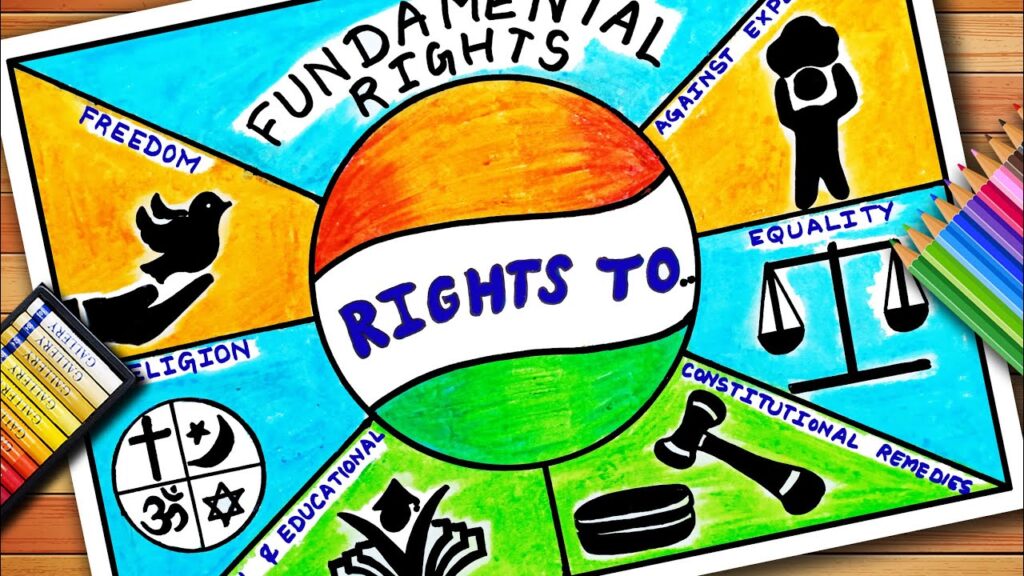
2. Breaking Down the Pillars of the Right to Education
When we discuss the Supreme Court fundamental right schools ruling, we are looking at a multi-layered legal shift. The court did not just issue a single order; it connected several fundamental constitutional rights to create a protective shield around students.
Substantive Equality: The court emphasized that true equality means removing structural barriers. If certain groups of students are missing school due to preventable gaps in infrastructure, they are being denied an equal opportunity to succeed.
Dignity and Privacy: Going to school shouldn’t mean leaving your human dignity at the door. The Supreme Court fundamental right schools ruling directly binds a student’s daily privacy and comfort to their right to life.
Effective Access: It is no longer enough to offer a free seat in a classroom. Access must be continuous, meaningful, and completely free of hidden physical or emotional costs. Stop Doing This if You Want to Succeed in Business
3. The Infrastructure Revolution: Menstrual Hygiene as a Constitutional Imperative
One of the most historic aspects of the Supreme Court fundamental right schools ruling is its focus on basic human dignity—specifically regarding young girls. In cases like Dr. Jaya Thakur v. Government of India, the apex court ruled that the lack of proper menstrual hygiene management (MHM) in schools directly violates Articles 14, 21, and 21A of the Constitution.
For decades, millions of girls have missed several days of school each month, or dropped out entirely, simply because their schools lacked basic sanitation. The Supreme Court fundamental right schools ruling shifts this from a mere “welfare issue” to a strict constitutional mandate. The court has ordered that schools across jurisdictions must provide functional, gender-segregated toilets with clean water, free standard-compliant sanitary products, and safe, hygienic disposal mechanisms.
4. Why Language Rights Matter in Primary Schooling
The Supreme Court fundamental right schools ruling has also profoundly impacted how children are taught. In a major decision, the court held that a child’s right to receive primary education in a language they actually understand—such as their mother tongue or a regional language—is an intrinsic part of the freedom of speech and expression.
Imagine being seven years old and forced to learn core concepts in a language you have never spoken at home. It acts as a massive barrier to effective learning. The Supreme Court fundamental right schools ruling notes that forcing an unfamiliar language on a young learner defeats the entire purpose of elementary education. As a result, state governments are now legally obligated to design curricula that respect regional languages, ensuring that the foundational years of learning are accessible and clear.
5. Raising the Bar for Teacher Qualifications
It is not just the physical space or the language that is changing; it is the quality of the instruction itself. The Supreme Court fundamental right schools ruling has sent a clear message to educational institutions: a quality education requires highly qualified educators.
The court has fiercely defended statutory requirements like the Teacher Eligibility Test (TET). When teacher associations and local governments argued that enforcing strict qualifications might threaten the job security of existing staff, the court stood firm. The bench noted that the Right to Education Act exists entirely for the benefit of the children, not the job security of adults. Under the Supreme Court fundamental right schools ruling, providing an uncertified or underqualified teacher to a child is a direct compromise of that child’s fundamental right to a high-quality education.
6. Eliminating Delays in Private School Admissions
A common hurdle for families from economically weaker sections (EWS) or disadvantaged groups has been the steep resistance from private, unaided institutions. Under Section 12 of the RTE Act, these neighborhood schools are required to reserve 25% of their entry-level seats for these children. Yet, bureaucratic delays and administrative roadblocks routinely left parents stranded.
The Supreme Court fundamental right schools ruling has reinforced that private neighborhood schools must admit these allotted students without any delay. The judiciary labeled this process a “national mission,” stating that courts must walk the extra mile to provide efficient, immediate relief to parents facing rejection. Denying or delaying these entries directly weakens the social transformation our society needs.
7. The Golden Thread: Safety, Security, and Freedom from Fear
You cannot expect a child to learn if they are terrified for their physical safety. The Supreme Court fundamental right schools ruling expands historical safety mandates—like strict fire safety compliance—to include modern structural hazards. Whether it is ensuring buildings are structurally sound, or enforcing strict administrative boundaries to prevent external safety threats, school safety is now a non-negotiable legal duty.
The takeaway from the Supreme Court fundamental right schools ruling is simple: the state’s duty to educate is not discharged by simply building four walls and a roof. Those walls must be safe, the environment must be secure, and the child must be entirely free from physical or emotional harm while exercising their right to learn.
8. What the Future Holds for Students and Parents
Moving forward, the Supreme Court fundamental right schools ruling puts immense power back into the hands of ordinary citizens. Parents are no longer at the mercy of poor school administration or indifferent local bodies.
If a school lacks basic toilets, if it refuses to admit a child under the legal quota, or if it fails to provide qualified teaching staff, it is no longer just an administrative failure—it is a constitutional violation. The Supreme Court fundamental right schools ruling opens the doors for direct judicial accountability, making it much easier for communities to demand the high-quality, dignified educational environment their children deserve.
9. Final Thoughts on a Historic Legal Evolution
The transformation we are witnessing today marks a beautiful evolution in constitutional law. Education is no longer being treated as a secondary goal or a charitable handout from the state.
Thanks to the Supreme Court fundamental right schools ruling, the classroom has officially become a sanctuary of rights. By weaving together infrastructure, language, safety, and teacher quality, the court is building a comprehensive framework that protects the mind, body, and dignity of every single student. It is a long-overdue victory for the future of our youth, ensuring that our schools are spaces where children don’t just survive, but truly thrive.

How useful was this post?
Click on a star to rate it!
Average rating 0 / 5. Vote count: 0
No votes so far! Be the first to rate this post.