
Top Private Space-Tech Startups in India and How They Are Changing the Space Race
For decades, the global narrative of space exploration was defined by a classic duopoly: the historic Cold War space race between the United States and the Soviet Union, succeeded by the modern billionaire-backed commercial engines of the West. However, as we progress through 2026, the gravitational axis of cosmic innovation is shifting rapidly. The most disruptive chapter of the modern space age is not being written in Silicon Valley, but across the vibrant tech corridors of Bengaluru, Chennai, and Hyderabad.
India’s space journey, once celebrated for its state-led triumphs like Chandrayaan-3 and Mars Orbiter Mission, has successfully transitioned into a dynamic, private-sector-led market. Today, private space-tech startups in India are no longer just domestic suppliers; they are leading the global space age by pioneering cutting-edge launch technologies, hyperspectral imaging systems, and in-orbit logistics.
Driven by progressive public reforms, a surge of domestic venture capital, and a massive cost-engineering advantage, India’s private space startups are establishing themselves as a global powerhouse. This comprehensive analysis evaluates the technical, policy, and economic forces propelling India’s deep-tech innovators to the absolute forefront of orbital technology.
1. The Policy Catalyst: Opening the Skies for the Indian Private Space Sector
The massive explosion of top space-tech startups India is producing did not happen in a vacuum. It was systematically triggered by a series of landmark regulatory overhauls. The turning point occurred with the release of the Indian Space Policy, which officially opened up rocket manufacturing, satellite deployment, and remote-sensing data commercialization to non-government entities. This was followed by the liberalization of the Foreign Direct Investment (FDI) policy, allowing up to 100% foreign investment in satellite manufacturing without bureaucratic delays.
To manage, authorize, and promote this massive influx of private enterprises, the government established the Indian National Space Promotion and Authorisation Centre (IN-SPACe), an autonomous, single-window regulatory agency under the Department of Space. IN-SPACe dismantled the public monopoly by acting as the ultimate bridge between state infrastructure and private entities.
To support this ecosystem, the government established a landmark Rs. 1,000 Crore Venture Capital Fund specifically for the space sector, alongside a Rs. 500 Crore Technology Adoption Fund. These funding channels have given private space-tech startups in India the financial runway to design, test, and deploy complex hardware systems without fear of immediate bankruptcy.
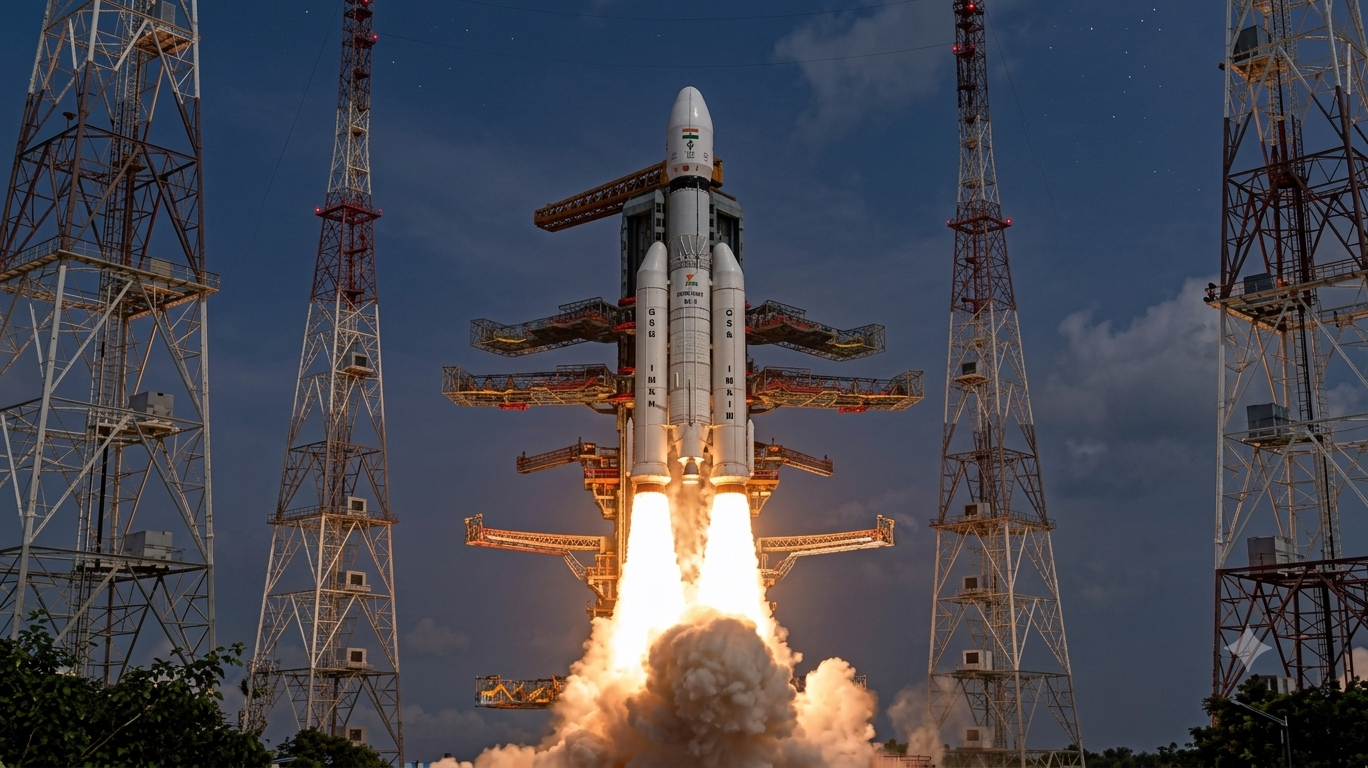
2. Why the Indian Private Space Sector is Disrupting the Global Space Race
The global space market has traditionally been notorious for its astronomical costs. Launching a satellite aboard legacy Western rockets required tens of millions of dollars. The Indian private space sector has completely disrupted this pricing structure, applying a frugal, highly productive engineering mindset to highly sophisticated systems.
According to economic reports on the Indian Brand Equity Foundation (IBEF) Spacetech Portal, the Indian space industry workforce is significantly more productive than the country’s wider industrial average, creating an exceptional economic multiplier effect. This high productivity index, driven by local technical talent, lower operational overheads, and vertical integration, allows Indian startups to deliver orbital services at a fraction of the cost of their Western competitors.
With cumulative equity funding for Indian space-tech startups scaling past $730 million, the country boasts over 400 registered space startups that are aggressively competing for commercial payload contracts worldwide.
3. Skyroot Aerospace: Scaling Up with India's First Space Unicorn
If there is a company that represents the commercial muscle of the Indian private space sector, it is Hyderabad-based Skyroot Aerospace. Founded by former ISRO scientists, Skyroot made global history by launching India’s first privately developed rocket (Vikram-S) into suborbital space, marking the beginning of the nation’s private launch industry.
Today, Skyroot has officially emerged as India’s first space-tech unicorn, securing massive funding rounds from top global investors like GIC and BlackRock. The company operates a state-of-the-art, fully integrated rocket manufacturing facility inaugurated by the Prime Minister.
Skyroot is preparing the highly anticipated orbital flight of its flagship rocket, Vikram-I, designed to provide highly customizable, on-demand, and cost-effective small satellite deployments. To check active launch schedules, technical specifications, and corporate press updates, you can consult the official Skyroot Aerospace Portal.
4. Agnikul Cosmos: Revolutionizing Rocket Engines with 3D Printing
While Skyroot focuses on scale and speed, Chennai-based Agnikul Cosmos is rewriting the rules of aerospace manufacturing. Operating out of the IIT Madras research park, Agnikul made global history by launching the world’s first suborbital rocket powered by a fully 3D-printed, single-piece semi-cryogenic engine (Agnibaan SOrTeD).
By utilizing advanced additive manufacturing to print their entire engine from an Inconel superalloy in one go, Agnikul eliminated over 1,000 individual joints, structural bolts, and weld points. This radical technical breakthrough shortens engine manufacturing timelines from months to just a few days.
Agnikul is in advanced stages of commercializing its Agnibaan launch vehicle, which is designed to carry micro- and nanosatellites to customized low-Earth orbits. The startup also operates its own private launch pad and mission control center inside ISRO’s Sriharikota spaceport, showcasing the seamless integration of public-private partnerships.
5. Pixxel: Capturing the Earth in High Definition with Hyperspectral Constellations
While launch companies build the transport lines, other startups are focusing heavily on capturing high-value data from orbit. Leading this segment is Bengaluru-based Pixxel.
Traditional satellites capture Earth imagery using multispectral cameras, which split light into broad bands. Pixxel has pioneered commercial hyperspectral imaging satellites. Their fully operating Firefly constellation captures hundreds of narrow, continuous wavelengths of light across the electromagnetic spectrum, providing hyper-detailed spectral data.
This molecular-level scanning allows their proprietary AI analytics platform, Aurora, to detect microscopic, chemical-level changes on Earth. This means farmers can detect crop diseases weeks before they are visible to the naked eye, mining corporations can locate underground mineral deposits without digging, and governments can monitor oil spills and methane leaks in real time. Pixxel now offers this high-resolution data to global entities, including NASA and national agricultural ministries.
6. Bellatrix Aerospace: Powering Next-Generation Satellite Propulsion Systems
A satellite in space is useless if it cannot maintain its orbit or navigate away from incoming space debris. This is the critical problem being solved by Bengaluru-based Bellatrix Aerospace.
Bellatrix specializes in designing and manufacturing advanced spacecraft propulsion systems. Rather than relying on traditional, highly toxic chemical propellants, Bellatrix is pioneering eco-friendly green propellants and high-efficiency electric thrusters, including Hall-effect thrusters and microwave plasma thrusters.
These next-generation engines are highly valued by global satellite manufacturers because they are incredibly lightweight, take up less space, and offer significantly longer operational lifetimes. By providing highly efficient maneuverability solutions, Bellatrix is ensuring that future satellite constellations remain sustainable and maneuverable throughout their orbital cycles.
7. Dhruva Space: Building End-to-End Space Infrastructure Solutions
For commercial enterprises looking to deploy payloads quickly, navigating rocket launches, satellite manufacturing, and ground communication can be overwhelmingly complex. Hyderabad’s Dhruva Space solves this by acting as a full-suite space-infrastructure provider.
Dhruva Space designs and manufactures scalable, modular satellite platforms weighing from 1 to 500 kilograms, suitable for commercial, defense, and scientific missions in low-Earth orbit. To support these platforms, the company designs, builds, and operates its own specialized LEO tracking ground stations.
Using proprietary control software, these ground stations provide simultaneous, uninterrupted access to multiple satellites. By offering “Space-as-a-Service”—combining satellite design, launch integration, and ground station operations into a single package—Dhruva Space is enabling non-space companies to utilize orbital assets seamlessly.
8. Digantara: Securing Orbit with Advanced Space Situational Awareness
With thousands of new satellites launching annually, low-Earth orbit is rapidly becoming crowded. Microscopic pieces of space debris, traveling at extreme velocities, pose a catastrophic threat to active spacecraft. Bengaluru’s Digantara is addressing this critical hazard by building a dedicated Space Situational Awareness (SSA) tracking network.
Digantara is developing a one-of-a-kind in-orbit device to track debris and catalog objects in space. Their specialized Space Domain Awareness satellites actively monitor micro-debris and dormant spacecraft directly from orbit, helping global satellite operators avoid collisions.
Backed by significant venture capital funding and partnerships with global defense organizations, Digantara is establishing itself as the premier traffic management platform for the orbital highway, ensuring that commercial space exploration remains safe and sustainable.
9. InspeCity: The In-Orbit Mechanics Reshaping Space Sustainability
If a multi-million dollar satellite runs out of fuel or suffers a minor electronic glitch, it traditionally becomes a useless piece of space junk. Mumbai-based InspeCity is changing this throwaway paradigm by acting as the global “space mechanics.”
InspeCity is developing advanced In-Orbit Servicing and Manufacturing (ISAM) technologies. Utilizing autonomous robotic arms and precise proximity maneuvering systems, their repair spacecraft are designed to dock with active satellites in LEO to:
Refuel Thrusters: Extending the operational life of highly valuable communication and imaging networks.
Repair Components: Replacing faulty hardware or performing critical system upgrades directly in orbit.
Active Deorbiting: Safely moving dead satellites out of busy lanes to prevent collision hazards.
This innovative approach is laying the foundation for a sustainable, circular space economy where orbital assets are maintained, upgraded, and recycled rather than abandoned.
10. Public-Private Partnership (PPP): The Earth Observation Constellation Milestone
The ultimate proof of India’s private space success is the transition from a supplier-based model to active, strategic collaboration with the government.
A historic milestone was reached when IN-SPACe awarded a landmark Public-Private Partnership (PPP) project to a consortium of leading private space-tech startups in India, led by Pixxel. The consortium was tasked with designing, building, and operating India’s first commercial Earth observation satellite constellation consisting of 12 multi-sensor satellites.
This landmark project is being privately funded by the consortium with zero direct financial support from the state, demonstrating the immense confidence, financial viability, and structural maturity achieved by private operators in the Indian space sector. To explore similar space development initiatives, government-backed capacity programs, and technology transfer notifications, you can monitor the Department of Space Indian National Portal which registers these major policy advancements.
11. High-Value Career Opportunities: Navigating Space Tech Careers in India
The rapid expansion of the private sector has triggered an unprecedented demand for highly skilled professionals, completely transforming space tech careers in India.
Historically, working in space research meant preparing exclusively for government exams to enter ISRO. Today, private startups are recruiting heavily across multiple engineering and scientific disciplines. Recruiters look for hands-on skills in computer-aided design (CAD) software, low-level programming (like C++ and Python), and systems engineering.
For young professionals, working at these agile startups offers a dynamic, fast-paced work environment with flat hierarchies, high creative freedom, and the opportunity to work on cutting-edge hardware without bureaucratic delays. To search for active job postings, skill training guidelines, and comprehensive vocational frameworks, candidates can explore the National Career Service (NCS) Portal of India.
12. Conclusion: India’s Private Space Startups Launching into the Future
The definitive verdict is clear: India’s private space-tech startups are no longer just participating in the global space race; they are actively rewriting its rules.
By pioneering highly disruptive technologies—ranging from 3D-printed cryogenic engines and hyperspectral earth observation constellations to autonomous in-orbit servicing robots and space debris tracking networks—these agile enterprises have dismantled the high financial barriers to space. Backed by the supportive regulatory channels of IN-SPACe, dedicated venture capital funds, and robust public-private collaborations, India’s private space sector has transformed from a costly government initiative into a highly productive commercial powerhouse.
As we look toward the future of cosmic exploration, one truth remains clear: the Indian private space sector has successfully launched its scientific odyssey, permanently positioning the nation as an independent, secure, and highly competitive global space superpower.

How useful was this post?
Click on a star to rate it!
Average rating 0 / 5. Vote count: 0
No votes so far! Be the first to rate this post.