AI and the Future of Work: Winners, Losers, and Opportunities
Open any corporate newsletter, tech blog, or mainstream business journal today, and you will encounter an underlying sense of anxiety. We are currently living through the most profound macroeconomic shift since the dawn of the internet. Artificial Intelligence (AI) has advanced from a niche technological novelty into a core infrastructure driving global commerce.
This dramatic shift has triggered a polarized debate. On one side, tech optimists promise a frictionless paradise of endless productivity. On the other side, alarming headlines predict widespread job displacement and automated unemployment.
The economic reality is far more nuanced. AI is not going to eliminate the concept of human labor; rather, it is radically reorganizing it. As the automated landscape settles, it is creating a brand-new corporate hierarchy. This deep dive moves past the surface panic to look at AI and the future of work, explicitly categorizing the definitive winners, the vulnerable losers, and the massive emerging opportunities in this automated era.
1. Beyond the Sci-Fi Panic: The Real Economics of Automation
To understand the modern labor market, we must first demystify what generative AI actually does. AI is not an independent conscious entity coming to lock office doors. At its core, it is an incredibly powerful prediction engine optimized to parse data, recognize patterns, and generate outputs at superhuman speeds.
The fundamental economic rule of the current automation wave is simple: AI does not replace entire jobs; it replaces specific, repetitive tasks. When an algorithm automates a task, it changes the time allocation of the professional holding that job. The anxiety sweeping through offices stems from a lack of clarity about which tasks are being automated and how human professionals must adapt to keep their roles viable.
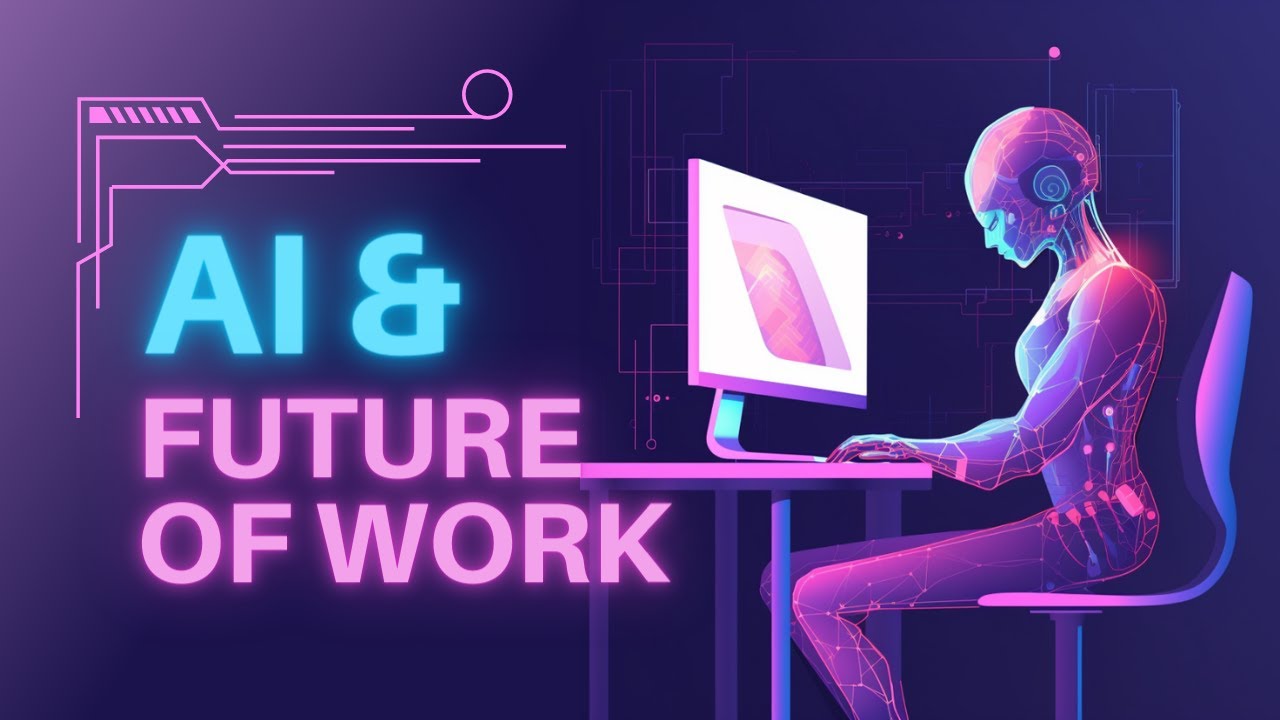
2. The Winners: Who Thrives in the Age of the AI Co-Pilot?
The definitive winners of this new economic era are not necessarily computer programmers or data scientists. Instead, the professionals thriving most are those who view AI as an intern, a co-pilot, or a force-multiplier.
Instead of fighting the technology, these forward-thinking workers use specialized prompts to automate their low-level administrative tasks. A legal professional might use a secure linguistic model to instantly scan 500 pages of case law for specific precedents. A marketer might use AI to generate 20 variations of an ad copy outline in seconds. By letting automation handle the mechanical grunt work, these professionals can double their output, focus on high-level strategic advisory roles, and dramatically scale their professional value.
3. The Rise of the Creative Strategist and Curator
In an era where text, code, images, and video can be generated instantly by anyone with a prompt, the market value of raw production is declining. When content is cheap and infinite, the premium shifts entirely to curation, taste, and high-level architecture.
The winners are the “Creative Strategists.” These are individuals who understand how to connect disconnected ideas, enforce strict quality control over AI-generated outputs, and inject unique human perspective into projects. They don’t spend their day writing standard code or drafting basic press releases; they spend their day designing the overarching strategy, ensuring ethical compliance, and validating the accuracy of the automated systems.
4. The Losers: The Vulnerability of Rote Cognitive Labor
To speak honestly and empathetically about the modern job market, we must acknowledge that structural task-displacement is actively occurring. The segments facing the most severe pressure are those categorized as rote cognitive labor—jobs where the day-to-day work consists entirely of following predictable formulas, templates, and repetitive digital processes.
Entry-level data entry, basic transcription, standard telemarketing, and formulaic customer support routing are experiencing massive consolidation. Similarly, basic copywriters who produce generic SEO content filler, or junior programmers whose sole responsibility is writing standard boilerplate code, are seeing their market demand decline. The uncomfortable truth is that if a job description can be entirely summarized by a static set of rules and instructions, an algorithm can likely perform it faster and cheaper.
5. The Threat to Outdated Operational Workflows
The real “losers” in the age of AI are not the individual workers, but the rigid, slow-moving corporate workflows that refuse to modernize. Organizations that continue to evaluate employee performance based on hours spent sitting at a desk doing manual, repetitive data sorting—rather than focusing on creative problem-solving and net impact—are facing structural obsolescence.
When a company forces its staff to perform tasks manually that an AI tool could complete in seconds, it wastes precious human talent and risks falling behind more agile competitors. Employees stuck inside these outdated operational environments are at high risk of sudden displacement when the organization is eventually forced to downsize or restructure.
6. The Human Moat: Capabilities Beyond the Reach of Algorithms
For professionals looking to protect their careers, the most effective strategy is to build a “human moat.” This means intentionally developing and showcasing human capabilities that an AI model cannot replicate due to its lack of consciousness and real-world physical presence.
| Human Capability Moat | Why AI Cannot Replicate It | Real-World Application |
| High Emotional Intelligence (EQ) | AI can mimic language, but it cannot authentically experience empathy, build deep trust, or manage intense human crises. | Leadership, client relationship management, complex stakeholder negotiations. |
| Cross-Disciplinary Innovation | AI models train on historical data within specific silos; they struggle to make random, brilliant creative leaps across entirely unrelated fields. | Entrepreneurship, advanced research, visionary product design. |
| Dynamic Physical Adaptability | Robotics remain incredibly expensive and struggle to navigate unpredictable, changing physical environments. | Skilled physical trades (plumbing, electrical engineering, specialized medical diagnostics). |
7. The Opportunities: Emerging Professional Landscapes
Every major technological revolution destroys old workflows, but it invariably creates entirely new industries that were previously unimaginable. The current AI wave is creating a surge in demand for specialized, high-paying career paths:
AI Ethics, Governance, and Compliance Officers: As governments implement strict regulations on data privacy, algorithms require human oversight to prevent bias, monitor transparency, and ensure legal compliance.
Prompt Architects and AI Integration Specialists: Businesses require experts who can audit their traditional, legacy infrastructure and seamlessly weave AI productivity tools into their day-to-day operations.
Data Curation and Annotation Engineers: High-quality AI models require pristine, human-verified data to train on. Professionals who can curate, verify, and ethically clean these massive datasets are in incredibly high demand.
8. Navigating the Mismatch: The Urgent Need for Agile Upskilling
The primary challenge of the current job market is not a total lack of employment opportunities, but a stark skills mismatch. The old jobs are shifting faster than our workforce can adapt. This leaves thousands of professionals feeling stranded, while tech organizations simultaneously struggle to fill critical, high-paying roles.
To close this gap, individuals must transition to a mindset of continuous, agile upskilling. Waiting for a traditional university or an employer to provide a formal training program is no longer a viable option. Professionals must independently take control of their learning journeys, utilizing digital platforms to master AI collaboration tools, project management frameworks, and strategic data analysis.
9. Moving from a "Coaching" Mindset to Holistic Education
This technological shift has profound implications for how we prepare the next generation. For decades, competitive educational setups have operated like high-stress coaching factories. They prioritize rote memorization, speed tricks, and passing standardized testing metrics above all else.
This approach is highly dangerous in an AI-dominated economy. If we train our youth to act like automated computers—focusing entirely on memorizing facts and following rigid formulas—we are intentionally preparing them to be replaced by actual computers. We must move toward a philosophy that prioritizes school, not coaching. True education must focus on building a resilient growth mindset, critical thinking, ethical reasoning, and collaboration—the exact human traits that ensure long-term career survival.
10. The Longevity Blueprint: How to Future-Proof Your Career
Surviving and thriving in the future of work requires a proactive, strategic plan. You can build a future-proof career by focusing on three clear actions:
Adopt the Co-Pilot Workflow Immediately: Stop viewing AI tools as a threat or a cheating mechanism. Actively integrate tools like secure coding assistants, writing frameworks, and data analytics tools into your current job to make yourself indispensable.
Double Down on Your Unique Human Strengths: Cultivate your negotiation skills, practice active empathy with your clients, and take on complex, unstructured problems that require deep human leadership.
Build a Public Personal Brand: In an era of infinite automated content, human authenticity is highly valued. Document your learning journey publicly, share your unique insights on professional networks like LinkedIn, and showcase your human perspective.
The Path Forward: Embracing the Augmented Era
The future of work is not a dystopian battle of Human vs. Machine. The true reality of the modern job market is far more pragmatic: AI is not going to take your job. However, a professional who knows how to collaborate with AI will eventually replace a professional who does not.
By recognizing where the system is shifting, letting go of outdated workflows, and stepping out of the rote-memorization trap, we can look at this technological wave not as a threat, but as an incredible opportunity. We can step away from mechanical grunt work and reclaim our true human potential—turning work into a creative, strategic, and deeply fulfilling endeavor.
References & Professional Resources
To discover more about the structural research, economic data, and ethical policy frameworks governing the evolution of automation in the global workforce, explore these references:
For a detailed macroeconomic look at global job displacement and talent reallocation trends, read the World Economic Forum (WEF) Future of Jobs Report.
To explore international guidelines regarding ethical AI development and employee protections, view the UNESCO Framework on the Ethics of Artificial Intelligence.

How useful was this post?
Click on a star to rate it!
Average rating 0 / 5. Vote count: 0
No votes so far! Be the first to rate this post.