
In education: Why Emotional Intelligence Must Become a Core Academic Skill?
For decades, the standard blueprint for academic success has been remarkably rigid: score top marks in your board examinations, secure a premier rank in hyper-competitive entrance tests, and gain entry into an elite institution. From early childhood, young minds are conditioned to believe that their cognitive capacity, measured strictly via Intelligence Quotient (IQ) and rote-learning memorization, is the single determinant of their future life trajectory.
However, a silent crisis is sweeping through the modern education landscape. We are producing a generation that is text-book smart but emotionally vulnerable. When confronted with real-world setbacks—such as an unexpected academic failure, a workplace rejection, or a difficult relationship transition—many young individuals find themselves completely unequipped to cope.
It is time for an urgent pedagogical transformation. We must recognize why teaching emotional intelligence as a core academic skill is no longer an experimental luxury, but an absolute structural necessity for our youth.
1. The Glaring Flaw in Modern Education’s Obsession with IQ
The traditional classroom operates predominantly on a single metric: the glorification of memory and logical processing. Students who can memorize vast quantities of data and replicate it perfectly under a three-hour exam environment are crowned as geniuses. This hyper-focus on intellectual intelligence (IQ) completely sidelines social-emotional development.
The structural flaw in this model is that standard IQ tests and exam scores measure what a person knows, but they fail entirely to measure how a person handles pressure. A student can possess a flawless understanding of advanced physics or complex mathematics, yet experience complete emotional paralysis when faced with a minor setback. By prioritizing the marksheet over the mind, the system builds an unstable foundation where intellectual capacity is unsupported by emotional resilience.
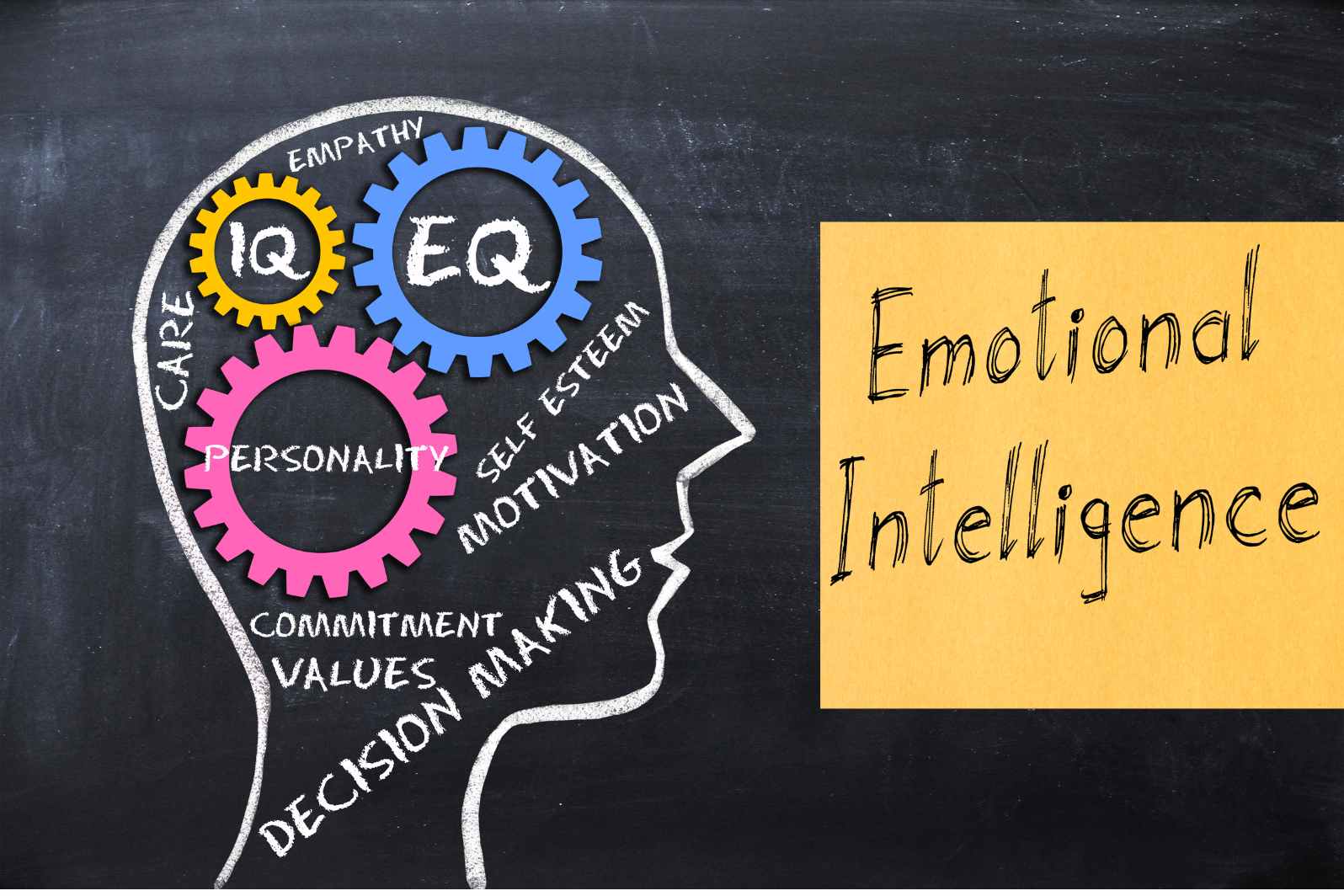
2. What Exactly is Emotional Intelligence (EQ)?
Before we can integrate it into the school curriculum, we must demystify what emotional intelligence (EQ) actually means. Popularized by psychologists, emotional intelligence is the capability to recognize, understand, manage, and reason with our own emotions while constructively navigating the emotions of those around us.
Unlike IQ, which remains relatively stable throughout an individual’s life, EQ is a dynamic life skill that can be systematically taught, practiced, and refined. When we cultivate a child’s emotional literacy, we aren’t just teaching them to be “nice”; we are actively building the neurological pathways required for high-level decision-making, sustained focus, and long-term behavioral adaptability.
3. The Five Core Pillars of EQ and Their Power in Student Life
To understand how emotional literacy transforms a classroom, we must break down its five foundational pillars through the lens of a student’s daily struggles:
Self-Awareness: The ability to identify one’s emotional state. A self-aware student can say, “I am not incapable; I am just experiencing acute test anxiety right now.” This self-reflection stops a temporary feeling from becoming a permanent identity crisis.
Self-Regulation: The capacity to control impulsive reactions. This prevents a student from experiencing cognitive burnout or engaging in self-destructive behaviors when an exam score drops.
Internal Motivation: Pursuing learning for the joy of curiosity and personal growth, rather than being driven entirely by external rewards like parental praise or peer rankings.
Empathy: Understanding the emotional perspectives of classmates, which directly reduces instances of campus alienation and cyberbullying.
Social Skills: Navigating complex interpersonal relationships, managing collaborative team projects, and resolving peer conflicts constructively.
4. The Antidote to Performance-Contingent Self-Worth
A primary driver of the mental health emergency among modern youth is a psychological vulnerability known as Performance-Contingent Self-Worth. In competitive societies, academic scores are deeply intertwined with family honor, parental pride, and social respect.
When a youth’s entire sense of being a “good child” or a “successful individual” is contingent on a marksheet, an academic failure feels like an absolute existential rejection. Teaching emotional intelligence serves as a psychological shield. It decouples an individual’s fundamental human worth from their academic performance. It teaches students a vital truth: An exam score is an evaluation of your current preparation level, not a final verdict on your human value.
5. Moving Toward a Philosophy of "School, Not Coaching"
To successfully cultivate emotional literacy, we must fundamentally alter where our children spend their formative years. The rampant rise of dummy schools and transactional test-preparation factories has severely disrupted youth development. We must actively champion an ecosystem that prioritizes school, not coaching.
Coaching institutions are structural assembly lines designed for a single purpose: maximizing exam speed and memorization tricks. They operate in a psychological vacuum where there is zero room for character building, arts, sports, or emotional counseling. A true school ecosystem, conversely, is built to nurture the whole child, providing the social support networks and safe peer environments necessary to practice emotional regulation and build lifelong resilience
6. How EQ Minimizes Academic Anxiety and Exam-Night Panic
Every year, thousands of capable students freeze during high-stakes examinations. This isn’t due to a lack of subject knowledge; it is a physiological panic response. When stress levels spike, the amygdala overrides the rational prefrontal cortex, causing the mind to go completely blank.
Students trained in emotional self-regulation possess the direct tools to handle these acute stress triggers. By utilizing mindfulness practices, deep diaphragmatic breathing, and cognitive reframing, they can actively down-regulate their nervous system’s fight-or-flight response. This emotional mastery ensures that their hard work translates accurately onto the answer sheet.
7. The Corporate Shift: Why Global Employers Prioritize EQ Over IQ
The modern workplace is changing rapidly. In an era dominated by automated tools, cloud architecture, and artificial intelligence, technical knowledge is becoming increasingly commoditized. Top-tier global organizations no longer hire individuals based solely on their university degrees or GPA rankings.
Corporate data consistently reveals that long-term career velocity is determined by emotional capability. Leaders must navigate cross-cultural remote teams, manage high-stakes corporate stress, practice active empathy with clients, and bounce back from project failures. By failing to teach EQ as a core academic skill, the education system risks producing graduates who are technically competent but structurally unequipped for the collaborative dynamics of the modern global economy.
8. De-escalating Peer Comparison and Toxic Social Media Culture
The digital classroom has expanded the boundaries of peer competition. Through digital study groups and social media platforms, students are exposed to a 24/7 stream of their classmates’ idealized achievements, internship letters, and study routines. This constant exposure creates deep-seated academic anxiety and a persistent sense of inadequacy.
An education infused with emotional intelligence equips youth with digital mindfulness. It helps them recognize that comparing their internal struggles to another person’s curated public highlight reel is a recipe for psychological distress. Cultivating empathy and internal motivation shifts peer dynamics away from cutthroat sabotage and toward collaborative learning.
9. Structural Support: Aligning Policy Frameworks for Change
The implementation of emotional literacy must be aligned with institutional goals. Modern progressive education directives, such as the frameworks established by global educational bodies, explicitly call for a complete shift away from rote learning and toward holistic, multidisciplinary education models.
These frameworks mandate the integration of Social-Emotional Learning (SEL) and life skills directly into the core curriculum from the foundational stage onward. By formalizing EQ as an evaluated academic track, policymakers provide school administrators with the clear authority to allocate hours for mindfulness, active counseling, mental health literacy, and soft-skill development alongside core sciences and humanities.
10. Breaking the Taboo Around Student Mental Health Support
For generations, seeking emotional guidance or admitting to feelings of overwhelming stress was met with social stigma. Vulnerable students often suffered in complete isolation, fearing that seeking psychological support would label them as “unfit” or “weak.”
Integrating emotional intelligence into daily lesson plans systematically normalizes conversations around mental well-being. When teachers openly discuss emotional health, anxiety management, and coping mechanisms in the classroom, the stigma dissolves. This changes the campus environment, turning it into a space where utilizing institutional resources, such as national healthcare initiatives or local counseling centers, is seen as an act of proactive self-advocacy.
11. Implementing Emotional Intelligence in the Classroom
Transitioning EQ from an abstract concept into a practical classroom skill requires moving past empty rhetoric and enforcing structured, daily habits. Educational institutions can build emotional resilience through actionable, scalable practices:
Daily Emotional Checks: Dedicate the first five minutes of the morning to a brief, non-graded emotional inventory where students learn to accurately label their stress levels.
Mandatory Conflict Resolution Workshops: Replace passive instruction with interactive, real-world case studies focused on empathy, active listening, and constructive peer mediation.
Integrate SEL into Teacher Training: Supercharge pedagogical programs, ensuring that educators are trained to recognize the early signs of student burnout, trauma, and identity anxiety.
De-emphasize Public Ranking Boards: Follow progressive guidelines that advise against the public shaming or batch-segregation of youth based entirely on test percentiles, preventing the compounding of academic trauma.
The Path Forward: Redefining True Academic Excellence
The ultimate purpose of a robust education system is not to build automated exam-taking machines, but to nurture complete, self-actualized human beings who can lead society with clarity, empathy, and courage. A high GPA combined with emotional vulnerability is an unsustainable foundation for life.
By boldly looking beyond the marksheet and integrating emotional intelligence as an unshakeable core academic skill, we can help our youth step out of the performance trap. We will empower the next generation to face the complexities of a highly digitized, unpredictable world with an unshakeable mind, a resilient heart, and a profound sense of intrinsic self-worth.
References & Resources
For further reading on the structural integration of mental health and social-emotional learning frameworks in modern academic design, explore these resources:
For foundational concepts on emotional literacy, view the Collaborative for Academic, Social, and Emotional Learning (CASEL) Framework.
To review national guidelines on prioritizing student well-being over high-stress metrics, consult the UGC Guidelines on Student Mental Health and Well-being.
For immediate, anonymous psychological assistance and counseling services, utilize the national health infrastructure via the Tele-MANAS Initiative.

How useful was this post?
Click on a star to rate it!
Average rating 0 / 5. Vote count: 0
No votes so far! Be the first to rate this post.