Best ISRO's Educational Programmes After 12th?
Entering the realm of space exploration is a dream shared by thousands of young minds across India. The Indian Space Research Organisation (ISRO) stands as a global beacon of innovation, building state-of-the-art launch vehicles, satellite communication platforms, and deep-space planetary probes. However, high school students often ask: What are the best ISRO’s educational programmes after 12th to build a direct path into space science and technology?
While ISRO rarely hires scientists directly after Class 12 high school exams, it nurtures talent through direct undergraduate institutions, specialized academic collaborations, distance learning initiatives, and student research schemes. Pursuing a career in space technology requires picking the right degree track right after high school. In this comprehensive guide, we unpack every major ISRO educational programme, university pathway, entry scheme, and academic course available to Class 12 graduates.
1. Why Choose ISRO Educational Programmes After Class 12?
Building a space science career requires direct exposure to advanced satellite systems, orbital dynamics, and remote sensing applications. Joining an ISRO learning initiative gives high school graduates a distinct advantage in higher education.
By enrolling in these initiatives, students gain access to official course certifications, interactive webinars with distinguished space scientists, and foundational knowledge of cutting-edge aerospace engineering. These learning opportunities bridge the gap between school curriculum and real-world space technology applications.
2. Indian Institute of Space Science and Technology (IIST) B.Tech Degrees
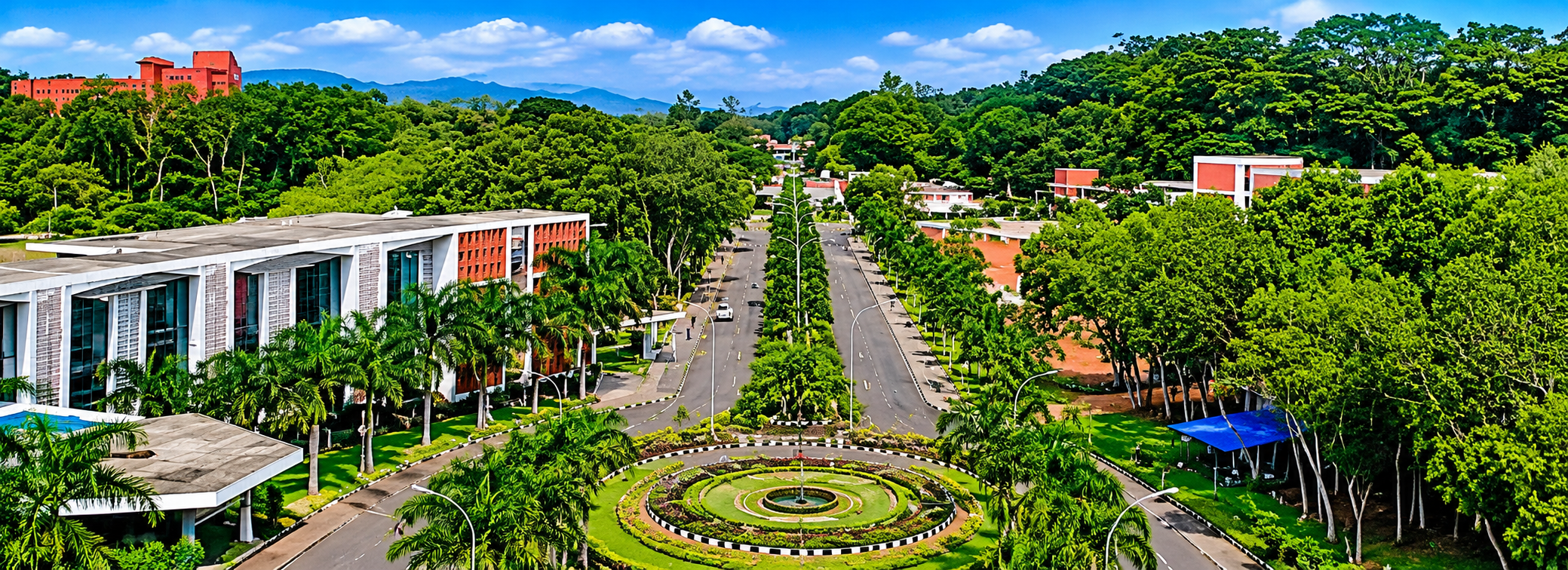
The most direct and prestigious pathway into space sciences straight after high school is through the Indian Institute of Space Science and Technology (IIST). Located in Thiruvananthapuram, IIST is an autonomous institution under the Department of Space, Government of India, specifically built to train workforce for ISRO’s requirements.
Students completing 12th standard with Physics, Chemistry, and Mathematics can aim for world-class undergraduate programs here:
B.Tech in Aerospace Engineering: Focuses on flight mechanics, propulsion systems, aerodynamics, launch vehicle design, and orbital structures.
B.Tech in Electronics and Communication Engineering (Avionics): Teaches satellite communication systems, digital signal processing, sensors, control electronics, and flight instrumentation.
Dual Degree (B.Tech + Master of Science / M.Tech): A 5-year integrated course specializing in Astronomy, Astrophysics, Solid State Physics, Optical Engineering, or Earth System Sciences.
Graduating from IIST with top academic ranks often opens direct recruitment opportunities into ISRO centers nationwide. Interested candidates can explore the official curriculum directly on the IIST Academic Programmes website.
3. IIRS Outreach and EDUSAT Distance Learning Programmes
For students who enroll in traditional university degrees after 12th standard—such as standard B.Sc., B.E., or B.Tech programs—the Indian Institute of Remote Sensing (IIRS) offers comprehensive distance learning modules. Headquartered in Dehradun, IIRS conducts short-term and semester-long outreach courses via live interactive modes and self-paced e-learning portals.
These certified online modules cover topics including:
Basics of Remote Sensing and Geographic Information Systems (GIS)
Global Navigation Satellite System (GNSS) applications
Digital Image Processing and Geo-computation
Artificial Intelligence and Machine Learning applications for Earth observation data
High school graduates entering college can join these courses through their institution’s network or individually. Details regarding course schedules and application windows are accessible on the official IIRS Distance Learning Portal.
4. YUVIKA (YUva VIgyani KAryakram / Young Scientist Programme)
Although primarily aimed at students entering 9th grade, the YUVIKA programme sets the foundation for scientific interest right up to Class 12 and beyond. It is ISRO’s signature residential initiative designed to impart basic knowledge on space technology, space science, and space applications to younger students.
Participants spend two weeks visiting key facilities like the Satish Dhawan Space Centre in Sriharikota, interacting with senior scientists, observing rocket integration bays, and engaging in hands-on science experiments. The experience gained during YUVIKA equips students with clarity when selecting their higher secondary science tracks and higher education paths.
5. ISRO Student Internships and Project Trainee Programmes
After completing 12th standard and enrolling in an undergraduate degree program, students can return to ISRO facilities as interns and project trainees. ISRO centers across India—such as the Vikram Sarabhai Space Centre (VSSC), U R Rao Satellite Centre (URSC), and Space Applications Centre (SAC)—offer project work placements for college students.
Short-Term Internships: Ranging from 1 to 3 months, these allow undergraduates in engineering or basic sciences to shadow projects in satellite engineering, software simulation, or payload design.
Project Training: Long-term academic project training spanning 4 to 12 months for final-year students looking to write dissertations on real-world space technology challenges.
These opportunities build practical expertise and establish network connections with working scientists.
6. Physical Research Laboratory (PRL) Summer Internships and Fellowships
The Physical Research Laboratory (PRL) in Ahmedabad, a premier autonomous institute supported by the Department of Space, focuses on basic research in planetary sciences, astronomy, astrophysics, solar physics, and atmospheric science.
For students choosing a pure science route (B.Sc. in Physics, Chemistry, or Mathematics) after 12th standard, PRL offers summer internships and fellowship programs. Undergraduates get to work directly in laboratory environments, analyze actual planetary data from missions like Chandrayaan and Aditya-L1, and publish scientific papers. Discover available fellowships on the official Physical Research Laboratory Website.
7. CSSTEAP Specialized Training Courses
The Centre for Space Science and Technology Education in Asia and the Pacific (CSSTEAP), affiliated with the United Nations and hosted by India’s Department of Space, runs specialized education modules in remote sensing, satellite communications, and global navigation systems.
While many full post-graduate diplomas cater to advanced researchers, CSSTEAP regularly conducts short short-term awareness programs and workshops accessible to undergraduate students pursuing technical degrees after Class 12. It provides an international learning environment where Indian students study alongside international scholars in geospatial technologies.
8. ISRO E-Learning & STEM Knowledge Portals
Students who wish to learn at their own pace alongside their post-12th college studies can utilize ISRO’s official STEM knowledge portals. These online hubs host structured video lectures, open-source geospatial software tutorials, and technical reading materials prepared directly by space agency scientists.
Key learning platforms include:
ISRO E-CLASS: A centralized portal for attending live distance sessions and obtaining digital certifications in Earth observation disciplines.
VEDAS (Visualization of Earth observation Data and Archival System): An interactive portal for exploring satellite data applications in environmental monitoring, agriculture, and hydrology.
MOSDAC (Meteorological and Oceanographic Satellite Data Archival Centre): A learning repository dedicated to weather forecasting models and oceanographic satellite datasets.
Students can start exploring these digital tools directly via the main ISRO Student Resources webpage.
9. IISER & NISER Integrated M.Sc. Pathways to Space Research
Besides IIST, another excellent educational route after 12th standard to reach ISRO research teams is through the Indian Institutes of Science Education and Research (IISERs) and the National Institute of Science Education and Research (NISER). Admission to these institutes is achieved through competitive entrance tests after Class 12.
These institutes offer 5-year Integrated B.S.-M.S. programs in key scientific branches:
Physics and Astronomy
Earth and Environmental Sciences
Chemical Sciences
Computational and Data Sciences
ISRO actively recruits research scientists and scientific officers from top-tier basic science institutes to work on observational missions, planetary exploration payloads, and space weather studies.
10. Core Engineering Disciplines Leading to ISRO Opportunities
If a student pursues standard engineering degrees at IITs, NITs, or state universities after Class 12, selecting the right core specialization is crucial for aligning with ISRO’s career requirements. ISRO regularly hires engineering graduates through the Centralised Recruitment Board.
Recommended undergraduate branches include:
Mechanical Engineering: Essential for designing rocket engine components, structural frames, payload deployment mechanisms, and thermal control systems.
Electrical & Electronics Engineering: Critical for satellite power systems, solar array deployment, batteries, and high-voltage distribution networks.
Computer Science & Data Science: Vital for mission control software, ground tracking software, satellite telemetry processing, and autonomous rover algorithms.
Aerospace & Aeronautical Engineering: Directly focused on orbital mechanics, trajectory calculations, atmospheric reentry dynamics, and launch vehicle aerodynamics.
11. How to Choose the Right ISRO Educational Path After Class 12
Selecting the ideal educational pathway depends on your long-term career preferences within the space industry. Students who prefer engineering and hardware design should aim for B.Tech degrees at IIST or reputed technical universities, followed by internships at ISRO centers. Those drawn to theoretical research, observational astronomy, or planetary geology should select pure science tracks (B.Sc./M.Sc. or Integrated B.S.-M.S.) and engage with PRL or IIRS short-term courses.
Whatever path you select, staying updated through the main ISRO Official Academics Page ensures you never miss application deadlines for courses, workshops, or training cycles. Building strong fundamentals during high school and remaining proactive in online outreach certifications will help turn your space ambition into reality.

How useful was this post?
Click on a star to rate it!
Average rating 0 / 5. Vote count: 0
No votes so far! Be the first to rate this post.