
How Student Innovators Can Turn Ideas into Successful Enterprises in 5 Steps
The modern educational landscape is experiencing a massive shift. Today, students are no longer just passive consumers of information; they are active creators, problem solvers, and visionary leaders. If you are a student, you are in a unique position. You have access to cutting-edge research, a network of passionate peers, mentoring professors, and university resources. This is why there has never been a better time to discover how student innovators can turn ideas into successful enterprises.
However, launching a business while managing exams, lectures, and a social life can feel incredibly overwhelming. Many brilliant concepts never leave the pages of a notebook because students don’t know how to navigate the complex road from concept to launch.
In this comprehensive student entrepreneurship guide, we break down the journey into an actionable, simple 5-step framework. Whether you want to build a tech platform, a social enterprise, or a localized service, this roadmap will show you exactly how to start a business as a student and build a scalable startup.
The Rise of Student Innovators: Why College is the Perfect Time to Launch a Startup
Before diving into the practical framework, it is vital to understand why your student years are the prime window for launching a startup. Many of the world’s most successful companies—including Google, Facebook, and Microsoft—began in university dorm rooms.
As a student, your risk profile is generally lower than it will be later in life. You do not have mortgages to pay or corporate golden handcuffs tying you down. Furthermore, the “student” label is an incredible superpower. People love to help students. Industry experts, potential mentors, and successful alumni who would ignore a standard sales pitch will happily take a 15-minute call with a student innovator seeking academic advice. By leveraging your university environment, you can access free software, university incubator programs, co-working spaces, and legal guidance.
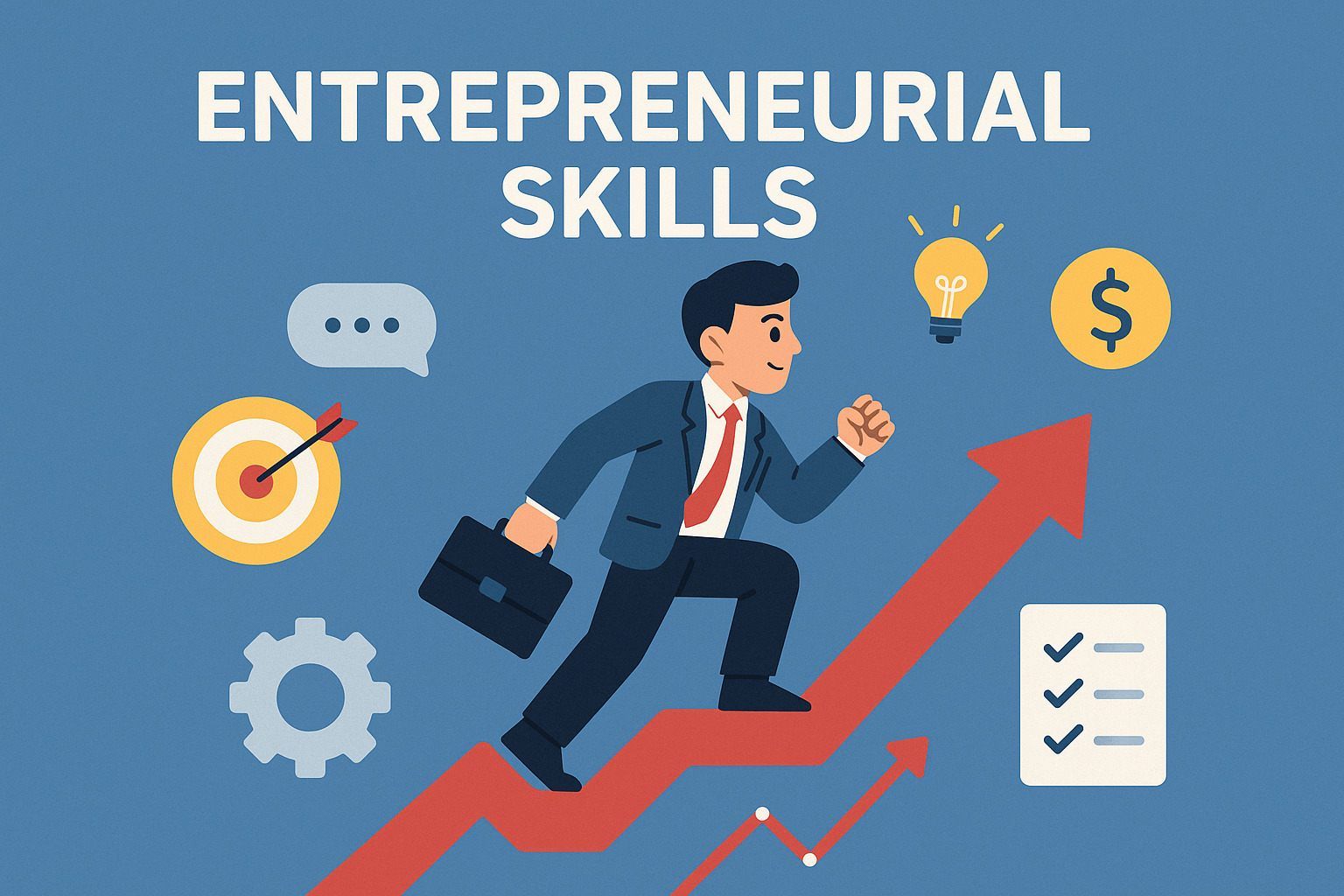
Understanding the Student Startup Framework: Bridging Academics and Entrepreneurship
A successful student startup framework must be designed around academic flexibility. You cannot afford to use slow, traditional corporate development processes. Instead, you need a lean, agile framework that allows you to rapidly test your ideas, learn from failures, and iterate without spending thousands of dollars.
Our 5-step framework is built on the principles of the Lean Startup methodology, adapted specifically for the constraints and advantages of student life. By mastering these five steps, you can bridge the gap between academic theory and practical startup execution.
Step 1: Ideation and Problem Identification (Finding Your Million-Dollar Idea)
Every great business starts with an idea, but not every idea can become a successful business. To turn an idea into a startup, you must shift your focus from “finding a great idea” to “identifying a deep, painful problem.”
Successful student innovators do not build products and then search for customers. Instead, they identify a massive pain point experienced by a specific group of people and design a solution tailored to resolve that pain.
                    The Ideation Framework
                              │
     ┌────────────────────────┼────────────────────────┐
     ▼                        ▼                        ▼
Personal Pain             Macro Trends            Peer Frustrations
(What annoys you      (AI, Sustainability,        (What challenges do
  every day?)         Circular Economy)          classmates face?)
Validating the Pain Point: Is It a Real Problem or a Classroom Project?
Before you spend a single rupee or hour building your product, you must validate that the problem you are solving actually exists. This process is called customer discovery.
Talk to at least 30 to 50 potential customers.
Ask open-ended questions about their workflows, challenges, and current workarounds.
Avoid asking leading questions like, “Would you buy my app?” Instead, ask, “How do you currently solve [Problem X], and how much does that workaround cost you?”
Focus on understanding their behavior. If potential customers are actively spending time or money trying to solve the problem, you have found a viable opportunity.
Step 2: Market Research and Competitive Analysis on a Student Budget
Once you have identified a validated problem, you need to understand the competitive landscape. Many student startup ideas fail because the founders assume they have no competition, only to discover later that a well-funded company is already solving the exact same problem.
Conducting thorough market research does not require an expensive consulting firm. As a student, you can access powerful databases through your university library, including IBISWorld, Statista, and academic journals.
Leveraging University Library Resources and Open-Source Data
Use your university credentials to explore industry reports and market sizing metrics. You need to calculate three key figures:
Total Addressable Market (TAM): The total global demand for your product or service if you had 100% market share.
Serviceable Addressable Market (SAM): The portion of the market that fits your target demographic and geographic reach.
Serviceable Obtainable Market (SOM): The realistic percentage of the SAM that you can capture within your first 2 to 3 years.
To identify and track competitors, use open-source platforms like Crunchbase and Product Hunt. Analyze what your competitors are doing well, where their users are complaining (read their negative App Store or Google reviews), and find a unique value proposition (UVP) that sets your startup apart.
Step 3: Building a Minimum Viable Product (MVP) Without Breaking the Bank
One of the biggest traps for student innovators is trying to build a perfect, feature-rich product before launching. This leads to wasted time, depleted budgets, and delayed launches.
Instead, you must focus on building a Minimum Viable Product (MVP). An MVP is the simplest possible version of your product that allows you to collect the maximum amount of validated learning from real customers with the least effort.
No-Code Tools and Rapid Prototyping for Student Founders
By 2026, the barrier to entry for building technology has completely collapsed. You do not need a computer science degree to build an MVP. You can leverage powerful no-code and low-code tools to construct, test, and launch your prototype in a matter of weeks:
For Web Apps: Bubble, Softr, or Webflow.
For Mobile Apps: Glide, Adalo, or FlutterFlow.
For Databases & Automation: Airtable, Make, and Zapier.
For Design: Figma (which offers free education licenses for students).
Your MVP should only solve the single core problem you identified in Step 1. Keep it simple, launch quickly, and prepare to adapt based on what your users tell you.
Step 4: Testing, Iterating, and Gathering Real User Feedback
Once your MVP is live, the real work begins. Your goal in this step is to get your product into the hands of real users and observe how they interact with it. Do not just rely on what they say; monitor what they do.
The Build-Measure-Learn Feedback Loop in Action
To continuously refine your student startup, you must run your operations through the classic Build-Measure-Learn feedback loop popularized by startup accelerators like Y Combinator.
                        ┌───────────────┐
                        │     BUILD     │◄────────┐
                        └───────┬───────┘         │
                                │                 │
                                ▼                 │
                        ┌───────────────┐         │
                        │    MEASURE    │         │ Learn and
                        └───────┬───────┘         │ Iterate
                                │                 │
                                ▼                 │
                        ┌───────────────┐         │
                        │     LEARN     │─────────┘
                        └───────────────┘
Track key metrics like Daily Active Users (DAU), churn rate, and customer acquisition cost (CAC). If your metrics show that users are signing up but leaving after a few days, talk to them to understand why. Use this feedback to tweak your features, fix bugs, and pivot your strategy if necessary. Continuous iteration based on actual data is the key to creating successful student enterprises.
Step 5: Securing Funding and Scaling Your Student Enterprise
Scaling a business requires resources, but as a student, you don’t necessarily have to rely on traditional bank loans or venture capital right away. There are several student-friendly funding avenues available to help you take your startup to the next level.
Navigating University Incubator Programs, Grants, and Angel Investors
Before looking for external investors who will demand equity in your company, exhaust all non-dilutive funding options:
University Pitch Competitions: Most major universities host annual business plan and pitch competitions that offer cash prizes, free office space, and legal support.
Government Grants: Look for research and development grants offered by government bodies specifically designed to support youth innovation and technology startups.
University Incubator Programs: Join campus accelerators that provide equity-free seed funding, mentorship, and connections to local angel investor networks.
Equity Crowdfunding: If your product has a strong community element, consider launching a crowdfunding campaign on platforms like Kickstarter to pre-sell your product and secure upfront capital.
Once you have established consistent traction, you can leverage resource hubs like the Stanford Center for Professional Development (SCPD) or Harvard Business School’s Entrepreneurship Resources to learn how to pitch to venture capitalists and scale your company globally.
Balancing Books and Business: Time Management Tips for Student Innovators
The hardest part of being a student founder is not building the product or pitching to investors; it is time management. How do you run a company when you have a 15-page research paper due tomorrow?
To survive this balancing act, you must treat your startup like a class:
Schedule Startup Hours: Block out specific times in your calendar dedicated solely to your business, just like you would for a lecture.
Leverage Academic Credits: Many universities allow you to earn independent study credits or write your thesis on your startup. Talk to your professors about aligning your academic curriculum with your business goals.
Build a Co-Founding Team: Do not try to do everything yourself. Partner with co-founders who possess complementary skills. If you are a business major, find a talented technical co-founder to handle product development.
Common Pitfalls to Avoid on Your Student Entrepreneurship Journey
As you embark on this exciting journey, be mindful of these common mistakes that often derail student startups:
Falling in Love with the Solution Instead of the Problem: If your initial MVP doesn’t work, don’t force it. Be prepared to pivot your solution while remaining committed to solving the core problem.
Ignoring Legal Foundations: Ensure you have clear, written co-founder agreements regarding equity split, intellectual property ownership, and vesting schedules. Use free university legal clinics to set up these documents early.
Premature Scaling: Do not spend money on expensive marketing campaigns, official office spaces, or hiring employees before you have achieved product-market fit.
Conclusion: From Student Innovator to Successful Startup Founder
Turning an idea into a scalable enterprise is a challenging, chaotic, and incredibly rewarding journey. By embracing this 5-step framework—Ideation, Market Research, MVP Building, User Testing, and Strategic Scaling—you can systematically de-risk your venture and turn your academic passions into a thriving, real-world business.
Remember, the greatest value of student entrepreneurship is not just the potential financial reward; it is the unparalleled real-world education you acquire along the way. Even if your first startup fails, the practical skills you develop—project management, sales, product development, and leadership—will future-proof your career and set you apart as an elite innovator. The tools, resources, and networks are at your fingertips. Stop waiting for graduation—start building your future today!

How useful was this post?
Click on a star to rate it!
Average rating 5 / 5. Vote count: 1
No votes so far! Be the first to rate this post.