Offline vs Hybrid Coaching: Which Format Yields Higher JEE and NEET Success Rates?
The pursuit of a seat in India’s premier engineering and medical institutions—the Indian Institutes of Technology (IITs) and the All India Institutes of Medical Sciences (AIIMS)—is widely considered one of the most rigorous academic journeys in the world. As we navigate the highly competitive exam cycles of 2026, the strategy for cracking the Joint Entrance Examination (JEE) and the National Eligibility cum Entrance Test (NEET) has evolved far beyond traditional rote learning.
For decades, the standard path to success involved packing bags and relocating to educational hubs like Kota, Sikar, or Hyderabad. However, the rapid integration of artificial intelligence, adaptive testing, and multi-sensory learning portals has introduced a formidable contender: the hybrid coaching model.
In this comprehensive evaluation, we analyze the structural differences of offline vs hybrid coaching, review the actual data behind JEE success rates and NEET success rates, weigh the unique benefits of hybrid learning in exam preparation, and help parents and students make the most informed decision to optimize their competitive scores.
The Core Debate: Defining Offline and Hybrid Coaching Models in 2026
To perform an accurate comparison, we must first establish what these distinct educational paradigms look like in the modern test-preparation landscape.
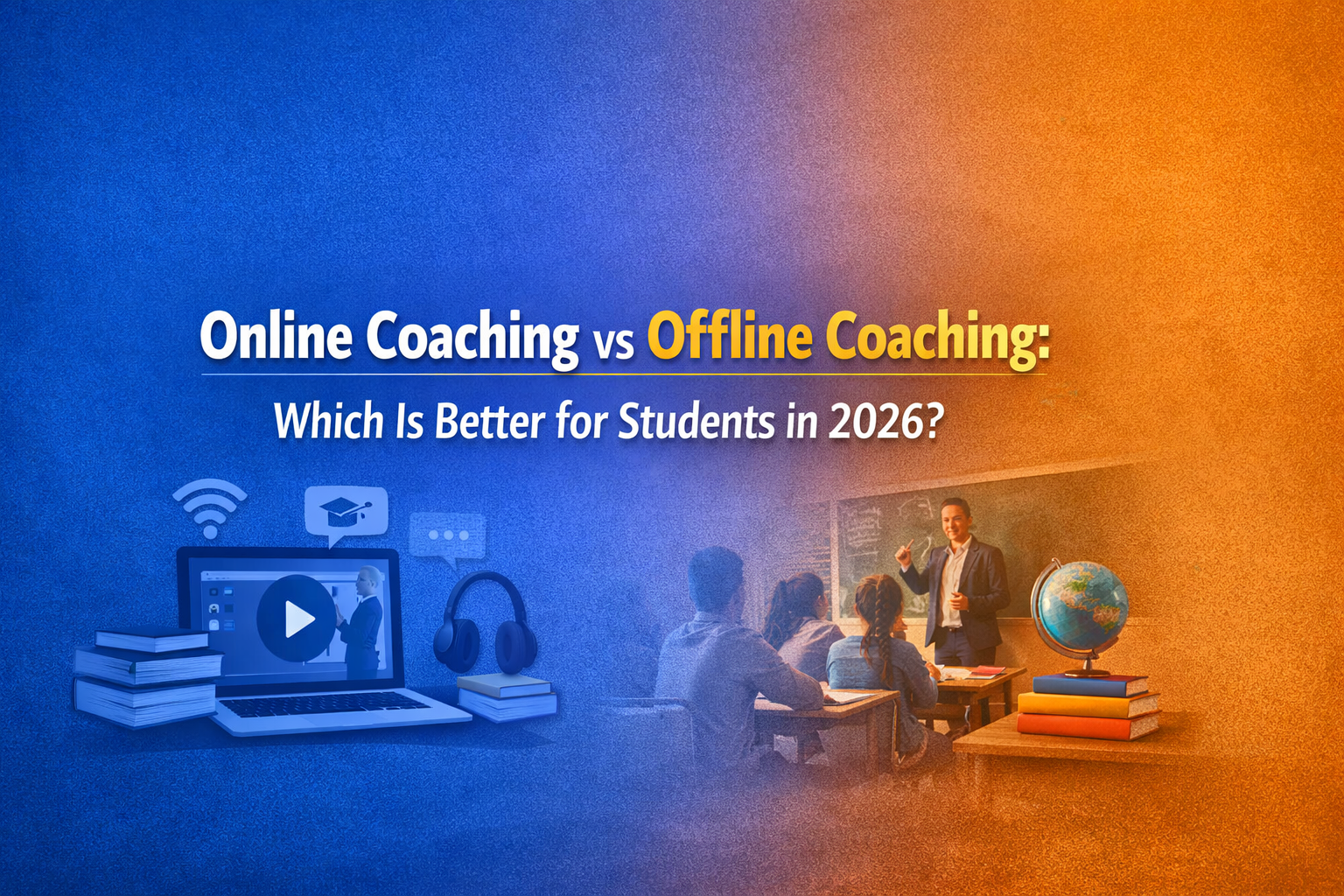
Offline Coaching: This is the legacy, purely physical classroom format. Students attend a physical center daily, sit in large lecture halls, receive printed study packages (modules), clear doubts by waiting in queues for physical faculty, and write scheduled mock tests using paper and pen or on-site computer terminals.
Hybrid Coaching: This is an integrated educational model that merges physical, face-to-face classroom instruction with digital enhancements. In a hybrid coaching model, students typically attend physical classes 2 to 3 days a week for core conceptual lectures and interactive peer discussions. The remaining days are supplemented by highly personalized digital portals featuring recorded backup lectures, AI-driven mock test engines, 24/7 online doubt-solving modules, and real-time behavioral analytics.
Analyzing JEE Success Rates: How Hybrid Classrooms Change the Game
The Joint Entrance Examination (JEE) demands an exceptional level of analytical depth, application-based physics mastery, and complex mathematical problem-solving. For JEE Main and Advanced success, the format of instruction plays a massive role.
Historically, offline coaching centers dominated the JEE merit lists. The intense, high-pressure atmosphere of physical batches forced a rigorous, competitive drive among students. However, modern results show a shifting trend.
Students using hybrid coaching models are securing top percentiles at an unprecedented rate. Because the JEE Main and Advanced are entirely Computer-Based Tests (CBT), students who prepare in a hybrid environment—where they routinely solve highly adaptive online mock tests, analyze complex data visualizations, and practice with simulated exam portals—develop a natural comfort with the digital interface of the actual exam. This eliminates test-day technical anxiety, contributing to superior performance under pressure.
Evaluating NEET Success Rates: Balancing Memorization with NCERT Accuracy
Unlike the mathematically heavy JEE, the National Eligibility cum Entrance Test (NEET) is a race of speed, hyper-accuracy, and memory retention. Since the biology section is heavily drawn from the NCERT textbook, students must master every single line, diagram, and footnote.
The NEET UG coaching comparison between offline and hybrid approaches reveals unique dynamics:
The Biology Factor: Hybrid platforms often utilize advanced 3D visual modules and digital anatomy models that make physiological processes easier to memorize. Interactive recall flashcards keep the massive botanical and zoological syllabi fresh in a student’s working memory.
The Physical OMR Element: Since NEET remains a physical, pen-and-paper exam using Optical Mark Recognition (OMR) sheets, purely online platforms face limitations. This is where the hybrid learning in exam preparation model excels. It allows students to study theoretical concepts and access nation-wide expert faculty digitally while physically attending local centers to practice the precise physical act of bubbling OMR sheets within the 3-hour-and-20-minute limit.
This balanced approach has led to a significant spike in NEET success rates among hybrid learners, who experience fewer “silly mistakes” on exam day compared to purely virtual students.
Head-to-Head Comparison: Structural Metrics of Exam Success
The table below breaks down how both coaching formats address the critical pillars of competitive exam preparation:
+------------------------------------+-------------------------+-------------------------+
| Success Pillar                     | Traditional Offline     | Modern Hybrid           |
+------------------------------------+-------------------------+-------------------------+
| Daily Discipline & Structure       | Exceptionally High      | High (Hybrid Schedule)  |
| Access to National Elite Faculty   | Limited by Location     | Unlimited (Via Portal)  |
| Doubt-Clearing Latency             | High (Queue-Dependent)  | Instant (24/7 Digital)  |
| Personalization of Practice        | Low (Same Batch Sheets) | Infinite (AI-Adaptive)  |
| Simulated Test Environment         | Excellent for NEET      | Excellent for JEE & NEET|
| Financial & Relocation Stress      | Very High               | Moderate to Low         |
+------------------------------------+-------------------------+-------------------------+
The Discipline Factor: Offline's Enforced Accountability
One of the greatest arguments in favor of traditional offline coaching is the psychological structure it imposes on teenage minds. Preparing for JEE or NEET requires a minimum of 10 to 12 hours of focused daily study.
Adolescent students often struggle with self-regulation, time management, and the constant digital distractions of smartphones and home environments. Offline coaching centers enforce a physical presence. The daily attendance tracking, the gaze of the physical instructor, the immediate social pressure of seeing peers solve problems in real-time, and a zero-device classroom rule build a high-performance routine that is difficult to replicate at home.
The Personalization Paradox: Why Hybrid Solves the "One-Size-Fits-All" Flaw
While offline coaching enforces discipline, it suffers from a major structural flaw: it treats all students in a batch identically. If a physical class of 100 students is studying rotational mechanics, the teacher must teach at the pace of the average student. Advanced students find themselves under-challenged, while struggling students are left behind, accumulating conceptual backlogs.
A high-quality hybrid coaching model elegantly solves this issue through personalized learning analytics. While the fundamental theory is delivered in the physical class, the practice modules on the digital portal dynamically adjust based on the student’s personal weaknesses.
If the digital system flags that a student consistently misses questions on thermodynamics, it pauses standard progression and automatically feeds them targeted micro-lessons and customized remedial worksheets. This level of personalized pacing is physically impossible in a standard offline classroom.
Doubt Resolution Frameworks: Instant Classroom Access vs. 24/7 Portals
In competitive exams, unresolved doubts are the absolute killers of high ranks. A single misunderstood concept in organic chemistry can trigger a chain reaction of failures across multiple chapters.
In Offline Coaching: To clear a doubt, a student must wait after class or visit a dedicated “doubt counter” during specified hours. Because of the high student-to-teacher ratio in major coaching hubs, students often wait in long lines, sometimes getting only 5 minutes of a teacher’s time.
In Hybrid Coaching: While students can ask their physical teacher during classroom days, they also have access to 24/7 digital doubt repositories and live chat assistants. By simply taking a photo of a difficult physics numerical and uploading it to the platform, they receive step-by-step video solutions and mathematical breakdowns within minutes. This rapid feedback loop keeps preparation momentum high.
Financial Analysis: The Actual Cost of Preparation
For most Indian households, the cost of competitive exam coaching is a major financial decision. The financial comparison between offline vs hybrid coaching highlights a stark difference in return on investment (ROI).
Traditional premium offline coaching in a major education hub can easily cost between ₹1.5 Lakhs to ₹3 Lakhs per year in tuition fees alone. When you factor in the hostel fees, mess food, travel, and health expenses associated with relocating to cities like Kota or Patna, the total annual bill can easily climb to ₹4 Lakhs to ₹5 Lakhs.
A hybrid program allows the student to study from the comfort of their home for a majority of the week, reducing travel to localized regional touchpoints. The digital-first delivery of high-end learning resources slashes basic tuition fees by up to 40% to 50%, entirely eliminating accommodation and food costs. This makes high-end, elite instruction accessible to families without forcing them to take predatory educational loans.
Mental Health and Burnout: The Human Element of Exam Prep
The emotional toll of JEE and NEET preparation is immense. Long study hours, isolation from family, peer pressure, and the hyper-competitive environment of physical coaching cities often lead to severe academic anxiety and cognitive burnout.
The hybrid model acts as an emotional safety net. By allowing students to spend significant portions of their week studying in a supportive, home-cooked environment surrounded by family, it reduces psychological strain. Students retain access to high-quality academic counseling and structured competitive exams without experiencing the crushing isolation of hostile hostel environments. Improved mental health directly correlates with higher cognitive performance, leading to better focus and ultimately superior exam results.
The Mock Test and Analytics Advantage: Physical Simulation vs. AI Error Logs
Both JEE and NEET are ultimately won or lost in the mock test phase. According to independent topper surveys, the single greatest predictor of competitive success is systematic mock test analysis.
Purely offline mock tests provide excellent physical simulation, but they yield very basic feedback—usually just a scorecard with positive and negative marks.
Hybrid test platforms provide deep, algorithmic data analysis. When a student submits a test, the platform breaks down:
Time Spent Per Question: Revealing if the student is wasting too much time on difficult math calculations instead of securing easy marks.
Accuracy by Concept: Highlighting exact sub-topics where silly mistakes are concentrated.
National Benchmarking: Comparing performance in real-time with lakhs of aspirants across India who are attempting the exact same digital test.
You can reference official guidelines on computerized mock testing structures via the National Testing Agency (NTA) Student Portal.
How to Choose: A Parent and Student Diagnostic Checklist
If you are struggling to choose between a purely offline structure or a modern hybrid model, use this simple diagnostic rubric to determine the best path:
Level of Self-Discipline: Does the student struggle to study without physical surveillance? If yes, look for an offline program or a highly structured hybrid option with mandatory physical attendance days.
Geographical Location: Are there top-tier national faculty members teaching physically within a 30-minute radius of your home? If not, do not settle for a mediocre local offline institute. Choose a hybrid program that connects you to national experts.
Target Exam: For the computer-based JEE, a hybrid model with heavy emphasis on online CBT tests is highly ideal. For the paper-based NEET, ensure your hybrid choice has robust, physical, paper-based mock testing events.
Emotional Resilience: Is the student highly sensitive to stress, peer pressure, or homesickness? If so, keeping them at home in a hybrid ecosystem is much healthier and more productive.
For an extensive database of verified coaching standards, you can read the public education reports compiled on the National Council of Educational Research and Training (NCERT) official site.
The Verdict: Which Format Yields Higher Success Rates in 2026?
The ultimate data for 2026 reveals a nuanced reality: Neither a purely offline legacy system nor a completely disconnected online platform yields the highest JEE and NEET success rates. The absolute winner is the Hybrid Coaching Model.
The highest success rates are achieved by students who leverage the absolute best of both worlds. By utilizing physical classroom days to build competitive stamina, participate in face-to-face peer discussions, and sit for rigorous, supervised mock exams, students develop critical exam temperament. Simultaneously, by using online portals to access elite national faculty, resolve doubts 24/7, and run highly targeted, AI-driven error-correction sessions, they eliminate individual learning gaps.
To secure an elite rank in JEE or NEET, do not restrict yourself to old-school formats. Embrace a modern, hybrid approach to make your preparation more efficient, more affordable, and academically unmatched.

How useful was this post?
Click on a star to rate it!
Average rating 0 / 5. Vote count: 0
No votes so far! Be the first to rate this post.