The Mental Cost of Competitive Exams: How Coaching Institutes Are Reforming Student Wellness
For decades, the journey of cracking competitive exams in India—most notably the Joint Entrance Examination (JEE) for engineering and the National Eligibility cum Entrance Test (NEET) for medical sciences—has been associated with intense discipline, sleepless nights, and rigorous academic schedules. However, as the ecosystem has expanded, so too has the conversation around the severe mental cost of competitive exams.
As we navigate through 2026, the educational landscape is undergoing a massive cultural shift. No longer is academic excellence viewed in isolation from cognitive safety. Driven by rigorous government guidelines, groundbreaking judicial rulings, and an urgent demand from parents and educators, coaching institutes are reforming student wellness in ways previously thought impossible.
In this deep-dive analysis, we break down the root causes of academic stress in competitive exams, highlight the landmark legal frameworks transforming the industry, explore the specific operational reforms being implemented inside classrooms, and analyze how a healthier preparation ecosystem is being designed to protect student mental health in JEE and NEET training centers.
The Pressure Cooker Effect: Deciphering the Academic Stress in Competitive Exams
The pursuit of entry into premier institutions like the Indian Institutes of Technology (IITs) and the All India Institutes of Medical Sciences (AIIMS) is a high-stakes endeavor. With millions of students competing for a tiny fraction of available seats, the preparation environment can easily devolve into a high-pressure situation.
The primary contributor to academic stress in competitive exams is not simply the vast syllabus, but the external environment. Students as young as fifteen are often isolated from their familiar support networks, placed in highly competitive peer groups, and subjected to continuous testing loops.
Psychologists point out that the human brain during adolescence is highly vulnerable to stress-induced cognitive fatigue. When students are forced to associate their entire self-worth with mock test percentages, it triggers a chronic fight-or-flight response. This prolonged state of anxiety degrades long-term memory consolidation, reduces problem-solving capability, and can lead to severe clinical depression.
The Silent Crisis: Student Mental Health in JEE and NEET Coaching Hubs
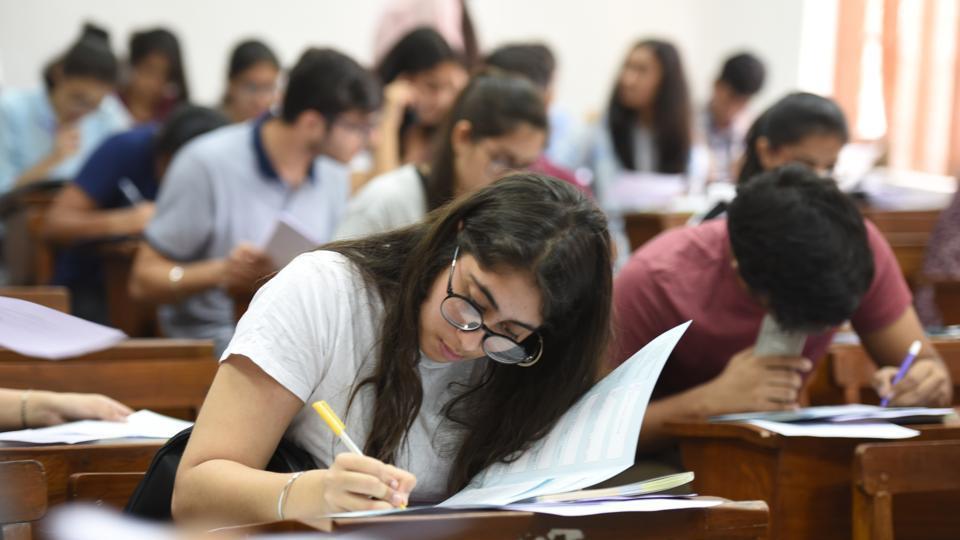
The intense atmosphere of coaching hubs like Kota (Rajasthan), Sikar, Hyderabad, and Delhi has been heavily scrutinized over the years. The rapid increase in student distress cases in these cities made it clear that the traditional, hyper-competitive business model of test preparation was unsustainable.
For years, the industry accepted high levels of student stress as a necessary trade-off for top exam ranks. “Survival of the fittest” became the unwritten rule of major coaching hubs. However, the visible toll on student mental health in JEE and NEET hubs triggered a national outcry, forcing local administrations and educational institutions to realize that academic success cannot come at the expense of human lives.
Legislative Reckoning: The 2024 Ministry of Education Coaching Regulations
The initial catalyst for structured, systemic change was the release of the comprehensive Guidelines for Regulation of Coaching Centers by the Ministry of Education, Government of India. This legislative move signaled that private coaching operations would no longer run without standard regulatory oversight.
Key mandates from these guidelines established a solid foundation for reducing student burnout:
Age Restrictions: Coaching centers are strictly prohibited from enrolling students below the age of 16, ensuring that younger children are not exposed to intense entrance preparation before completing their secondary board examinations.
Prohibiting Misleading Ads: Institutes are barred from making grandiose claims, publishing misleading results, or guaranteeing ranks to trap anxious parents into registration.
Daily Workload Limits: Class hours are capped at a maximum of five hours per day, preventing the exhausting “double-schooling” schedules that left students with no time for cognitive recovery.
For a detailed review of the policy parameters, you can explore the Ministry of Education Guidelines for Coaching Centers.
Judicial Intervention: The Supreme Court's Landmark Article 21 Student Mental Health Directives
While legislative guidelines established a basic framework, the judicial system provided the ultimate, binding enforcement mechanism. In a historic ruling, the Supreme Court of India declared that student mental health is an integral, non-negotiable component of the fundamental “Right to Life” protected under Article 21 of the Indian Constitution.
Through this landmark judgement, the apex court issued 15 binding directives applicable to all public and private educational institutions, training academies, and coaching institutes with more than 100 enrolled students. The court mandated that academic authorities have an “unequivocal moral and legal obligation” to actively prevent student distress, establish early detection networks, and move away from toxic academic ranking practices.
Deconstructing the Reforms: How Coaching Institutes Are Actively Restructuring Daily Operations
Spurred by these legal mandates and administrative pressure, leading coaching institutes are reforming student wellness by redesigning their physical environments, schedule structures, and psychological safety nets.
+------------------------------------+------------------------------------+
| Traditional Toxic Coaching Culture  | Modern Reformed Wellness Model     |
+------------------------------------+------------------------------------+
| Performance-based batch division  | Heterogeneous, inclusive seating   |
| Daily mock tests & public scores   | Restrictive testing, private marks |
| Continuous 7-day study loops       | Mandatory weekly off, zero exams   |
| No psychological safety nets       | Qualified, 24/7 on-campus therapist|
| Zero refund policies              | Pro-rata exit policies & transparency|
+------------------------------------+------------------------------------+
Below, we examine the four critical pillars of operational restructuring that are being implemented across major institutes in 2026.
1. Abolishing Batch Segregation and Public Academic Shaming
Historically, one of the most psychologically damaging practices in coaching hubs was “batch segregation.” Students who scored high on weekly mock tests were placed in elite “star batches” with the best teachers, air-conditioned rooms, and personalized mentoring. Conversely, struggling students were demoted to lower-tier batches, often leading to deep feelings of inadequacy and public humiliation.
Under the new regulatory environment:
Heterogeneous Classrooms: Institutes are actively merging batches to ensure balanced classrooms where students are not segregated based on mock test rankings.
Confidential Assessment Results: Test scores are no longer posted on public bulletin boards or shared in group chats. Performance metrics are sent privately to the student and parent as a diagnostic tool rather than a tool for peer comparison.
Removing Public Rankings: Highlighting top scorers while ignoring or shaming low-performing students has been replaced with generalized progress tracking.
2. Standardizing Mandated Weekly Offs and "No-Exam" Buffer Days
Continuous cognitive load without adequate recovery is a primary driver of academic burnout. To counter this, local administrative orders—such as those enforced in major districts like Noida and Kota—have strictly standardized the weekly schedule.
Mandatory Weekly Off: Coaching institutes must provide a full, uninterrupted 24-hour weekly rest day. No classes, homework assignments, or supplementary sessions can be scheduled on this day.
No-Exam Buffer Days: To ensure that the weekly off-day is actually used for rest and family connection rather than intensive cramming, institutes are prohibited from scheduling examinations or diagnostic tests on the day immediately following a weekly off.
Festival Leaves: During major national festivals, institutes must arrange multi-day breaks to allow out-of-town students to travel home and connect with their primary support systems.
3. Integrating Qualified Psychological Counselors and Interactive Support
The most visible change inside modern coaching institutes is the physical integration of mental health professionals. Rather than treating mental health as an afterthought, campuses are now designing designated wellness centers.
On-Campus Counselors: Any educational center housing more than 100 students is legally required to employ at least one qualified child/adolescent psychologist or clinical counselor.
Early Distress Detection Training: Faculty members and hostel wardens are undergoing specialized psychological training to detect early signs of clinical distress—such as changes in eating habits, social withdrawal, sudden performance drops, or persistent fatigue.
Proactive Stress-Busting Sessions: Daily schedules are being adapted to include mandatory sessions for yoga, meditation, physical sports, and expressive arts. This ensures that students develop healthy emotional coping strategies outside of pure academics.
4. Exit Clauses and Financial Transparency: Alleviating Parental Pressure
A major portion of academic stress in competitive exams is driven by financial guilt. Many parents take high-interest personal loans or empty their life savings to pay non-refundable upfront tuition fees at premium institutes. When a student struggles or realizes they do not want to pursue engineering or medicine, they feel trapped, believing they cannot leave because of the financial loss to their family.
Reformed enrollment regulations have systematically targeted this pain point:
Pro-Rata Refund Policies: If a student decides to withdraw from a course mid-way, the institute is legally obligated to issue a pro-rata refund for the remaining duration of the course, including hostel and mess deposits, within 10 days of withdrawal.
Transparent Fee Structures: All fees must be publicly published on the institute’s website. Hidden charges or unexpected hikes during the academic year are strictly prohibited.
Alternative Career Guidance: Wellness centers inside coaching institutes are integrating certified career counselors who educate both students and parents on viable, rewarding career paths outside of traditional engineering and medical fields, lowering the high stakes of a single exam.
The Role of National Support Frameworks: Tele-MANAS and NIMHANS-2
To support institutional changes on the ground, the Government of India has significantly expanded national mental health infrastructures. In the Union Budget 2026-2027, the central government announced a massive expansion of the Tele-Mental Health Assistance and Networking Across States (Tele-MANAS) program, incorporating multilingual AI assistants (like the chatbot ‘Asmi’) to provide immediate, anonymous crisis intervention.
Furthermore, the construction of the second National Institute of Mental Health and Neuro Sciences (NIMHANS-2) in Northern India has provided regional coaching hubs with immediate access to advanced pediatric psychiatric care, closing the historical gap in emergency specialized healthcare for young students.
For digital support resources, students and parents can access the public helpline systems verified on the Official Tele-MANAS National Portal.
Mindset Shifts Over Mandates: Why Parental Education is Crucial for Student Wellness
While legislative rules and on-campus therapists are essential, the ultimate solution to the mental cost of competitive exams lies in changing the mindset of parents. Academic stress is often an extension of parental expectations.
Recognizing this, progressive coaching institutes are initiating mandatory parent-counselor alignment programs. These programs are designed to:
Manage Realistic Expectations: Educating parents that competitive exams are not the sole indicator of their child’s intelligence or future professional success.
Recognize Pressure Red Flags: Teaching parents to notice subtle cues of academic burnout during phone calls or home visits.
Promote Supportive Dialogue: Encouraging parents to provide unconditional emotional support rather than asking exclusively about test scores and batch ranks.
Conclusion: Navigating the Roadmap to a Balanced Preparation Ecosystem
The transformation of India’s competitive exam ecosystem is far from complete, but the trajectory is highly encouraging. By shifting the focus from hyper-competitive ranking loops to comprehensive student safety, the industry is recognizing that long-term academic success cannot exist without emotional and mental stability.
The rapid rise of structured coaching institutes student wellness programs, enforced by the Supreme Court’s landmark Article 21 directives and regional administrative supervision, represents a vital turning point. As classrooms continue to adapt in 2026, the ultimate goal remains clear: to build a balanced, empathetic, and scientifically designed preparation ecosystem where young minds can pursue academic excellence without sacrificing their peace of mind, health, or happiness.

How useful was this post?
Click on a star to rate it!
Average rating 0 / 5. Vote count: 0
No votes so far! Be the first to rate this post.