
The 3-Language Trap: Is English Now a "Foreign Language"?
Language policy is shifting across global educational landscapes. In many modern school systems, a quiet crisis is brewing—one that educators, parents, and linguistic experts are calling the 3-language trap.
For decades, learning English was seen as the golden ticket to global commerce, academic research, and international communication. However, as local school boards adjust their curricula to accommodate regional dialects and national heritage languages, a startling question has emerged: Is English now a foreign language in our own classrooms?
This comprehensive deep dive explores how the 3-language trap operates, why it risks turning English into an inaccessible luxury, and what this structural shift means for the future of the global workforce.
1. Defining the 3-Language Trap in Modern Education
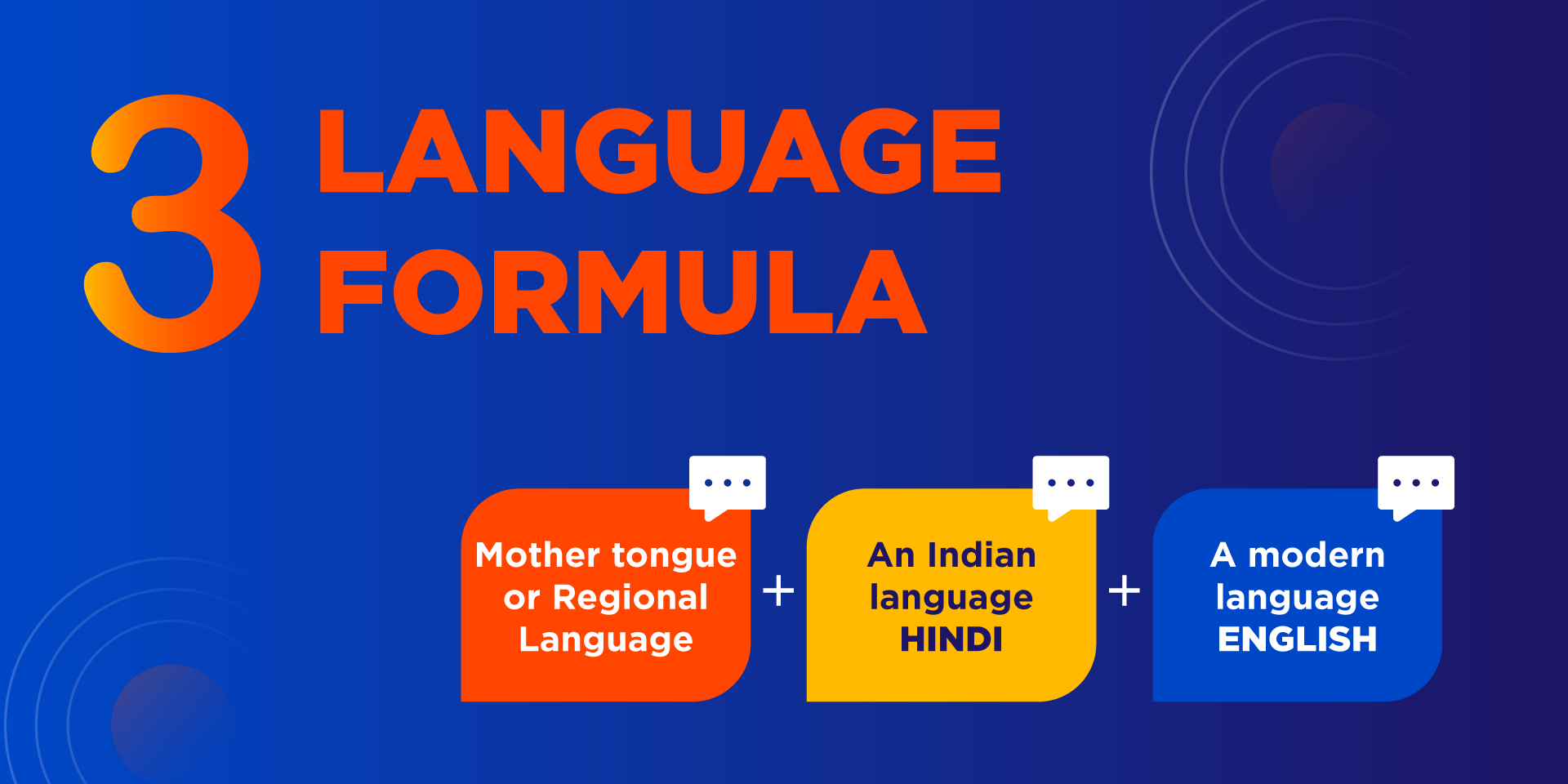
To understand how the 3-language trap alters student learning, we must first look at its logical structure. The policy typically mandates that a student must learn three distinct tongues simultaneously:
The Mother Tongue: The native regional dialect spoken at home.
The National Language: The primary political or historic language of the country.
The Global Language: Usually English, intended for international integration.
While this policy sounds inclusive and progressive on paper, in practice, it creates a dangerous bottleneck. When a curriculum divides a 14-year-old student’s cognitive bandwidth equally among three separate grammatical structures, mastery over any single language drops significantly. Instead of creating fluent, trilingual citizens, the 3-language trap frequently produces students who are semi-fluent in three languages but incapable of professional-level communication in any of them.
2. Why Are We Asking: Is English Now a "Foreign Language"?
For generations, English was treated as a primary or secondary foundational language in non-Western educational frameworks. It was woven into mathematics, integrated into science textbooks, and used as the medium of instruction.
Today, however, a massive policy shift is reclassifying English. By relegating it to a tertiary subject—taught for only 45 minutes a day alongside completely unrelated linguistic structures—schools are effectively treating it as a non-essential elective.
[Traditional System]  --> English as a Core Tool (Math, Science, Daily Use)
[3-Language Trap]     --> English as a Isolated Subject (Grammar Rules Only)
When you treat a global communication tool with the same pedagogical distance that you treat a traditional elective, you change how students internalize it. This is precisely why critics are asking: Is English now a foreign language? It is increasingly being viewed by students not as a living, breathing tool for daily life, but as an alien set of abstract grammar rules to be memorized for an exam and immediately forgotten.
3. The Cognitive Overload of Trilingual Curriculums
Human brains are remarkably adaptive, but they are not infinite data drives. When a child is trapped within the 3-language trap, their cognitive processing limits are pushed to the brink.
Learning a language requires deep cultural immersion, constant contextual practice, and structural familiarity. When a student is forced to constantly switch their brain chemistry between a regional dialect, a national script, and English, structural interference occurs.
Students begin applying the syntax of their native tongue to English essays, resulting in broken communication. The sheer volume of vocabulary, spelling rules, and idioms across three distinct linguistic families leaves ninth and tenth graders feeling entirely overwhelmed and academically paralyzed.
4. The Hidden Socioeconomic Divide of Linguistic Shifts
When public school systems succumb to the 3-language trap, wealthy families do not suffer. Instead, a massive socioeconomic chasm opens up.
Affluent parents recognize the danger of asking is English now a foreign language inside public school walls. In response, they pull their children out of state-funded systems and enroll them in elite, private, international academies where English remains the absolute medium of instruction.
Meanwhile, working-class students are left relying on the public school curriculum. When the public system dilutes English instruction under the guise of trilingual equity, it effectively cuts off marginalized children from the global digital economy. The rich maintain their global fluency, while the poor are linguistically locked out.
5. The STEM Pipeline Bottleneck: When Science Meets Broken English
The consequences of this linguistic policy hit a brick wall when students attempt to enter higher education, particularly within Science, Technology, Engineering, and Math. The entire global STEM pipeline operates almost exclusively in English. Academic journals, coding repositories, software documentation, and international research collaborations require an advanced, nuanced grasp of the English language.
When the 3-language trap reduces a student’s linguistic capability, their ability to navigate complex scientific concepts collapses. A student might understand advanced calculus or organic chemistry concepts in their native dialect, but if they cannot write a research paper, comprehend a python documentation manual, or present at an international conference, their career in the STEM pipeline stalls out before it even begins.
6. How the Corporate World Views the New Linguistic Reality
Global businesses do not adapt their internal communication strategies to accommodate a country’s internal educational experiments. In the corporate sector, English is not an optional asset; it is the infrastructure.
When HR managers and corporate recruiters interview graduates who have been processed through the 3-language trap, they notice a distinct trend. Candidates possess high technical skills but struggle with soft skills, cross-border negotiation, and nuanced corporate storytelling.
By allowing public systems to treat English like an isolated, optional subject, nations inadvertently reduce the employability of their youth on the international stage.
7. The Emotional and Identity Crisis for Modern Students
Beyond data and corporate metrics, there is an intense psychological toll on the youth caught in this system. Students feel caught between cultural preservation and global survival.
On one hand, they want to speak their heritage languages to remain connected to their families and communities. On the other hand, they know the global economy values English above all else.
When forced into the 3-language trap, students experience chronic academic anxiety. They feel inadequate in their native tongue because they don’t study its advanced literature, and they feel insecure in English because they never get to speak it naturally. They are left floating in a linguistic limbo—lacking a true, confident voice in any world.
8. Case Studies: Regions Feeling the Strain of Trilingual Policies
This crisis is not theoretical; it is actively playing out across several developing economies and post-colonial nations.
| Region / Context | Policy Intention | Actual Practical Outcome |
| Southeast Asian Public Schools | Promote regional heritage alongside global tech readiness. | High exam scores in grammar, but a total collapse in conversational English fluency. |
| South Asian Educational Boards | Equalize regional dialects with the national language. | Private schools thrive; public school graduates face severe corporate hiring bias. |
| Eastern European Border States | Shift away from legacy political tongues to local + Western alignment. | Severe teacher shortages as educators struggle to teach advanced subjects trilingually. |
These case studies show that whenever a government attempts to legislate linguistic balance without dramatically expanding school hours or teacher training, the global language is always the first to degrade into a textbook-only subject.
9. Dismantling the 3-Language Trap: Strategic Solutions
How do we fix this educational crisis without losing our cultural heritage? Dismantling the 3-language trap requires moving away from rigid, bureaucratic mandates and embracing practical pedagogical design.
Functional Separation: Stop teaching all three languages using the same dry, grammatical methods. Use the mother tongue for emotional expression and history, the national language for civic life, and English as an active, applied tool for science and tech.
Immersive Learning over Memorization: Move away from standard written exams. If we want to prevent people from asking is English now a foreign language, we must evaluate students based on real-world application—debates, presentations, and digital content creation.
Leveraging Digital Tools: Use AI-driven language apps and global digital media to supplement classroom shortages, allowing students to hear natural conversational flow outside of outdated textbooks.
10. Conclusion: Finding Balance in a Multilingual World
Preserving local culture and native dialects is a noble, necessary endeavor. A society that loses its historic tongue loses its soul. However, forcing children into a poorly executed 3-language trap that treats the global language of the internet and commerce as an outsider elective is an act of economic self-sabotage.
We must stop treating language education as a zero-sum political game. By redesigning our curricula to view English not as a threatening “foreign” entity, but as a practical, shared utility, we can raise a generation that is proudly rooted in its local heritage while remaining entirely unhindered on the global stage.

How useful was this post?
Click on a star to rate it!
Average rating 0 / 5. Vote count: 0
No votes so far! Be the first to rate this post.