
The Trap: How India’s Education System is Breaking Its Youth
Every spring, a familiar and tragic ritual unfolds across India. As billboards light up with the smiling faces of national toppers who scored 99.9th percentiles in JEE, NEET, or Board examinations, a silent counter-statistic builds in the shadows.
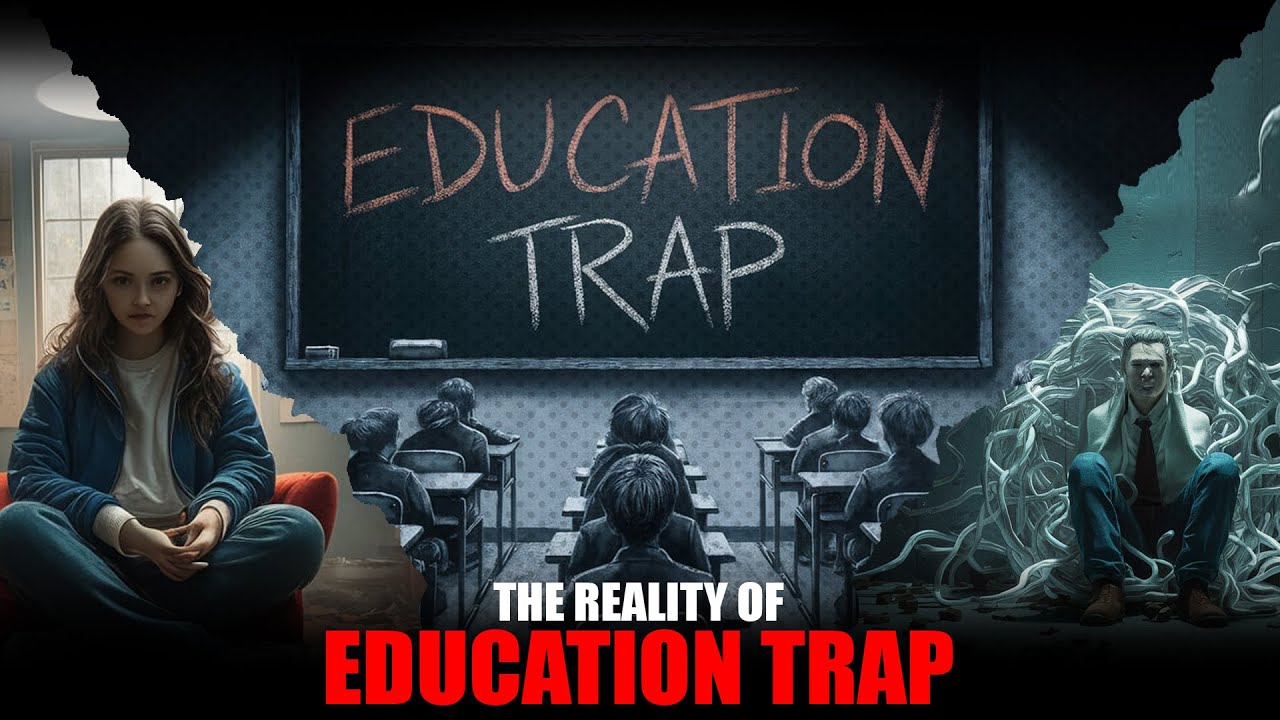
For decades, India’s academic landscape has been celebrated globally for producing world-class engineers, doctors, and tech executives. Yet, beneath this glittering surface of extreme meritocracy lies a structural emergency. The relentless pressure of the Indian academic setup has mutated into what psychologists, educators, and the highest courts now openly call a systemic trap—one that is actively breaking the mental well-being of its youth.
This deep dive exposes the hidden machinery of India’s hyper-competitive education model, exploring how an obsession with rote memorization, institutional apathy, and a brutal coaching culture are driving a generation to the brink of cognitive burnout and despair.
1. The Mirage of the 99th Percentile: Defining the Academic Trap
In India, education is rarely viewed merely as a pathway to learning or self-discovery. Instead, it is treated as a high-stakes lottery and an ultimate economic escape route. In a country with a vast population and a historic scarcity of elite institutional seats, the difference between a 99th percentile and a 98th percentile can mean the difference between professional validation and societal dismissal.
This reality creates “The Trap.” The trap springs the moment a young human being’s entire identity, self-worth, and future are reduced to a single, cold examination rank. From a tender age, children are implicitly taught that their value as a person is entirely tied to their report card. This toxic perfectionism eliminates the psychological safety needed to grow, replacing a child’s natural curiosity with a paralyzing, chronic fear of failure.
2. The Rise of the Coaching Industrial Complex
Over the last few decades, traditional schooling in India has been systematically hollowed out by a multi-billion-dollar coaching industrial complex. Cities like Kota in Rajasthan, Sikar, and hyper-competitive regional hubs across the National Capital Region (NCR) have become factory towns designed entirely around competitive exam preparation.
In these intensive preparation factories, teenagers are stripped of a normal childhood. They spend 12 to 14 hours a day inside tiny, windowless classrooms and cramped hostel rooms. The environment operates on a brutal assembly-line model where students are segregated into “star batches” based on weekly test scores, while those who lag behind are neglected. This hyper-transactional setup treats young minds as commercial units of production rather than developing human beings.
3. The Shift from School to Coaching: A Lost Generation
There is a fundamental, structural difference between a nurturing school environment and a competitive exam factory. We must urgently return to a philosophy that prioritizes school, not coaching if we hope to save our youth from early burnout.
| Core Attribute | True Nurturing School Ecosystem | Hyper-Competitive Coaching Model |
| Primary Goal | Holistic development, critical thinking, and social-emotional growth. | Rote-learning optimization, speed tricks, and clearing specific exam cut-offs. |
| Peer Dynamics | Collaboration, deep lifelong friendships, sports, and creative arts. | Cutthroat competition, isolation, and viewing classmates as immediate obstacles. |
| Identity Base | Multidimensional (hobbies, character, diverse academic interests). | One-dimensional (Weekly mock-test scores and comparative batch rankings). |
When traditional schools morph into shadow dummy schools just to fulfill attendance criteria while coaching centers dictate a child’s entire life, the youth lose their vital social support networks, creative outlets, and emotional cushions.
4. Performance-Contingent Self-Worth: The Psychological Burden
Why does an academic failure hit an Indian student so devastatingly hard? The answer lies in a deeply rooted psychological vulnerability known as Performance-Contingent Self-Worth.
In many Indian households, academic success is intertwined with filial piety and family honor. Children carry the immense weight of their parents’ sacrifices, life savings spent on fees, and the collective expectations of extended relatives. When a youth believes that parental love, respect, and their place in society are strictly contingent on a test score, a poor mock exam result feels like an existential rejection. This psychological burden leaves students struggling with chronic anxiety and a profound sense of isolation
5. What the Supreme Court’s National Task Force Revealed
For years, institutional headers dismissed the rising tide of student distress as an individual mental health issue, often shifting the blame onto the “weakness” or “frailty” of the student. However, landmark judicial interventions have completely shattered this narrative, exposing the crisis as a profound structural and institutional failure.
The landmark interim report by the Supreme Court-appointed National Task Force (NTF) on student mental health, chaired by former Supreme Court Judge Justice S. Ravindra Bhat, brought forward alarming systemic revelations. The report notes that student suicides in India have doubled over a decade, tragically surpassing farmer suicides in recent counts.
More damningly, the NTF’s nationwide survey revealed that 73% of higher educational institutions completely lack a full-time mental health professional, and fewer than 4% maintain any formal suicide-risk management protocol. The message from the apex court is clear: student distress is being driven directly by institutional apathy.
6. Campus Alienation and the Pain of the "Social Mismatch"
The pressure doesn’t miraculously dissolve once a student successfully navigates the entrance matrix and secures admission into an elite central university, IIT, or medical college. For many marginalized students, entry into these spaces marks the beginning of severe campus alienation.
The Supreme Court NTF report explicitly highlighted a stark “social mismatch” on premier campuses. While students from diverse socioeconomic backgrounds make up a significant portion of enrolments, the faculty and administrative leadership remain skewed toward privileged urban backgrounds. Students coming from tier-2 and tier-3 cities often face quiet caste profiling, subtle discrimination based on their entry ranks, and social exclusion during informal “vibe checks” that mock their English fluency or grooming, exacerbating depression and isolation.
7. Brutal Academic Regimes and Chronic Sleep Deprivation
The day-to-day lifestyle within many premier Indian professional colleges is intentionally grueling, often romanticizing suffering under the guise of building grit. Medical interns and residents, for instance, are routinely subjected to continuous 36-to-48-hour shifts without adequate food or rest.
This institutionalized cognitive burnout and chronic sleep deprivation seriously damages brain function and emotional stability. When students speak up about being exhausted, they are often publicly shamed by senior faculty as being “lazy” or “unfit” for the profession. This toxic normalization of burnout destroys long-term mental well-being, leaving zero space for basic self-care or psychological recovery.
8. Financial Exploitation and Scholarship Delays
For students from lower-income or marginalized families, a higher education degree is an explicit family investment. However, structural inefficiencies within state and central administrative bodies regularly compromise this hope.
State universities frequently experience severe delays in releasing government scholarship payouts. Rather than absorbing these bureaucratic delays, colleges often pass the financial anxiety directly onto vulnerable students—barring them from taking end-semester exams, evicting them from hostels, or withholding their final degrees over arrears they did not cause. This constant financial precarity, piled on top of intense coursework, creates a pressure-cooker environment.
9. Regulatory Vacuums and Paper Leaks: Compounding the Anxiety
The reliability of India’s high-stakes exam system has been repeatedly shaken by a series of administrative collapses, including recurring competitive exam question paper leaks and subsequent sudden cancellations.
This introduces an agonizing layer of prolonged uncertainty. When an exam a student has sacrificed years of their life preparing for is suddenly canceled due to a security breach, their psychological timeline is shattered. India currently lacks a direct statutory, legally binding framework to manage student crisis interventions or hold testing boards accountable, leaving millions of young citizens in a state of perpetual anxiety.
10. Reclaiming the Mind: Nurturing a Growth Mindset Shift
Breaking out of this systemic trap requires a profound philosophical transformation among parents, educators, and policy makers. We must intentionally dismantle the culture of fixed metrics and actively cultivate a growth mindset across our homes and classrooms.
A growth mindset teaches young minds that intelligence and talent are developed through resilience, strategy, and learning from mistakes, rather than being unchangeable traits determined by an entrance score. We must re-couple the act of studying with genuine curiosity and critical thinking, building an environment where a child feels completely safe to fail, iterate, and discover alternative paths to life success.
11. The Blueprint for Structural Reform
Resolving India’s youth mental health crisis requires moving past empty rhetoric and enforcing legally binding institutional accountability. To create safe, equitable, and supportive environments, we must implement clear structural changes across our educational landscape:
Enforce Independent, Strict Student Confidentiality: Campus counseling centers must operate completely independently of university administrations. The harmful practice of automatically notifying faculty or parents when a student seeks psychological support must be ended, as it actively deters vulnerable and LGBTQ+ youth from seeking help.
- Mandate 24/7 Professional Medical Access: As underscored by the UGC Guidelines on Student Mental Health and Well-being, every residential campus must provide around-the-clock access to certified, independent mental health practitioners.
Dismantle Performance Segregation: Following the principles highlighted in the Supreme Court’s Sukdeb Saha v. State of Andhra Pradesh framework, institutions must completely ban the public sorting, shaming, or batch-segregation of students based purely on academic marks.
Expand National Crisis Support Infrastructure: Educational networks must be deeply integrated with accessible, free crisis hotlines like the government’s Tele-MANAS Initiative to provide immediate, anonymous tele-counselling for youth in acute distress.
Our youth are the heartbeat, the intellect, and the future of the nation. It is time to dismantle the assembly line of performance-contingent trauma and construct an educational ecosystem that honors their humanity, protects their peace of mind, and values their life far above any examination rank.

How useful was this post?
Click on a star to rate it!
Average rating 0 / 5. Vote count: 0
No votes so far! Be the first to rate this post.