
Top and Best Institutes for Astronomy, Astrophysics and Space Science
The universe has always captured human curiosity, prompting scientists to build modern instruments and explore deep space. Pursuing an academic career in astronomy, astrophysics, and space science offers researchers a chance to study celestial mechanics, dark matter, theoretical physics, and planetary exploration.
Selecting the right academic institution provides access to cutting-edge observatories, satellite technology laboratories, and supercomputing centers. Below is an in-depth breakdown of the world’s most prestigious institutions dedicated to advancing our understanding of the cosmos.
1. California Institute of Technology (Caltech) – United States
The California Institute of Technology stands at the absolute pinnacle of astrophysics research and observational space science. Home to the legendary Jet Propulsion Laboratory (JPL), which Caltech manages for NASA, the university plays a central role in planetary exploration missions and robotic space probes.
Students and researchers at Caltech gain direct access to world-class facilities, including the Palomar Observatory and the W. M. Keck Observatory in Hawaii. The institution’s Department of Astronomy specializes in stellar astrophysics, observational cosmology, extra-solar planet detection, and gravitational wave physics. Studying at Caltech connects scholars directly with active space exploration programs and cutting-edge instrumentation projects.
Official portal: Learn more about academic programs at the Caltech Astronomy Department
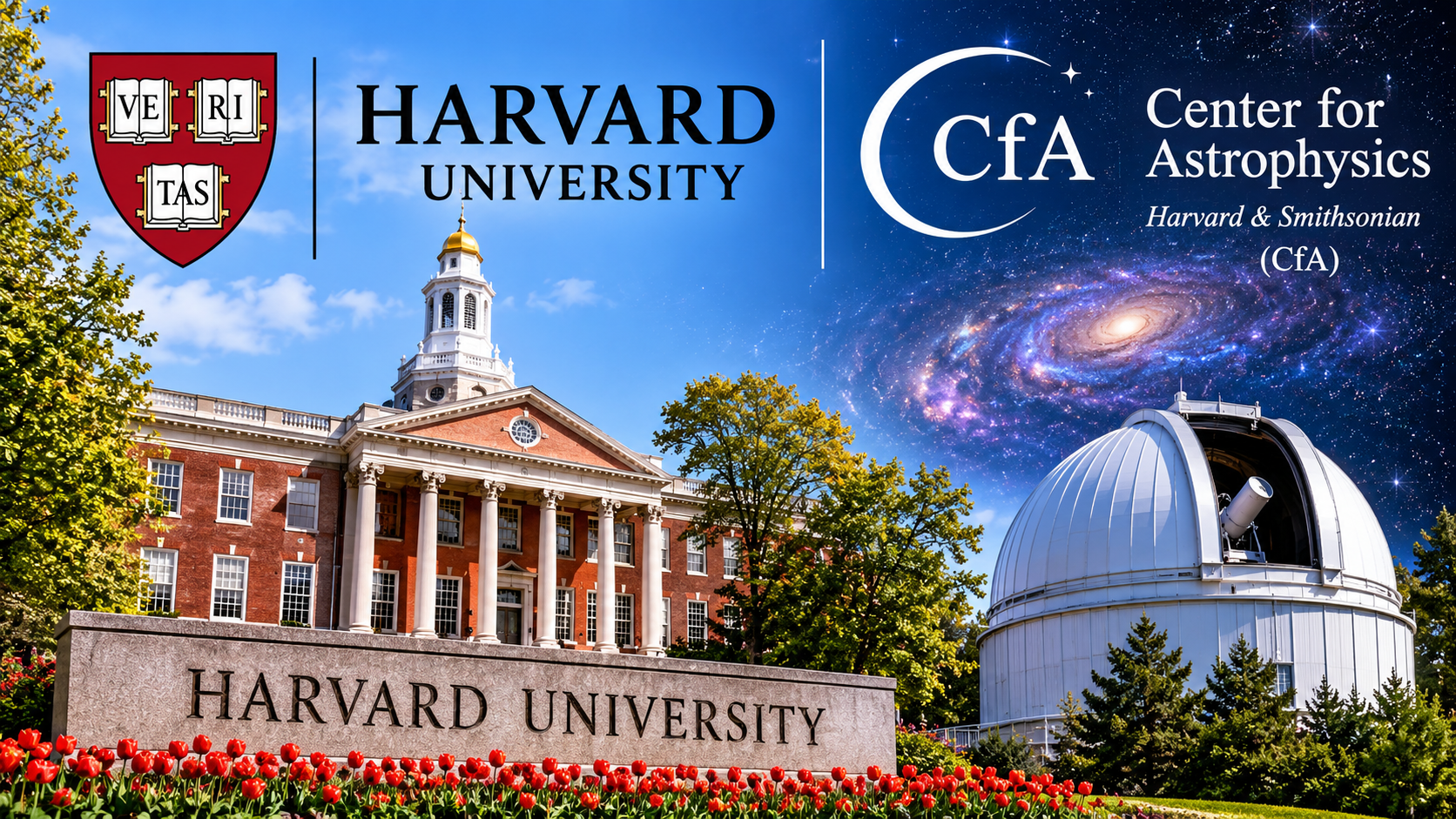
2. Harvard University & Center for Astrophysics | Harvard & Smithsonian (CfA) – United States
Harvard University hosts one of the world’s largest and most diverse astronomical research organizations: the Center for Astrophysics | Harvard & Smithsonian. This collaborative enterprise combines the observational resources and theoretical power of the Harvard College Observatory and the Smithsonian Astrophysical Observatory.
The Center for Astrophysics conducts extensive research across the entire electromagnetic spectrum. Key focus areas include submillimeter astronomy, high-energy astrophysics, solar physics, and exoplanet characterization. Harvard’s academic programs provide a solid grounding in theoretical physics alongside hands-on research using space telescopes such as the Chandra X-ray Observatory.
Official portal: Explore research opportunities at the Harvard Center for Astrophysics.
3. Massachusetts Institute of Technology (MIT) – United States
The Massachusetts Institute of Technology is globally recognized for integrating physical science with advanced engineering and space instrumentation. The MIT Kavli Institute for Astrophysics and Space Research serves as the central hub for the university’s cosmic investigations.
MIT researchers excel in space payload design, optical and X-ray astronomy, and planetary science studies. MIT played a pivotal role in missions like the Transiting Exoplanet Survey Satellite (TESS) and continues to lead breakthroughs in gravitational wave astrophysics. Students here benefit from an interdisciplinary ecosystem that bridges deep-space exploration with state-of-the-art technological innovation.
Official portal: Discover research initiatives at the MIT Kavli Institute.
4. University of Cambridge – United Kingdom
The University of Cambridge boasts a long, distinguished legacy in physical sciences, dating back to Sir Isaac Newton and continuing through modern cosmologists like Stephen Hawking. Today, the university’s Institute of Astronomy (IoA) remains a leader in observational and theoretical astrophysics.
Cambridge excels in key theoretical domains, including early universe cosmology, galactic structure formation, black hole physics, and astronomical data processing. The Institute maintains strong international linkages, allowing researchers to utilize major overseas observation platforms, including telescopes run by the European Southern Observatory (ESO).
Official portal: Read about courses and research at the Cambridge Institute of Astronomy.
5. University of Oxford – United Kingdom
The University of Oxford houses a dynamic Astrophysics sub-department within its Department of Physics. Oxford is internationally recognized for its contributions to observational cosmology, radio astronomy, galaxy evolution, and instrumentation design.
Oxford scientists are leading contributors to international consortiums, such as the Square Kilometre Array (SKA) project and the Vera C. Rubin Observatory. Students receive intensive academic preparation, gaining expertise in massive astronomical datasets, computational modeling, and observational techniques.
6. Max Planck Institute for Astrophysics & Max Planck Institute for Extraterrestrial Physics – Germany
Located in Garching near Munich, the Max Planck Institute for Astrophysics (MPA) and the Max Planck Institute for Extraterrestrial Physics (MPE) collectively form one of Europe’s premier centers for space science. Operating alongside the European Southern Observatory (ESO) headquarters, this research complex provides an unmatched environment for astrophysicists.
Research at the Max Planck Institutes ranges from high-energy astrophysics and gamma-ray astronomy to numerical simulations of cosmic structure formation. While primarily research institutions, they maintain joint doctoral and postdoctoral training programs with nearby universities such as LMU Munich and TU Munich.
Official portal: Learn about research programs at the Max Planck Institute for Astrophysics.
7. Princeton University – United States
Princeton University is synonymous with theoretical physics, dark matter studies, and general relativity applications in cosmology. The Department of Astrophysical Sciences at Princeton offers an intimate academic environment with exceptional faculty-to-student ratios.
Princeton maintains strong ties with the Institute for Advanced Study (IAS) and plays a leading role in major international sky surveys, such as the Sloan Digital Sky Survey (SDSS) and the Atacama Cosmology Telescope (ACT). Areas of expertise include plasma astrophysics, compact object physics, star formation, and planetary system dynamics.
Official portal: Explore academic programs at Princeton Department of Astrophysical Sciences.
8. University of California, Berkeley – United States
The University of California, Berkeley has a long history of astronomical discoveries, including groundbreaking research that revealed the accelerating expansion of the universe. The university operates the Space Sciences Laboratory (SSL), which builds and manages instrumentation for NASA satellite missions.
UC Berkeley excels in high-energy astrophysics, supernova searches, radio astronomy, and theoretical cosmology. Scholars at UC Berkeley utilize observational facilities across California, including the Lick Observatory, and work closely with Lawrence Berkeley National Laboratory.
Official portal: Check out graduate and research programs at UC Berkeley Astronomy.
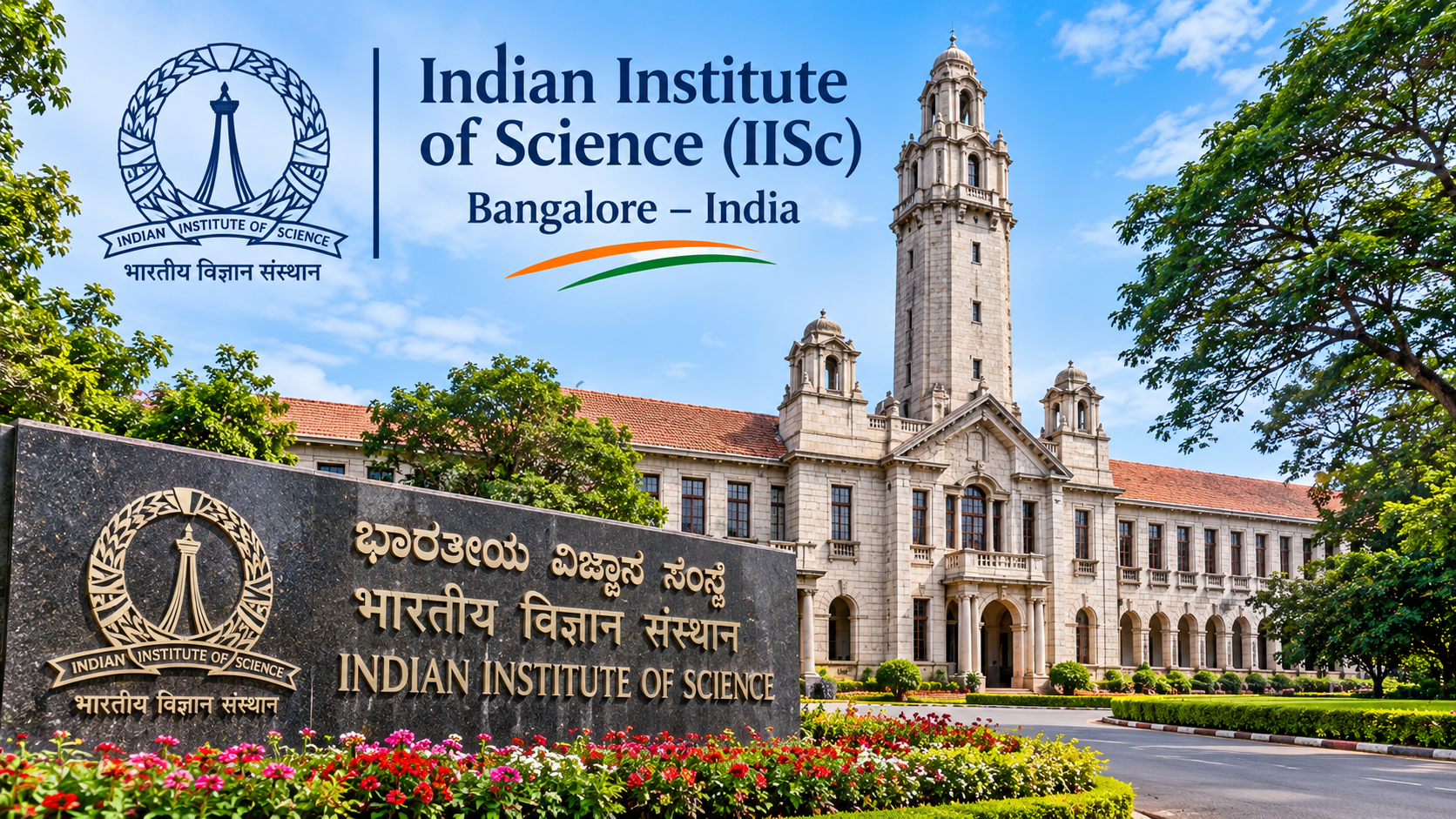
9. Indian Institute of Science (IISc) Bangalore – India
The Indian Institute of Science (IISc) in Bangalore is India’s leading research institution for fundamental physical sciences. Its Department of Physics and the Joint Astronomy Programme (JAP) provide advanced postgraduate training in astrophysics and space science.
Research at IISc covers solar physics, neutron star astrophysics, black hole accretion dynamics, cosmic ray physics, and theoretical cosmology. IISc collaborates with national laboratories and space agencies, serving as a primary pipeline for scientific talent entering advanced space research.
Official portal: Visit the main portal for the Indian Institute of Science.
10. Indian Institute of Astrophysics (IIA) Bangalore – India
The Indian Institute of Astrophysics (IIA) is an autonomous research institution funded by the Department of Science and Technology, Government of India. Dedicated entirely to astronomical sciences, IIA operates premier observational facilities across India.
Key observational assets include the Indian Astronomical Observatory at Hanle, Ladakh—one of the highest altitude observatory sites in the world—and the Vainu Bappu Observatory at Kavalur. IIA specializes in optical, infrared, and solar astronomy, payload development for space missions, and theoretical stellar physics.
Official portal: Discover observatory facilities at the Indian Institute of Astrophysics.
11. Indian Institute of Space Science and Technology (IIST) Thiruvananthapuram – India
The Indian Institute of Space Science and Technology (IIST) holds a unique position as Asia’s first university dedicated exclusively to space study and technology. Established under the Department of Space, Government of India, IIST works in direct partnership with the Indian Space Research Organisation (ISRO).
IIST offers targeted academic programs in avionics, aerospace engineering, physical sciences, and astronomy. Students participate in space payload development, satellite design, atmospheric science, and planetary remote sensing. Graduates frequently step directly into roles supporting space missions and satellite development.
Official portal: Learn about programs at the Indian Institute of Space Science and Technology.
Key Academic Paths and Core Specializations
When choosing an institute for astronomy, astrophysics, or space science, prospective students should align their career goals with the specific domain of study:
Observational Astronomy: Focuses on gathering data across the electromagnetic spectrum (optical, radio, infrared, X-ray, and gamma-ray) using ground-based observatories and space telescopes.
Theoretical Astrophysics: Uses computational physics, fluid dynamics, and general relativity models to explain phenomena like black holes, dark energy, and cosmic expansion.
Space Science & Payload Engineering: Focuses on spacecraft design, satellite navigation systems, atmospheric remote sensing, and instrumentation built for planetary landers and space probes.
Planetary Geology and Exoplanet Research: Explores planetary formation, atmospheric composition, solar system dynamics, and the search for habitable environments beyond Earth.
Selecting top institutions ensures access to collaborative international research groups, supercomputing infrastructure, and space mission data pipelines. Whether your interest lies in theoretical physics or hardware engineering for orbital payloads, these top-tier institutions provide the academic foundation required to push the frontiers of human knowledge.

How useful was this post?
Click on a star to rate it!
Average rating 0 / 5. Vote count: 0
No votes so far! Be the first to rate this post.