
Roberts v Louisiana
In Roberts v Louisiana, the US Supreme Court evaluated a case where the petitioner received an automatic death sentence under Louisiana law for a first-degree murder committed during a gas station robbery.
Reversing the Supreme Court of Louisiana, the US Supreme Court held that while capital punishment is not inherently unconstitutional per se, Louisiana’s mandatory death penalty statute violated the Eighth and Fourteenth Amendments.
The Court emphasized that automatic death sentences fail to provide individualized consideration of mitigating factors and that Louisiana’s responsive-verdict system lacked clear standards to prevent arbitrary decisions, effectively encouraging juries to compromise on lesser charges whenever they wished to avoid a mandatory execution.
Additionally, related constitutional precedents underscore that severe penalties, such as life imprisonment without parole for juveniles, similarly breach Eighth Amendment safeguards against cruel and unusual punishment.
Terrance Jamar Graham v Florida
In Terrance Jamar Graham v Florida, the US Supreme Court ruled in a 4-to-2 decision that sentencing a juvenile to life imprisonment without parole for a non-homicidal crime—such as armed burglary with assault—violates the Eighth Amendment’s prohibition against cruel and unusual punishment.
Reversing the decision of the Florida Court of Appeal, the Supreme Court determined that such harsh sentences lack penological justification under retribution, deterrence, incapacitation, or rehabilitation, and contradict a growing national consensus.
The Court emphasized that because a youth’s character is not fully formed at the time of sentencing, courts cannot prematurely declare a juvenile permanently dangerous.
Consequently, while states are not required to guarantee ultimate release, they must afford non-homicidal juvenile offenders a realistic opportunity to demonstrate growth, maturity, and rehabilitation to seek release during their lifetime.
R v Secretary of State for the Home Department, ex parte Hindley
In R v Secretary of State for the Home Department, ex parte Hindley, the House of Lords reviewed a challenge brought by Myra Hindley against the Home Secretary’s decision to maintain a “whole life tariff,” ensuring her detention for the entirety of her natural life following her murder conviction.
Delivering the court’s reasoning, Lord Steyn affirmed decisions from the Divisional Court and the Court of Appeal, dismissing Hindley’s appeal and upholding the lawfulness of whole life tariffs.
The House of Lords held that under Section 27 of the Prison Act, 1952, a sentence of life imprisonment is legally defined as an indeterminate period that lasts until the prisoner’s death unless executive release is granted.
The Court reasoned that certain crimes are so uniquely wicked that the requirements of retribution and deterrence are never fully satisfied, thereby making a lifetime of detention without eventual release both lawful and appropriate in extreme cases.
Roberts v The Queen
In Roberts v The Queen, the Supreme Court evaluated an appeal against a sentence of strict security life imprisonment with a 20-year non-parole period imposed under Section 282 of the Western Australian Criminal Code for wilful murder.
The appellant contended that the trial judge erred in categorizing the offense in the upper range of severity and argued that standard life imprisonment should have been granted given his background.
Dismissing the appeal, the Court held that the unprovoked, frenzied nature of the attack—wherein the accused pursued a retreating victim over 30 paces and inflicted nearly 100 severe wounds—demonstrated extraordinary brutality that placed the crime in the upper spectrum of seriousness.
Consequently, the Court affirmed that the extreme overkill and utter lack of justification fully warranted the imposition of strict security life imprisonment.
HOMICIDE BY NEGLIGENCE
Under Section 304A of the Indian Penal Code, 1860, causing death by a rash or negligent act carries a penalty of up to two years imprisonment, a fine, or both, provided there is a direct legal nexus establishing the act as the immediate cause (causa causans) of the death.
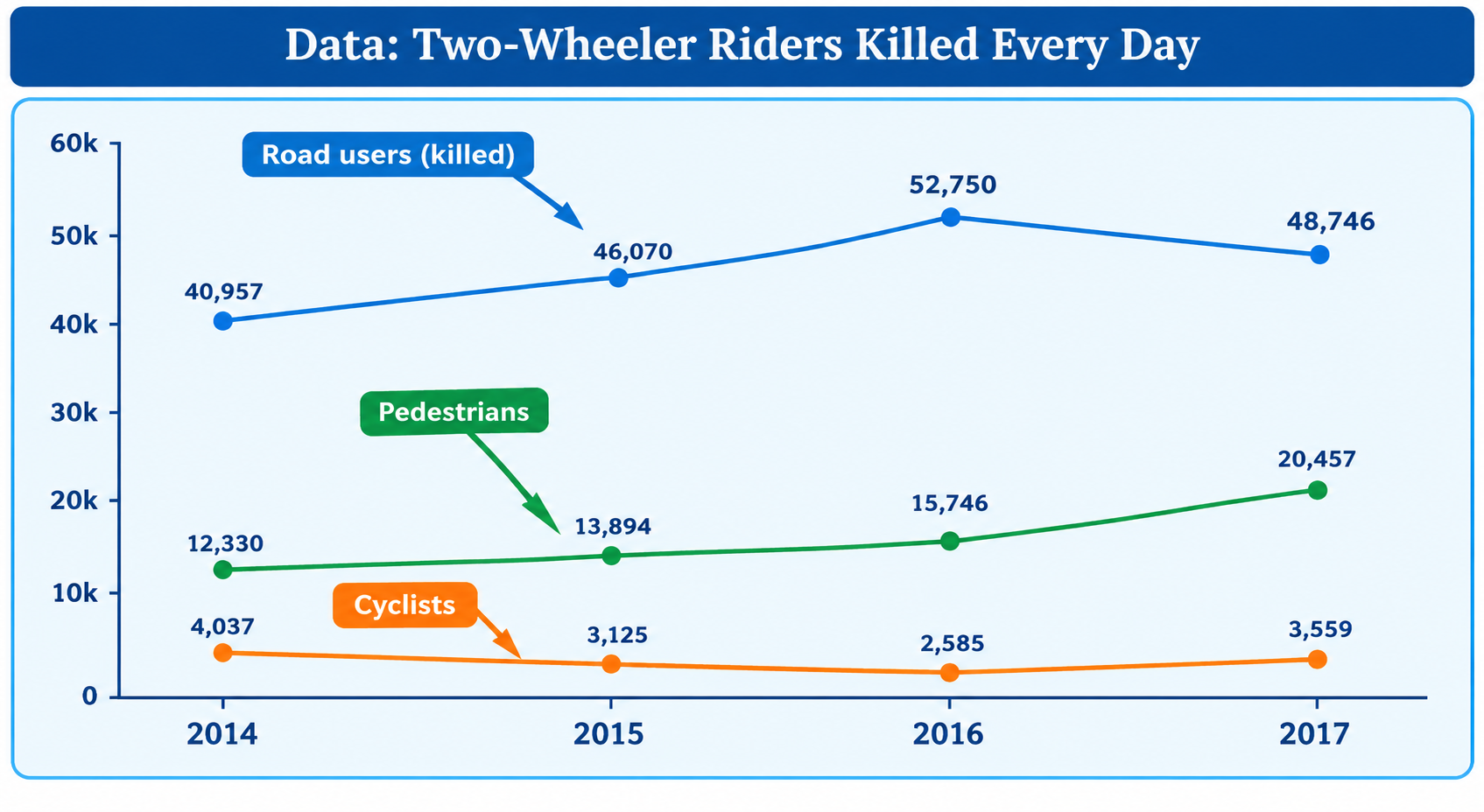
Despite India holding only 1% of the world’s vehicles, it accounts for 10% of global road fatalities, with pedestrians, cyclists, and two-wheeler riders constituting more than half of all road deaths.
This ongoing crisis carries a severe economic burden, costing the nation approximately 3% of its GDP annually.
Given these staggering numbers and the limitations of 19th-century legislation, commentators and legal scholars advocate for reforming Section 304A to increase penalties to a minimum of two years and up to five years imprisonment—alongside substantial fines—while pairing legal reforms with mandatory safety mechanisms like Anti-lock Braking Systems (ABS) for two-wheelers.
Ravi Kapur v State of Rajasthan
In Ravi Kapur v State of Rajasthan, the Supreme Court evaluated an appeal concerning a fatal jeep collision caused by reckless driving that resulted in three deaths and multiple critical injuries.
Although the trial court acquitted the accused and the High Court subsequently reduced the sentence to the period already undergone, the Supreme Court allowed the State’s appeal to enhance the punishment.
The Court held that rash and negligent driving under Sections 279, 337, and 304A of the IPC cannot be judged in isolation by speed alone, but must be evaluated through the surrounding circumstances, the doctrine of reasonable care, and the principle of res ipsa loquitur.
Emphasizing that undue leniency and unwarranted sympathy erode public confidence in the rule of law, the Supreme Court ruled that sentences must remain strictly proportionate to the gravity of the offense to ensure adequate deterrence and uphold societal interests.
Cherubin Gregory v State of Bihar
In Cherubin Gregory v State of Bihar, the appellant was convicted under Section 304A of the IPC after setting up a naked, electrically charged copper wire at the back of his house, which resulted in the electrocution and death of a neighbor named Madilen who used his latrine.
Justice Rajagopala Ayyangar rejected the defense’s argument that the victim was a trespasser to whom no duty of care was owed, emphasizing that a trespasser is not an outlaw and property owners cannot lawfully set traps or lethal barriers to inflict serious harm.
The Court affirmed that while an occupier is not required to safeguard trespassers, they are legally prohibited from willfully deploying lethal hazards—such as high-voltage uninsulated wires—under the guise of protecting private property.
Consequently, the appeal was dismissed, reinforcing that human life takes precedence over property defense and that reckless disregard for intruders constitutes criminal negligence.
Juggankhan v State of MP
In Juggankhan v State of MP, the Supreme Court reviewed a case where a registered homoeopath was initially convicted of murder under Section 302 of the IPC after administering dhatura and stramonium to a patient suffering from guinea worms, which resulted in her death.
Although lower courts upheld the murder conviction based on medical testimony identifying an irritant, the Supreme Court partly allowed the appeal, ruling that the conviction should be altered to Section 304A IPC for causing death by a rash and negligent act.
The Court reasoned that because there was no conclusive proof that the dose was inherently fatal or administered with the knowledge or intent required for culpable homicide, the elements of murder were not met.
Instead, the practitioner’s failure to thoroughly study the effects and proper administration of a dangerous substance constituted gross medical negligence rather than intentional killing.
Syed Akbar v State of Karnataka
In Syed Akbar v State of Karnataka, the court reviewed the case of a bus driver driving at a moderate speed who suddenly encountered a four-year-old child crossing a narrow 12-foot-wide road bordered by deep ditches.
In an attempt to avoid the child, the driver swerved the bus to the extreme right—as far as safety permitted without plunging into the ditch—but tragically, the child was struck and killed.
The court ruled that because the driver took prompt evasive action under difficult, pressurized circumstances, the incident was the result of a sudden error in judgment rather than criminal negligence or a lack of driving skill, leading to the appellant’s acquittal.
Furthermore, as highlighted in related legal principles, honest errors in judgment, simple lack of care, or unexpected treatment accidents do not constitute criminal rashness or negligence under Section 304A of the Indian Penal Code.
Jacob Mathew v State of Punjab
In Jacob Mathew v State of Punjab, the Supreme Court reviewed a case where a patient died after doctors and hospital staff experienced critical delays due to an empty oxygen cylinder and a lack of functional equipment.
Although lower courts framed charges under Section 304A of the IPC, the Supreme Court quashed the charges against the doctors, ruling that criminal prosecution requires gross negligence and a breach of individual professional duty, whereas logistical and infrastructural failures of hospital equipment are matters of civil liability rather than individual criminal recklessness.
The Court established comprehensive guidelines shielding medical practitioners from routine criminal harassment for simple errors in judgment, provided they exercise ordinary competence.
However, this ruling has faced critical commentary from legal analysts who argue that such lenient standards undermine the gravity of patient safety, failing to adequately penalize gross institutional failures that endanger lives in emergency care settings.
Prashant Dhananka v Nizam Institute of Medical Science, Hyderabad
In Prashant Dhananka v Nizam Institute of Medical Science, Hyderabad, the Supreme Court on May 14, 2009, awarded a landmark compensation of Rs 1 crore to a technocrat who had been left permanently paralyzed from the waist down and bedridden for 19 years after a surgeon accidentally damaged his spinal cord during the removal of a benign chest tumor.
By scaling up the High Court’s earlier award of Rs 15 lakh to Rs 1 crore, the Supreme Court set a crucial precedent for reassessing damages in medical negligence cases, echoing historical cases like that of table tennis player V. Chandrashekhar.
This milestone judgment underscores the judiciary’s growing commitment to ensuring that victims of severe, life-altering medical malpractice receive meaningful financial restitution that corresponds to the gravity of their lifelong suffering and permanent disability.
DOWRY DEATH
Section 304-B of the Indian Penal Code defines and penalizes dowry death, stipulating that if a married woman dies unnaturally within seven years of her marriage following cruelty or harassment by her husband or relatives over dowry demands, it is legally deemed a dowry death punishable by a minimum of seven years up to life imprisonment.
Introduced in 1986 to curb rampant bride burning and dowry-related violence, this provision uniquely shifts the burden of proof onto the accused family members, requiring them to disprove their culpability.
Because these offenses typically happen within the private confines of a home involving close relatives, enforcement can be challenging and complex, making statutory protections and strict judicial oversight essential for addressing domestic exploitation and upholding justice.
Rajbir @ Raju v State of Haryana
In Rajbir @ Raju v State of Haryana, the Supreme Court reviewed a case where a husband murdered his pregnant wife just six months after marriage due to unmet dowry demands, a crime for which the trial court initially awarded a life sentence before the High Court reduced it to ten years.
Addressing the alarming rise in dowry deaths, the apex court issued a directive instructing trial courts to ordinarily add Section 302 (Murder) of the IPC alongside Section 304B (Dowry Death) in such heinous cases, thereby ensuring that perpetrators face the possibility of capital punishment or rigorous life imprisonment.
Furthermore, the Court emphasized that statutory terms like “soon before her marriage” must be given a wide and liberal interpretation rather than a restrictive one, reinforcing the legal framework designed to protect women from domestic and dowry-related violence.
Ashok Kumar v State of Haryana
In Ashok Kumar v State of Haryana, the Supreme Court examined a tragic case where a woman was set on fire and killed due to unfulfilled dowry demands, including cash for a new business, less than two years into her marriage.
While the trial court convicted the husband, brother-in-law, and mother-in-law under Section 304B of the IPC, the appellate courts acquitted the relatives due to insufficient evidence while maintaining the husband’s conviction, ultimately sentencing him to the minimum statutory term of seven years of rigorous imprisonment.
In upholding the conviction, the apex court clarified that the statutory requirement of cruelty occurring “soon before her death” must be interpreted contextually to establish a reasonable nexus between the persistent harassment and the fatal outcome, reinforcing that rigid or restrictive definitions must not undermine the protective intent of anti-dowry legislation.
Shanti v State of Haryana
In Shanti v State of Haryana, the Supreme Court reviewed a case where a young married woman was subjected to continuous cruelty and harassment by her mother-in-law and sister-in-law over unfulfilled dowry demands for a scooter and a television, culminating in her death and a suspicious, hurried cremation that concealed the body from her grieving parents.
Although the High Court had set aside the conviction under Section 498A while upholding Section 304B, the Supreme Court clarified that Sections 304B and 498A are distinct and not mutually exclusive, emphasizing that the complete lack of notice to the victim’s family and the hasty disposal of the body triggered the legal presumption of dowry death under Section 113-B of the Evidence Act.
Ultimately, taking into account that both appellants were female relatives, the Supreme Court upheld their culpability under Section 304B but exercised judicial discretion to reduce their punishment from life imprisonment to the minimum statutory term of seven years of rigorous imprisonment.
State (Delhi Administration) v Laxman Kumar and Indian Federation of Women Lawyers v Shakuntala
In State (Delhi Administration) v Laxman Kumar, the Supreme Court reviewed appeals against the acquittal of a husband and his family members who were accused of burning a heavily pregnant young woman, Sudha, to death over dowry demands.
While the trial court had originally sentenced the accused to death upon establishing that they poured kerosene and set her ablaze, the Delhi High Court had wrongly acquitted them by accepting an unconvincing theory of an accidental stove burst.
Reversing the High Court’s judgment, the Supreme Court logically dismantled the accident defense by noting that an advanced-pregnant woman wearing only a nylon saree in December would not venture into the cold to operate a floor-level stove, especially when supported by the victim’s clear dying declarations pointing to her mother-in-law and husband.
Consequently, the Supreme Court restored the conviction and sentenced the mother-in-law and husband to life imprisonment, underscoring the judiciary’s firm condemnation of bride burning and dowry-related violence.
Maya Devi v State of Haryana
In Maya Devi v State of Haryana, the Supreme Court reviewed an appeal involving the tragic suicide by poisoning of a young woman named Kavita, who faced continuous physical and mental abuse from her husband and mother-in-law over dowry demands starting barely weeks after her 1994 marriage.
The trial and high courts had previously convicted both appellants under Sections 498A and 304B of the IPC, sentencing the husband and mother-in-law to life imprisonment, a decision that the Supreme Court upheld upon finding their guilt supported by consistent witness testimony and an unshakeable parental account.
Addressing the legal scope of dowry deaths, the apex court clarified that Section 304B encompasses suicides resulting from unrelenting harassment, emphasizing that while “soon before her death” requires a proximate and live link between the cruelty and the fatal outcome, it is a contextual standard meant to punish those whose ongoing abuse drives a vulnerable bride to take her own life.
Rajinder Singh v State of Punjab
In Rajinder Singh v State of Punjab, the Supreme Court reviewed a heart-wrenching case where a young woman, Salwinder Kaur, died from consuming a pesticide (Aluminium Phosphide) within four years of her 1990 marriage due to relentless dowry harassment.
Despite her father’s desperate conciliation efforts—which included offering a buffalo and pleading alongside village elders with promises to pay money after crop harvest—the continuous ill-treatment drove her to suicide just fifteen days after visiting her parental home.
With the father’s testimony remaining completely unshaken during cross-examination, the trial court and the Supreme Court affirmed the concurrent findings of guilt, upholding the husband’s conviction under Section 304B IPC and enforcing the minimum sentence of seven years of rigorous imprisonment.
Furthermore, the Apex Court underscored that Section 304B, introduced via the 1986 legislative amendment to curb dowry atrocities, broadly covers any unnatural death occurring within seven years of marriage, applying a statutory deeming fiction to hold husbands and relatives legally accountable for such preventable tragedies.
Preet Pal Singh v State of Uttar Pradesh & Anr.
In Preet Pal Singh v State of Uttar Pradesh & Anr., the Supreme Court addressed an appeal by a grieving father against the Allahabad High Court’s decision to casually grant bail to his son-in-law, Sandeep Singh Hora, who had been convicted by the sessions court and sentenced to life imprisonment under Section 304B IPC.
The High Court had initially suspended the sentence based on technicalities, such as the lack of a pre-death FIR and the argument that financial transactions were loans rather than dowry.
However, the Supreme Court strongly rebuked the High Court for issuing a cryptic, non-speaking order, emphasizing that families rarely rush to file police complaints while a daughter is alive due to hopes of an amicable settlement, and noting substantial evidence of excessive wedding expenses and ongoing financial demands.
Consequently, the Apex Court set aside the bail order, ordered the husband to surrender immediately, and reaffirmed the core statutory prerequisites under Section 304B regarding unnatural deaths within seven years of marriage linked to dowry harassment.
State of Madhya Pradesh v Jogendra & Anr.
In State of Madhya Pradesh v Jogendra & Anr., the Supreme Court heard an appeal brought by the State against a High Court decision that had acquitted a husband and his father of charges under Sections 304B and 306 IPC following the horrific suicide of 18-year-old Geeta Bai.
Geeta Bai had set herself on fire with kerosene and died on April 20, 2002—while five months pregnant and less than four years into her marriage—because she was continuously harassed over dowry demands for constructing a house.
Although the trial court initially convicted both men under Sections 304B, 306, and 498A IPC, the High Court erroneously set aside those convictions.
Upon reviewing the consistent and trustworthy testimony of the deceased’s maternal uncle (PW-1), the Supreme Court restored the trial court’s conviction under Sections 304B and 498A IPC, holding that all statutory ingredients for a dowry death were fully established, while modifying the sentence to the statutory minimum of seven years of rigorous imprisonment.
Satbir Singh & Another v State of Haryana
In Satbir Singh & Another v State of Haryana, the Supreme Court reviewed an appeal concerning the tragic death of a young woman who suffered fatal burn injuries on July 31, 1995—just over a year after her July 1994 marriage—following continuous cruelty and harassment over dowry demands by her husband and mother-in-law.
The trial and high courts had previously convicted both under Sections 304B and 306 IPC, a decision that prompted the Supreme Court to meticulously outline foundational guidelines regarding statutory presumptions under Section 113B of the Evidence Act, the necessity of a live and proximate link for “soon before her death,” and the mandatory procedural safeguards required during a trial court’s examination under Section 313 CrPC.
While issuing a cautionary note against the over-implication of distant, uninvolved relatives, the Apex Court upheld the concurrent conviction under Section 304B IPC because the appellants failed to discharge their statutory burden, though it appropriately set aside the separate conviction under Section 306 IPC.
Subedar Tewari v State of UP
In Subedar Tewari v State of UP, the Supreme Court dealt with the horrific murder of an educated young woman named Veena, who suffered fatal burn injuries within seven months of her marriage to Dr. Narendra while residing on the Banaras Hindu University campus.
The evidence revealed severe marital discord, allegations of illicit relationships, and shocking callousness on the morning of the tragedy, where a milkman discovered Veena burning in the kitchen while her husband and sister stood by completely inactive without making any attempt to extinguish the fire or help her.
Although the trial court had originally convicted the husband and sister for murder, the High Court erroneously acquitted them under the guise of suicide.
Upon appeal by the State and the victim’s father, the Supreme Court severely criticized the High Court’s reasoning, emphasizing that an optimistic and strong-willed woman would not commit suicide, and that the total apathy of the accused proved a homicidal act beyond reasonable doubt; consequently, the Apex Court set aside the acquittal, restored Dr. Tewari’s conviction for murder, and sentenced him to life imprisonment.
State of UP v Ashok Kumar Srivastava
In State of UP v Ashok Kumar Srivastava, the Supreme Court reviewed a brutal murder case where 25-year-old Meera Srivastava died from severe burn injuries on the night of July 20–21, 1974, inside her husband’s apartment in Lucknow, just over a year after their marriage.
The evidence established that the husband, father-in-law, and sister subjected Meera to relentless torture over perceived insufficiencies in dowry.
After she defied her father-in-law’s prohibition and traveled to join her husband, the father-in-law and sister followed her, and together they sprinkled kerosene, set her ablaze, stood by unconcernedly while she burned, and subsequently locked the house and absconded.
Although the trial court convicted all three for murder under Section 302/34 IPC and sentenced them to life imprisonment, the High Court erroneously overturned the verdict and treated it as suicide.
Upon appeal by the State, the Supreme Court reinstated the trial court’s conviction, highlighting that independent neighbor testimonies, the absence of names in the panic-stricken initial FIR, and the immediate flight of the accused left no doubt regarding their joint culpability.
Mulakh Raj v Satish Kumar
In Mulakh Raj v Satish Kumar, the Supreme Court adjudicated a tragic case involving the death of Shashi Bala, who was married to Satish Kumar on March 1, 1979, and died under suspicious circumstances on August 10, 1980, leaving behind a three-month-old infant.
Medical evidence established a brutal reality: the victim did not commit suicide as claimed by the defense, but died of strangulation followed by an extensive 85% to 95% post-mortem burning intended to destroy evidence.
The trial court convicted the husband under Sections 302 and 201 IPC based on a robust chain of circumstantial evidence, including their exclusive isolation in the upstairs bedroom, his unnatural post-crime absence, and false pleas.
Although the Punjab and Haryana High Court erroneously acquitted him, the Supreme Court allowed the State’s appeal, ruling that the failure to establish an explicit motive is not fatal when circumstantial evidence is clear and unbroken, thereby setting aside the High Court’s acquittal and restoring the trial court’s conviction and life sentence.
State of Rajasthan v Jaggu Ram
In State of Rajasthan v Jaggu Ram, the Supreme Court evaluated an appeal filed by the State against a High Court judgment that had partially let off the in-laws in a brutal dowry death case.
The evidence revealed that Shanti was continuously tortured by her husband (Jeevan Ram), father-in-law (Jaggu Ram), and mother-in-law (Nathi) following her marriage due to unsatisfied dowry demands, ultimately culminating in her being burned to death on March 30, 1993, followed by a secretive cremation without informing her family or police.
Although the trial court initially convicted the in-laws under Sections 304B, 201, and 498A IPC while acquitting the husband for physical absence at the precise moment of the crime, the High Court erroneously set aside the major dowry death convictions.
Upon reviewing the matter, the Supreme Court ruled that the husband’s acquittal did not weaken the proven culpability of the other co-accused, emphasizing the necessity of evaluating the proximate link between dowry harassment and unnatural death; consequently, the Apex Court set aside the High Court’s relief and restored the trial court’s conviction of Jaggu Ram and Nathi under Sections 304B and 201 IPC.
Narayanamurthy v State of Karnataka
In Narayanamurthy v State of Karnataka, the Supreme Court reviewed a heart-wrenching case where Jagadeshwari, a young mother who had recently given birth to a daughter, died by self-immolation on November 11, 1990, after bolting her kitchen door and setting herself on fire.
The tragedy stemmed from continuous harassment by her husband and in-laws because her financially struggling father could not immediately provide expensive items like a gold ring, silver plate, and silver panchapatre demanded as a condition for the husband’s attendance at the child’s customary thread-changing ceremony.
Although the trial court acquitted the accused and the High Court subsequently convicted the husband under Section 304B IPC for dowry death, the Supreme Court ultimately set aside the conviction.
The Apex Court reasoned that gifts associated with customary birth ceremonies do not strictly fall within the legal definition of “dowry,” a narrow interpretation that has sparked critical commentary regarding the law’s protection against coercive demands made under the guise of tradition.
ABETMENT OF SUICIDE
Sections 305 and 306 of the Indian Penal Code, 1860, establish the legal framework penalizing the abetment of suicide, providing heightened protection for vulnerable groups such as minors, intoxicated individuals, and those with mental incapacities under Section 305 with penalties ranging up to life imprisonment or death, while Section 306 addresses general abetment punishable by up to ten years of imprisonment.
These statutory provisions target individuals who instigate, encourage, or facilitate self-harm, reflecting the state’s commitment to holding perpetrators accountable.
However, practical implementation highlights significant legal hurdles, as demonstrated by national crime statistics from 2016 which recorded thousands of registered incidents under Section 306 alongside a notably high rate of acquittals in completed trials involving the abetment of suicide among women.
Abetment of suicide coupled with cruelty (Sections 306 and 498A IPC).
In Vajresh Venkatray Anvekar v State of Karnataka, the Supreme Court addressed a case where a young wife committed suicide by consuming poison within her matrimonial home due to severe ill-treatment and physical abuse.
Although the trial court had initially acquitted the family, the High Court convicted the husband under Sections 306 and 498A IPC, leading to an appeal before the Apex Court regarding a six-hour delay in lodging the First Information Report (FIR).
Dismissing the husband’s appeal and upholding the conviction, Justice Ranjana Desai powerfully observed that a father shattered by the loss of his daughter to cyanide poisoning cannot be expected to function like a machine or draft a legal treatise immediately, making a brief five-to-six-hour delay entirely natural and non-fatal to the credibility of the prosecution’s case.
Bakshish Ram v State of Punjab
In Bakshish Ram v State of Punjab, the Supreme Court evaluated an appeal against concurrent lower court convictions under Sections 304B and 498A IPC, where the husband and in-laws were sentenced to seven years of rigorous imprisonment for allegedly setting the deceased wife on fire over unfulfilled demands for a cooler.
Justice P. Sathasivam, speaking for the Apex Court, emphasized that statutory provisions require clear evidence proving that the victim was subjected to cruelty or harassment “soon before her death,” and that the prosecution must successfully rule out the possibility of an accident.
Because the prosecution’s case relied heavily on the vague, hearsay testimony of the victim’s mother and failed to establish a tight, unbroken nexus of proximate cruelty, the Court ruled that the lower courts erred in their findings.
Consequently, the Supreme Court allowed the appeal, set aside the conviction, and clarified that general allegations of harassment, without proof of active intent to instigate suicide, cannot sustain severe criminal charges or trigger legal presumptions of abetment.
Heera Lal v State of Rajasthan
In Heera Lal v State of Rajasthan, the Supreme Court reviewed a case where the appellants (in-laws) were initially convicted under Section 306 IPC following the tragic self-immolation of a young woman who sustained 90% burns.
A thorough examination of the dying declaration recorded by the Sub-Divisional Magistrate (PW-9) revealed that the incident was triggered by a sudden verbal altercation when the in-laws arrived with luggage to stay, prompting the victim in a fit of anger to lock herself in the kitchen and set herself on fire while noting her husband tried to save her.
Setting aside the lower courts’ rulings and allowing the appeal, Justice Rohinton Fali Nariman held that because the appellants had been cleared of cruelty under Section 498A IPC, the statutory presumption of abetment under Section 113A could not be invoked, concluding that mere findings of lesser harassment without a direct link, intent, or active inducement to commit suicide are insufficient to maintain a conviction under Section 306 IPC.
Gurcharan Singh v State of Punjab
In Gurcharan Singh v State of Punjab, the Supreme Court reviewed a tragic case where Surjit Kaur and her daughters were found dead in their rented home after her husband, Dr. Jaspal Singh, absconded following severe business losses.
Although lower courts relied on a disputed suicide note—authenticated merely through the casual eye estimation of the deceased’s brothers rather than proper expert analysis—to convict the relatives under Section 306 IPC for abetment of suicide, Justice Amitava Roy speaking for the Apex Court decisively set aside the conviction.
The Supreme Court emphasized that the evidence failed to demonstrate any continuous, proximate, or lethal acts of cruelty, oppression, or direct inducement by the appellants, reiterating that a conviction for abetment of suicide requires concrete proof of active incitement rather than speculative assumptions, thereby ensuring that criminal liability is never imposed without rigorous legal justification.
Gurcharan Singh v State of Punjab
In Gurcharan Singh v State of Punjab, the Supreme Court reviewed an appeal against concurrent lower court rulings that had convicted a husband under Section 306 IPC for the abetment of his wife Shinder Kaur’s suicide by aluminium phosphide following allegations of dowry harassment and demands for Rs. 20,000.
Although the trial and high courts reasoned that a young mother would not take her life without being driven to it by matrimonial cruelty and the frustration of her expectations, Justice Hrishikesh Roy, speaking for the Apex Court, firmly held that these conclusions were built entirely on speculation, conjectures, and unsupported inferences.
Emphasizing that criminal convictions cannot stand without concrete material support and direct proof of active abetment, the Supreme Court allowed the appeal, set aside the conviction, and quashed the sentence.
State of West Bengal v Indrajit Kundu & Ors.
In State of West Bengal v Indrajit Kundu & Ors., the Supreme Court reviewed an appeal filed by the State against the discharge of the accused under Section 306 read with Section 34 IPC, following the tragic suicide of a young artist who hanged herself after being insulted as a “call-girl” by the parents of the man she intended to marry.
Justice R. Subhash Reddy, speaking for the Apex Court, upheld the High Court’s decision to discharge the respondents, emphasizing that although the language used by the in-laws was deeply offensive and uncalled for, it did not legally constitute active instigation, goading, or intentional solicitation to drive the victim to suicide.
Because the evidence failed to show any direct action or continuous coercive conduct by the respondents that left the victim with no alternative but self-extinction, the Supreme Court dismissed the State’s appeal, reinforcing the principle that deeply hurtful words alone, without the requisite legal ingredients of abetment, cannot sustain a criminal charge under Section 306 IPC.
Raj Bala v State of Haryana
In Raj Bala v State of Haryana, Justice Dipak Misra addressed the principles of sentencing, stressing that judicial discretion must be rooted in the conceptual essence of a just punishment rather than arbitrary leniency.
The case involved a trial court finding that after Seema was teased and assaulted following an alarm she raised, the deceased committed suicide by hanging out of apprehension of further maltreatment, leading to a conviction under Section 306 IPC and a sentence of three years of rigorous imprisonment.
Although the High Court upheld the conviction, it unmindfully reduced the sentence to the period already undergone (4 months and 20 days).
The Supreme Court firmly rejected this reduction as unconcerned with the facts, allowing the appeal and fully restoring the trial court’s original judgment, sentence, and conviction.
Velladurai v State of Tamil Nadu
In Velladurai v State of Tamil Nadu, Justice M. R. Shah reviewed a heartbreaking case where a couple married for 25 years got into a sudden quarrel, leading both to consume pesticide in a tragic joint incident that resulted in the death of the appellant’s wife while the appellant survived.
Although the trial court sentenced him to 7 years RI and the High Court confirmed the conviction under Section 306 IPC while reducing the sentence to 3 years, the Supreme Court allowed the appeal and completely set aside the conviction.
The Apex Court reasoned that aside from a spontaneous quarrel on the day of the incident, there was no material indicating an active role of instigation, and the fact that the appellant himself consumed pesticide demonstrated a complete lack of malicious intent or abetment, thereby correcting the lower courts’ error in misapplying criminal liability to a shared domestic tragedy.
Brij Lal v Prem Chand and State of Punjab v Prem Chand
In Brij Lal v Prem Chand and State of Punjab v Prem Chand, the Supreme Court examined a tragic case where Veena Rani, an educated working woman employed at the State Bank of Patiala, suffered continuous physical abuse, financial exploitation, and dowry-related harassment from her husband, Prem Chand, ultimately dying from burn injuries after setting fire to herself on September 15, 1975.
Although the sessions court convicted the husband under Section 306 IPC for abetment of suicide and sentenced him to four years of rigorous imprisonment, the High Court erroneously acquitted him on the premise that an earning spouse would not wish to lose financial support.
The Supreme Court firmly set aside the High Court’s speculative logic, allowing the appeals and restoring the trial court’s conviction.
The Apex Court emphasized that the accused valued extortion and cruelty far more than his wife’s life, and that creating an oppressive environment of constant physical and mental torment directly constituted instigation and abetment under Section 306 IPC, thereby ensuring that severe domestic abuse leading to suicide does not go unpunished.
State of Punjab v Iqbal Singh
In State of Punjab v Iqbal Singh, Justice Ahmadi reviewed an appeal against the High Court’s acquittal of the accused husband, who had been originally convicted under Section 306 IPC by the trial court after Mohinder Kaur set herself and her three children ablaze on June 7, 1983, following years of relentless dowry harassment, alcohol-fueled violence, and a severe beating the day before.
Justice Ahmadi emphasized that because dowry crimes occur in the secretive privacy of residential homes, statutory provisions and legal presumptions under the Evidence Act exist to assist prosecution when direct evidence is hard to secure.
The Supreme Court ruled that the trial court had correctly recognized how the husband’s wilful, oppressive conduct created an atmosphere of terror that forced the victim into taking the ultimate extreme step.
Consequently, the Apex Court allowed the State’s appeal, set aside the High Court’s erroneous acquittal, and fully restored the trial court’s judgment of conviction and sentence.
Sohan Raj Sharma v State of Haryana
In Sohan Raj Sharma v State of Haryana, Justice Dr. Arijit Pasayat addressed a deeply tragic case where a woman left an eight-page suicide note detailing severe perverted sexual torture by her husband before poisoning her three children and herself.
Although both the trial court and the High Court convicted the husband under Section 306 IPC, the Supreme Court allowed the appeal and set aside the conviction.
The Apex Court observed that despite the husband’s atrocious and animalistic behavior, the legal ingredients of abetment under Section 107 IPC—requiring direct or indirect acts of instigation, conspiracy, or intentional aid—were not fulfilled, reiterating that proof of marital cruelty alone is insufficient to sustain a charge of abetting suicide without clear evidence of active incitement.
Sanjay v State of Maharashtra
In Sanjay v State of Maharashtra, the Supreme Court evaluated a case involving charges under Section 306 IPC for abetment of suicide, ruling that because the deceased made contradictory statements within the dying declaration, it was unsafe to sustain the conviction.
The Apex Court emphasized that the prosecution must prove guilt beyond a reasonable doubt, entitling the accused to the benefit of the doubt when evidence is inconsistent.
Additionally, the text highlights related principles regarding serious offenses under Section 307 IPC, where the Supreme Court in 2017 upheld a sentence of life imprisonment for an accused who forcibly entered a victim’s home with country-made pistols and inflicted grave gunshot injuries on family members.
Ahsan v State of UP
In Ahsan v State of Uttar Pradesh, Justice Abhay Manohar Sapre reviewed an appeal against the Allahabad High Court’s judgment affirming the appellant’s conviction under Sections 307/34, 316/34, 452, and 504 IPC, alongside a sentence of life imprisonment.
The Supreme Court detailed the statutory tiers of punishment under Section 307 IPC and emphasized that sentencing courts must evaluate key factors such as the nature of the offense, the vulnerability of the targeted body parts, and the severity of injuries.
Noting that the appellant and co-accused had acted with a common intention to kill, inflicting a devastating gunshot wound to the head and causing multiple severe injuries that would have proved fatal without emergency medical intervention, the Apex Court concluded that the case fell squarely within the provisions warranting life imprisonment.
Dismissing the appeal, the Supreme Court affirmed that the quantum of punishment was entirely proper and immune to appellate interference.